
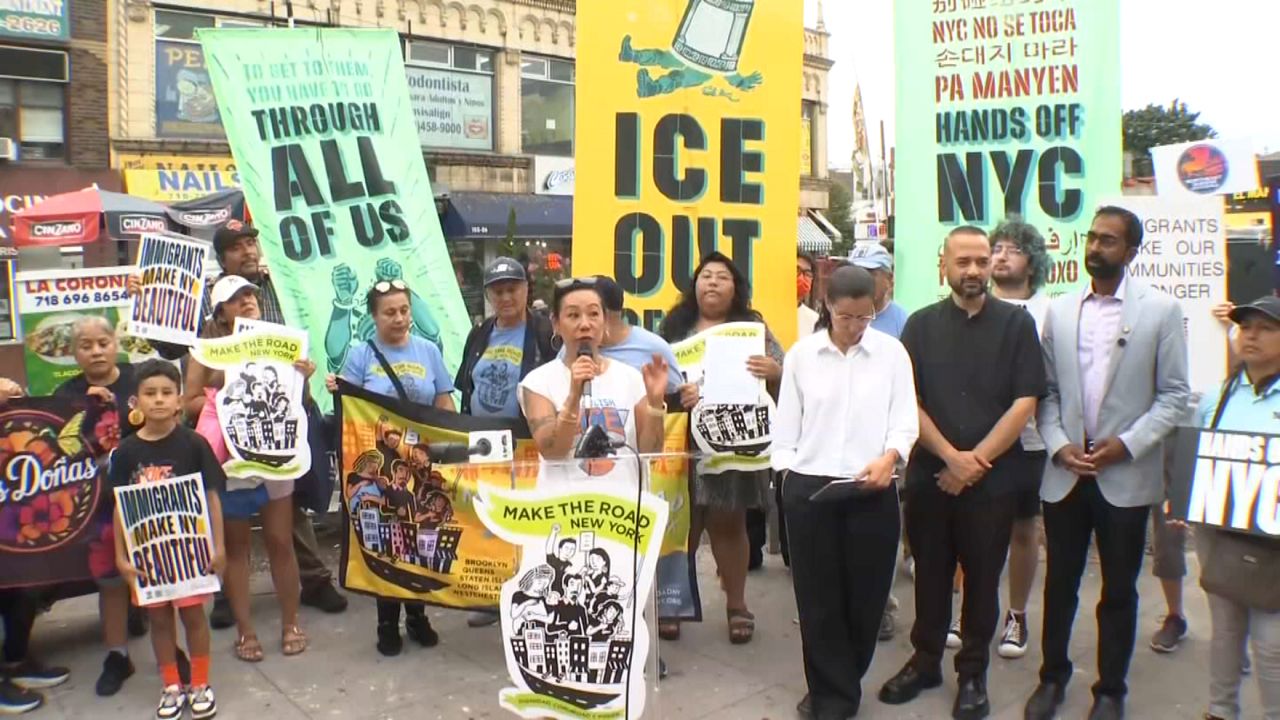
A group rallied to protest U.S. Immigration and Customs Enforcement on Monday, but they’re also a network of information, tracking and documenting reported ICE sightings in neighborhoods.
“All of these raids are causing so much fear and trauma in our communities,” Luba Cortes of Make the Road New York said.
Cortes said there’s an uptick in ICE sightings across the city. That fear is increasingly visible in Corona, Queens, where they’ve tallied the most enforcement.
She said Corona Plaza, once filled with vendors, has thinned out as some immigrants stay away.
“Because of the fear that police will collaborate with ICE, and that they get stopped for a ticket or something that the police would call ICE,” Cortes said.
City law already limits when the NYPD can cooperate with ICE.
Dozens of people joined Monday’s rally, including elected officials and people who came out simply to show support.
“I believe families are being torn apart, and it breaks my heart,” Forest Hills resident Dawn Berry said.
The rally comes as the city let go dozens of Haitian employees with Temporary Protected Status, also known as TPS, after the program ended for them at the end of July.
“We wanted to make sure that we only took this action at the point at which it was legally required to do so because it is not an action we would want to take in any which way or form,” Mayor Zohran Mamdani said.
“There’s a lot of fear, a lot of panic, but there’s also a lot of empowerment because a lot of them already know their rights. So they’re protecting each other,” Tony Alaracon with Las Donas said.
While the empty spaces back in Corona are easy to see, advocates said some effects of immigration enforcement are not.
“Right now, there’s a lot of trauma going on. A lot of the families are being separated,” Veronica Torrico, a psychologist, said.
She said that uncertainty can show up differently in children.
“A lot of these children have a regression, and they stop talking, and there are a lot of delays with them,” Torrico said.
It’s one reason advocates said their work goes beyond tracking where immigration agents are to making sure families know what to do if they encounter them.