
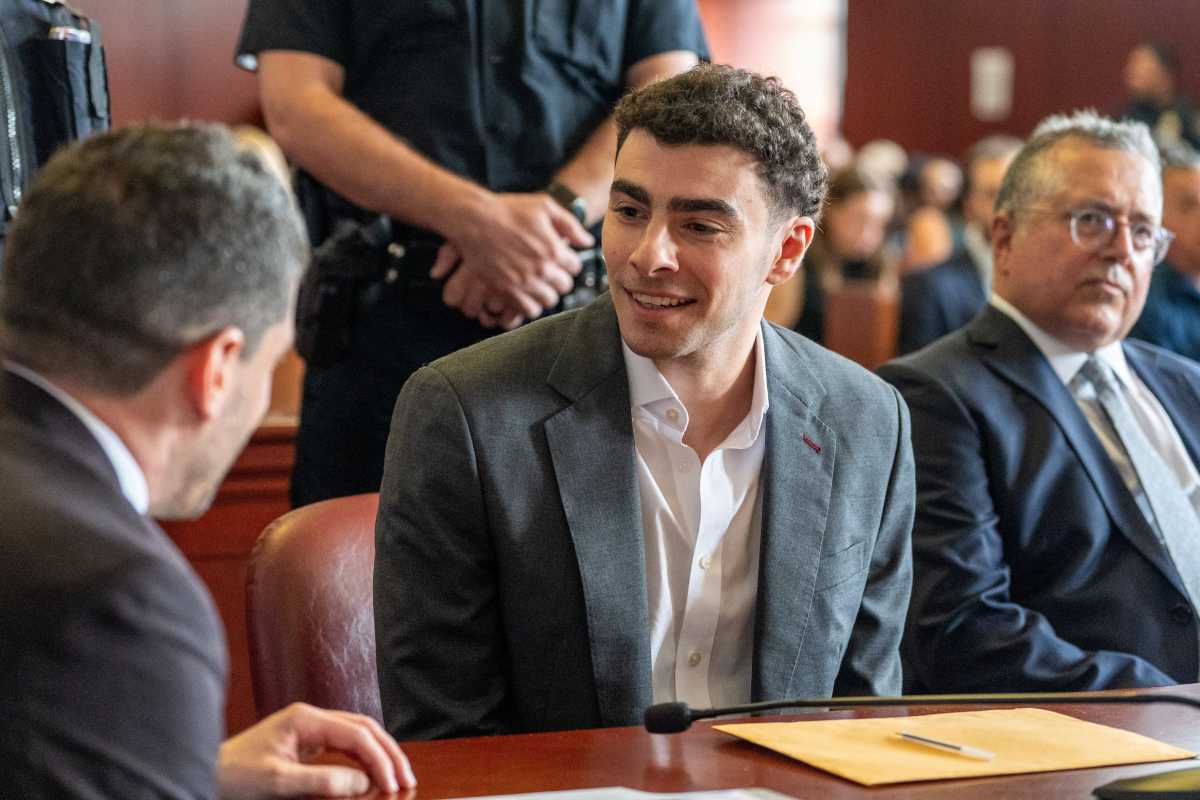
After the defense and prosecution clashed over media access for the past week, the Manhattan judge overseeing Luigi Mangione’s state murder trial on Tuesday said there would be an overflow room for press and spectators when the proceedings begin in September.
Manhattan Supreme Court Justice Gregory Carro said the defense’s recent concerns over whether media access to the trial would be limited were unfounded and that the court system had a plan in place to expand the number of people who would be able to attend the highly publicized case.
“There has never been a discussion or a decision by this court to exclude or limit the public or the press. Quite the opposite is true,” Carro said.
Mangione has pleaded not guilty to state charges of murdering United Healthcare CEO Brian Thompson in front of a Midtown hotel in 2024.
At the end of July, Mangione’s legal team alleged that District Attorney Alvin Bragg’s office and court administrators had coordinated to hand-pick reporters for trial coverage. Caro immediately sought to shut down any such suggestion, calling it “reckless mischaracterization” of the process.
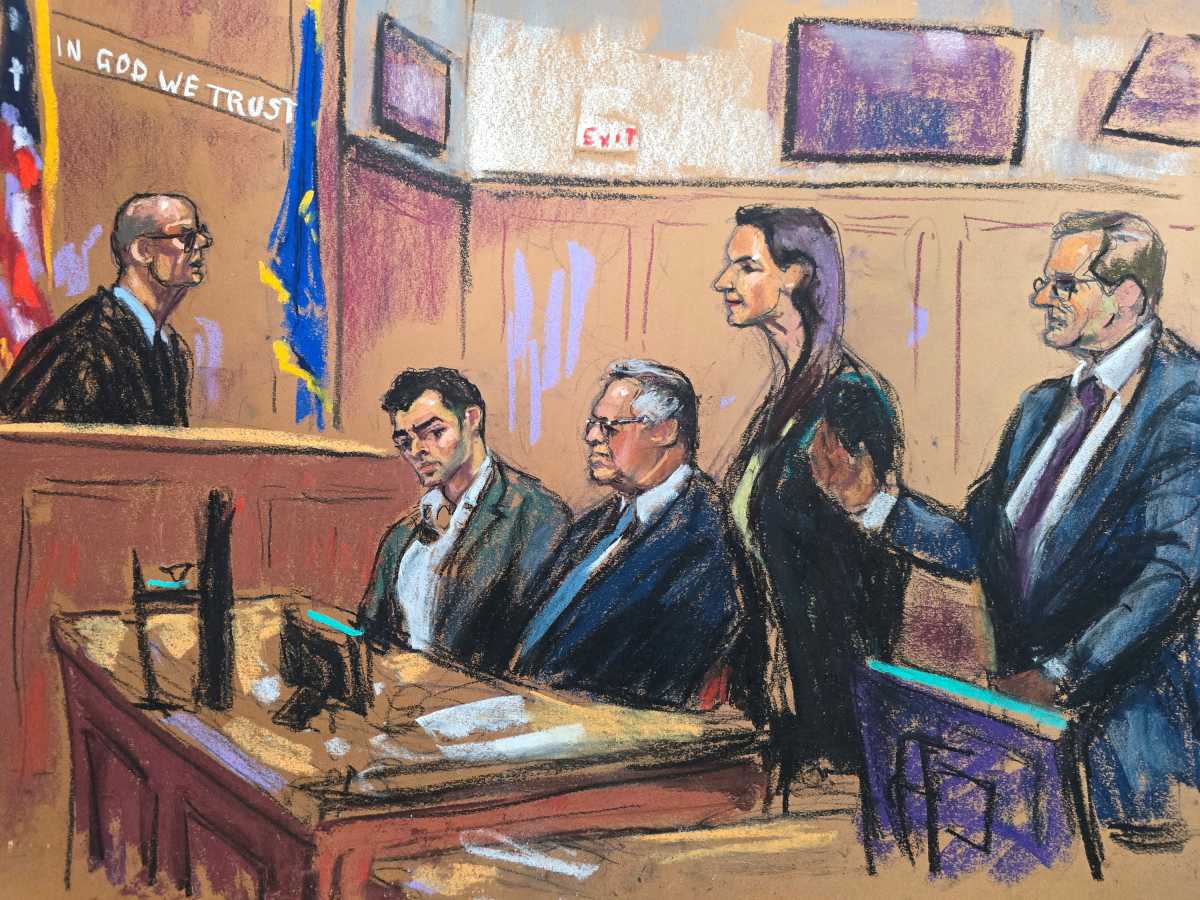 Luigi Mangione, the suspect in the murder of UnitedHealth Group executive Brian Thompson, sits next to his defense attorneys Karen Friedman Agnifilo and Marc Agnifilo, and a prosecutor Joel Seidemann during a pre-trial hearing before New York State Justice Gregory Carro at Manhattan Criminal Court in New York City, New York, U.S., August 11, 2026 in this courtroom sketch. REUTERS/Jane Rosenberg
The state Office of Court Administration typically handles press access, working out an arrangement with local court reporters.
Carro also addressed concerns that the District Attorney’s office had raised regarding an overflow room, specifically that spectators might be more likely to illegally attempt to take video footage of the proceedings.
The judge said that the public interest in Mangione’s case was “not the first rodeo” for the Manhattan courts, which would closely monitor the overflow room and throw out spectators who use their phones in the courtroom.
Carro added that there will be 85 or 86 outlets that will be able to report from court — a higher number than attorneys in the case previously believed would be the case.
For the preliminary process of jury selection, which will begin the first day of the trial on Sept. 8, Caro did clarify that the court will use a press pool for coverage because the presence of potential jurors will limit
“However we got here, I’m glad we got here,” said Marc Agnifilo, a member of Mangione’s legal team.
Mangione, who entered the courtroom in handcuffs, sat quietly in a gray suit for the final pretrial hearing in his state case. Mangione is also slated to stand trial on federal stalking charges in a parallel trial that will happen in January after the state proceedings conclude. He has pleaded not guilty to all the charges.
For the remainder of the hearing, Caro and the attorneys discussed the jury selection process. He encouraged the lawyers on both sides to meet and try to resolve any outstanding disagreements on jury questions for him to consider, then adjourned the case for jury selection in September.