

Spencer Gustafson, Geovany Dias, and Greg Mocker
1 hour ago
NEW YORK CITY (PIX11) — It’s not magic, it’s just science. It already has precedent in New York City.
Mayor Zohran Mamdani and the MTA are exploring a new way to tackle extreme heat in the bowels of New York City’s subway stations through a process called geothermal heating and cooling.
Discover more local reporting on our homepage
This would capture the excess heat plaguing subway stations in the summertime that causes some to reach well over 100 degrees. It would then convert it into energy that could heat nearby city buildings in the winter.
 Mayor Zohran Kwame Mamdani, Governor Hochul and the Metropolitan Transportation Authority (MTA) announced today a partnership to study a Thermal Energy Network (TEN) in the Brooklyn Bridge-City Hall 4/5/6 and Chambers Street J/Z station complex on Monday, August 10, 2026. Michael Appleton/Mayoral Photography Office
This isn’t a concept of futuristic hypotheses or science fiction. It’s been done in the Big Apple already. You just may not have noticed, even in one of the most iconic structures Manhattan has to offer.
How will geothermal energy be tested at the Chambers Street subway station?
The proposed system would take excess heat generated inside the old J and Z subway station and move it through pipes to an underground storage system beneath Chambers Street. The system would create a thermal energy network.
Stay connected with community stories that matter: Visit our homepage
Chambers Street’s abandoned center platform could provide a space for the MTA to test without passenger disruptions.
What is a geothermal energy network?
A geothermal network takes “waste” heat from different avenues, such as data centers or wastewater from rivers, lakes and sewers, to harness in underground storage systems.
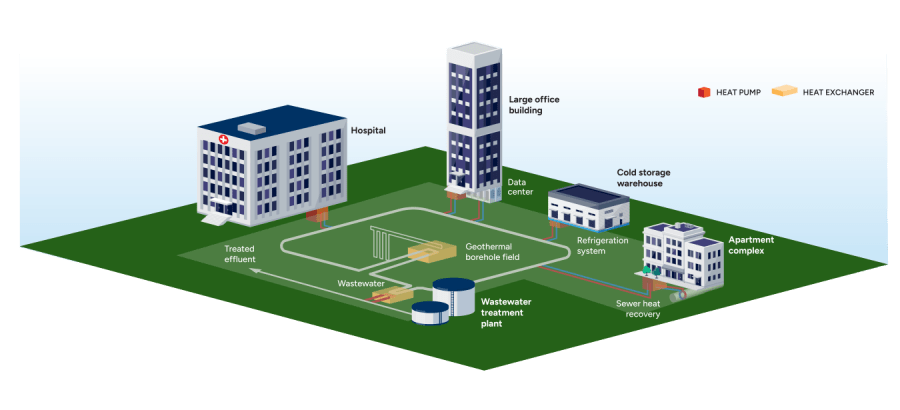 Example of a thermal energy network (TEN). (Credit: U.S. Department of Energy)
These networks connect to many buildings that can serve entire city blocks, neighborhoods, campuses and more, according to the Department of Energy.
If implemented at Chambers Street, it would be the first geothermal network in the country to be installed in a transit system.
Have geothermal networks worked before?
Boise, Idaho, is currently the home of the largest municipally-operated geothermal heating utility in the country, with more than 20 miles of piping and six million square feet of building space, according to the Department of Energy.
On a local level, St. Patrick’s Cathedral is an example of geothermal success in New York City.
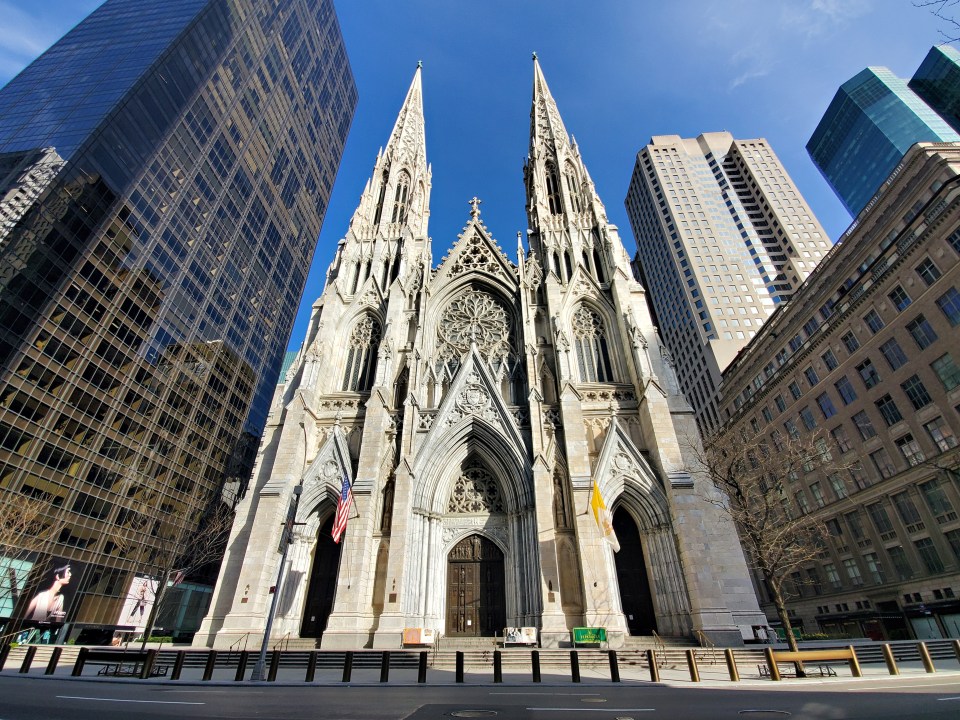 NEW YORK, NEW YORK – APRIL 14: A view of St. Patricks Cathedral during the coronavirus pandemic on April 14, 2020 in New York City. (Photo by Cindy Ord/Getty Images)
The world-famous house of worship had a geothermal pump system installed as the primary source of energy, with 10 columns ranging from 800 feet to 2,200 feet beneath the building.
The system provides water-to-water and water-to-air heating and cooling while reducing the dependency on fossil fuels, as well as visible mechanical equipment on-site, according to Causeway Energies.
While unfinished, there is an apartment building going up in Coney Island that will be heated and cooled by its own geothermal network, according to the contractor, LRC Construction.
The building is expected to save roughly $7 million per year on energy costs.
Timeline for the project
As of this moment, the geothermal energy network is only an $800,000 study funded through the New York State Energy Research and Development Authority.
“We now have an opportunity to do more than rebuild Chambers Street top to bottom. We can make our subway platforms cooler and more comfortable while putting wasted heat to work during the winter. That means lower energy costs, a more resilient subway system and a cleaner energy future for New York City,” Mayor Mamdani said.
MTA Chair and CEO Janno Lieber said the agency, city and state will work together to determine whether the technology is practical for the century-old transit system.
“Bringing down the temperature is a real challenge in a century-old system with open entrances and vents everywhere,” Lieber said.
If all goes well, design work could begin next year.
Spencer Gustafson is a digital content producer from Long Island who has covered New York state and city news since 2023. See more of his work here.