
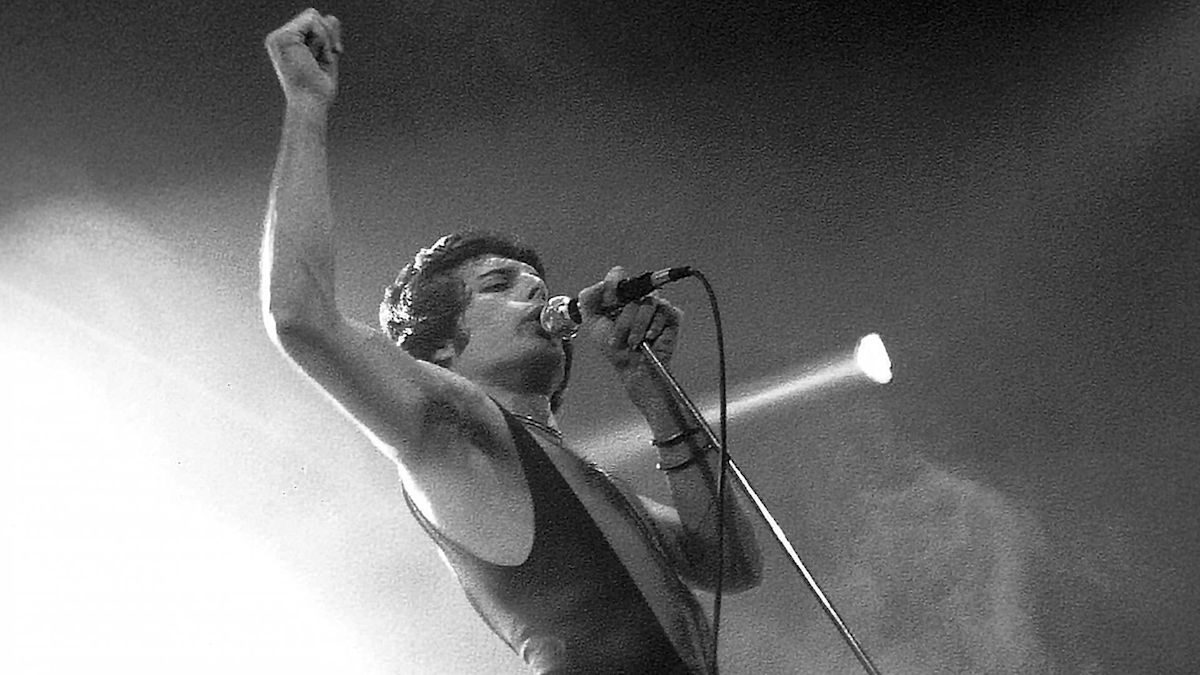
One of rock’s most ambitious songs has just earned another major distinction, more than 50 years after it was first released.
Queen’s “Bohemian Rhapsody” has been named the greatest No. 2 hit of all time by Billboard, topping a new ranking of the best songs in Hot 100 history that peaked at No. 2 without ever reaching the summit.
But there’s an unusual twist behind the song’s place on the list: “Bohemian Rhapsody” wasn’t a No. 2 hit when Queen originally released it.
It took 17 years, the death of Freddie Mercury and an unforgettable scene in Wayne’s World to send the song higher on the U.S. charts than it had ever been before.
‘Bohemian Rhapsody’ Tops Billboard’s Greatest No. 2 Hits
“Bohemian Rhapsody” beat some formidable competition for the top spot on Billboard’s ranking.
Lady Gaga‘s “Bad Romance” landed at No. 2, followed by Missy Elliott’s “Work It,” Prince and the Revolution’s “Purple Rain” and Kelly Clarkson’s “Since U Been Gone” to round out the Top 5.
The rest of the Top 10 includes Marvin Gaye’s “What’s Going On,”The Ronettes’ “Be My Baby,” Dr. Dre’s “Nuthin’ But a ‘G’ Thang” featuring Snoop Dogg, Cyndi Lauper’s “Girls Just Want to Have Fun” and Bob Dylan’s “Like a Rolling Stone.”
That puts Queen atop a list containing songs widely considered among the defining recordings of their respective eras.
Yet “Bohemian Rhapsody’s” path to becoming the greatest No. 2 hit is particularly unusual.
Released as the lead single from Queen’s 1975 album A Night at the Opera, the nearly six-minute song became a sensation in the U.K., where it spent nine weeks at No. 1. Its initial American reception was considerably more modest. “Bohemian Rhapsody” peaked at No. 9 on the Billboard Hot 100 in 1976.
It might have remained a Top 10 hit rather than a No. 2 hit if not for a movie released nearly two decades later.
‘Wayne’s World’ Revived ‘Bohemian Rhapsody’ 17 Years Later
In 1992’s Wayne’s World, Wayne (Mike Myers), Garth (Dana Carvey) and their friends famously pile into an AMC Pacer and erupt into synchronized headbanging when the hard-rock section of “Bohemian Rhapsody” kicks in.
The scene introduced Queen’s song to a new generation of American listeners and sent it racing back up the charts. The revival came just months after Mercury died in November 1991.
“Bohemian Rhapsody” ultimately climbed to No. 2 on the Hot 100 in May 1992, six months after Mercury’s death. In what seems like an unbelievable bit of trivia, “Jump” by Kris Kross prevented it from reaching No. 1.
The song’s 1992 U.S. re-release spent 17 weeks on the chart, giving “Bohemian Rhapsody” a new American peak 16 years after its original Hot 100 run.
That remarkable second life is what ultimately made the song eligible for Billboard’s new distinction.
Queen Was Warned ‘Bohemian Rhapsody’ Was Too Long
Of course, “Bohemian Rhapsody” had been defying expectations long before Wayne’s World came along.
Mercury described the sprawling composition as a “mock opera” created by combining three songs he’d written. Queen recorded it with producer Roy Thomas Baker across five studios in August and September 1975. The elaborate production required extensive overdubbing, with tracks bounced through multiple generations of 24-track tape.
Its unconventional structure was equally striking. Rather than following a typical verse-chorus format, “Bohemian Rhapsody” moves through a ballad, an elaborate operatic section, hard rock and a quieter coda.
Not everyone thought radio listeners would embrace it.
Mercury recalled that record executives believed its 5-minute, 55-second running time made the song essentially unmarketable. They wanted Queen to shorten it.
He refused.
“I said no way,” Mercury recalled in a 1985 interview with Australian TV’s Molly Meldrum, explaining that his position was that the song would be released in its entirety or not at all. He acknowledged that doing so was a major risk because the record could have flopped if radio stations refused to play it.
Instead, DJ Kenny Everett helped create enormous demand in Britain by repeatedly playing the song before it was even commercially available. According to Queen’s Brian May in an interview with Blender, Everett helped himself to a copy of the song without anyone even knowing.
“He walked out of the studio with the tape without anyone realizing. The next morning, I’m woken up by the sound of ‘Bohemian Rhapsody’ blaring through the ceiling from my upstairs neighbor’s apartment,” May recalled. “I thought I was going mad. It was like the song was following me, because, as far as I knew, no one except us had the tapes. But Kenny played it three times that day, and the next day, and he got a brilliant reaction from his listeners.”
The gamble paid off.
“Bohemian Rhapsody” eventually became one of the band’s signature recordings, returned to No. 1 in the U.K. following Mercury’s death and received Diamond certification in the United States in 2021.
And now the song that couldn’t quite reach the top of the Hot 100, even after one of the most famous movie revivals in rock history, has found another way to be No. 1.
Related: 1975 Rock Epic Is Suddenly Climbing the Charts 51 Years Later
This story was originally published by Parade on Aug 11, 2026, where it first appeared in the Entertainment section. Add Parade as a Preferred Source by clicking here.