
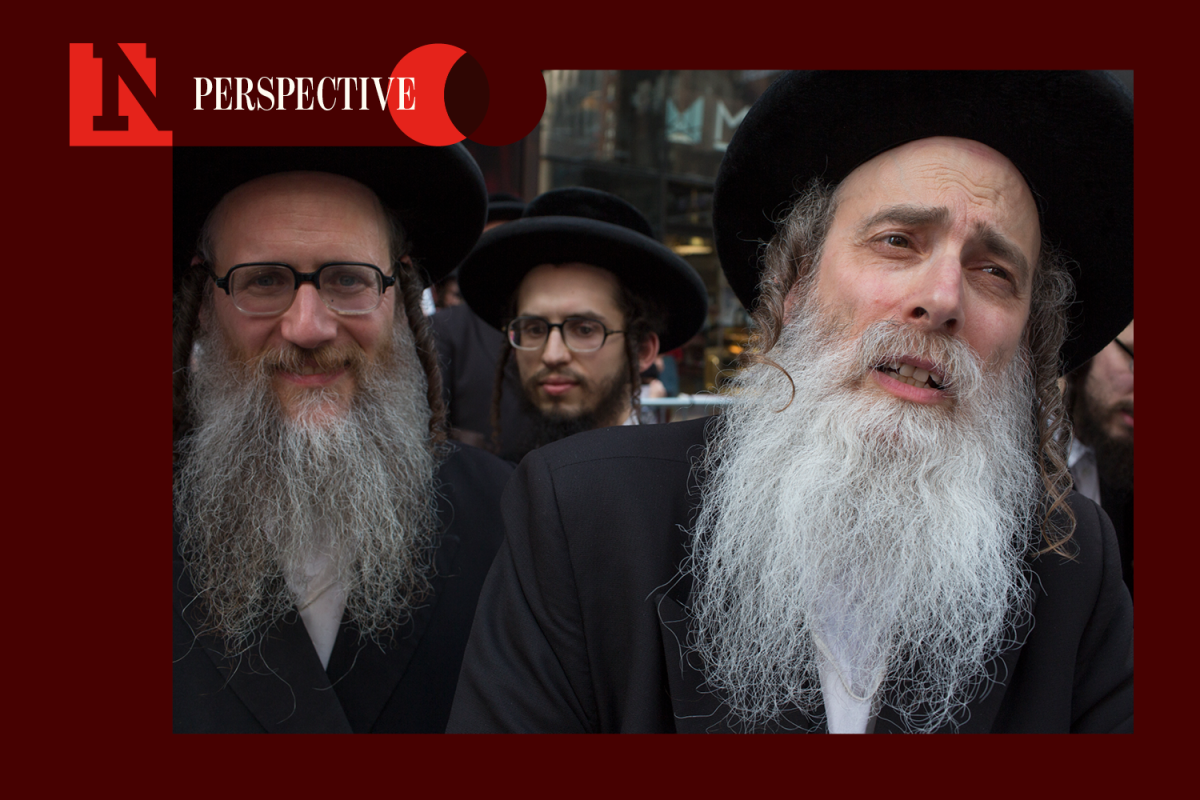
Rabbi Zalman Leib Teitelbaum, the Satmar Rebbe of Williamsburg, has criticized efforts to brand Mayor Zohran Mamdani as antisemitic, putting one of New York’s most prominent anti-Zionist Hasidic leaders on the opposite side of a fight from Jewish organizations that have accused the mayor of making the city more hostile to Jews.
The event made it starkly clear how difficult it now is to treat Jewish New York as a single political constituency.
Satmar’s position is not an endorsement of Mamdani’s progressive politics; the movement’s opposition to Zionism is religious and long predates the mayor, while its leaders have traditionally emphasized maintaining workable relations with the governments under which Jews live. Teitelbaum invoked precisely that tradition in his remarks, citing the biblical instruction to seek the welfare of the city in which Jews live and warning against confrontation with political authorities.
Read More on News
Mamdani has therefore found common ground with Satmar for reasons almost entirely different from those that draw anti-Zionist activists on the left to him, a fact that scrambles one of the shortcuts New York politics has long used when talking about Jewish voters: the assumption that attitudes toward Israel can reliably predict political alliances at home.
Satmar Complicates the Mamdani Divide
Mamdani’s Jewish allies do not form a coherent pro-Mamdani bloc. Satmar leaders can work with him even though their anti-Zionism comes from a religious tradition far removed from the contemporary left, while progressive Jewish groups may reach a similar position through opposition to Israeli policy or broader political agreement with the mayor.
Liberal Zionists, on the other hand, can disagree sharply with Mamdani over Israel while deciding that maintaining a relationship with City Hall still matters.
For Satmar, there is also a practical calculation: City Hall makes decisions about housing, schools, social services and other issues that directly affect Hasidic neighborhoods. During Mamdani’s campaign and transition, Satmar figures argued for maintaining relations with him even as other Orthodox voices favored a more confrontational approach.
Those constituencies can therefore end up on the same side of a dispute over Mamdani without agreeing on Zionism, Israel or much of anything else.
So the divide isn’t simply between Jews who support Mamdani and Jews who oppose him. Jewish groups that are willing to work with the mayor are themselves doing so for different, sometimes contradictory reasons. New York’s Jewish politics is increasingly being conducted constituency by constituency, making it harder for politicians (or community-minded institutions) to treat disagreement over Israel as a reliable guide to political alliances at home.
The Jewish Consensus Has Limits
Satmar’s relationship with Mamdani should not be mistaken for evidence that Jewish attachment to Israel has collapsed because the movement has opposed Zionism for generations while recent polling still shows broad support for Israel among American Jews, generally speaking.
A 2026 Pew Research Center survey found that 64 percent of Jewish Americans viewed Israel favorably, even as 56 percent expressed little or no confidence in Prime Minister Benjamin Netanyahu. A separate poll of Jewish New York City voters commissioned by The Jewish Majority found that two-thirds agreed that opposition to Israel’s existence as a Jewish state undermines Jewish identity.
The more consequential fracture is over what those views should mean for politics at home.
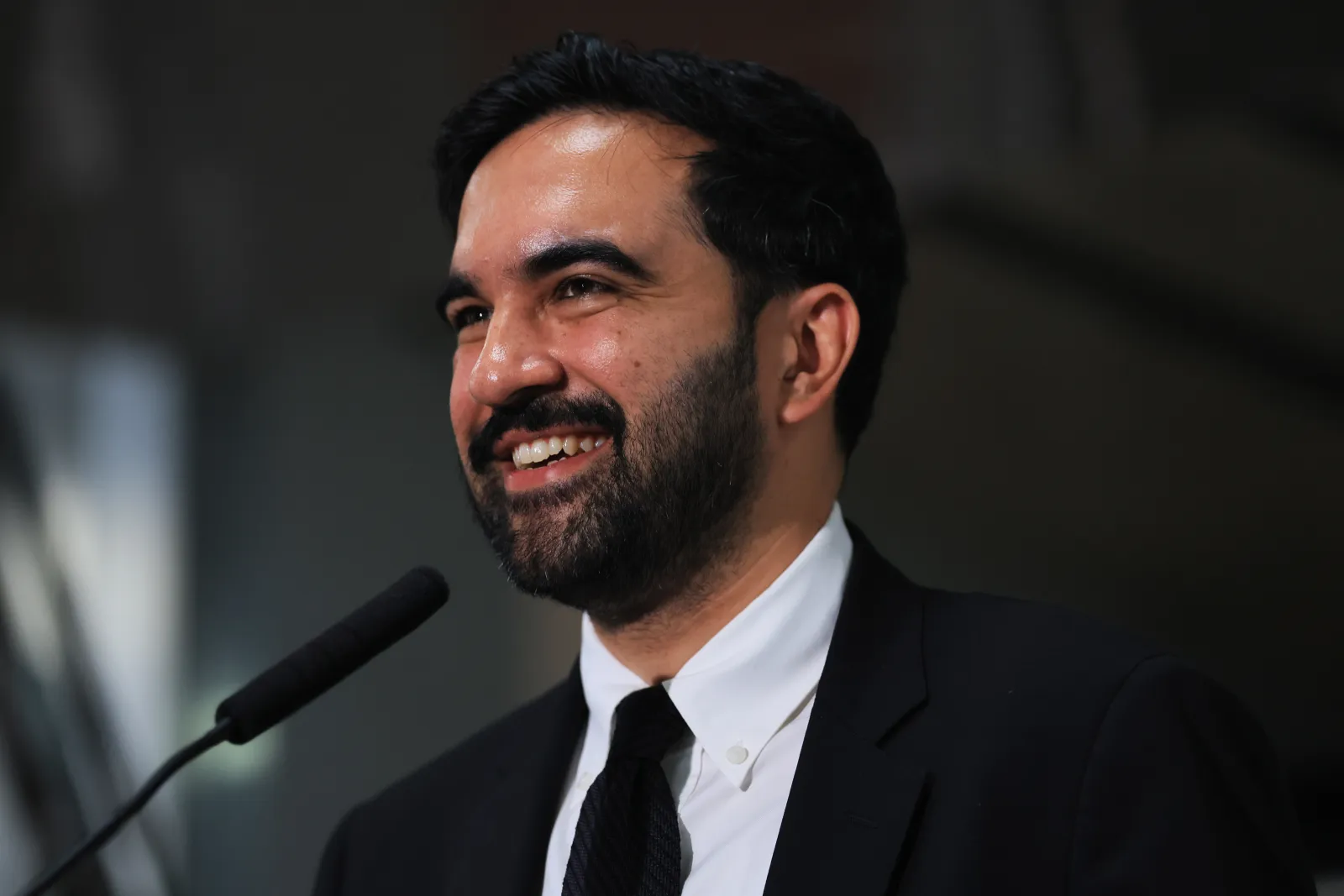
Jewish leaders who broadly support Israel can still disagree over whether opposition to Mamdani should mean refusing to work with him. That dispute surfaced when Orthodox leaders met the mayor at City Hall in March. Back then, former Assemblyman Dov Hikind criticized the meeting as legitimizing a politician he regards as hostile to Israel, while Rabbi Yaacov Behrman, who attended, argued that refusing to meet a sitting mayor would be counterproductive.
The disagreement was therefore about more than Mamdani’s views on Israel, directly involving political access, communal interests and ideological disagreement and how those facets can coexist.
It’s possible that broad attachment to Israel remains, but it no longer produces a common strategy for dealing with political power in New York, effectively shifting the way Jews navigate the city.
Who Gets to Speak for Jewish New York?
For decades, New York mayors looking for organized Jewish opinion had a familiar set of institutions to call, like UJA-Federation of New York, the Jewish Community Relations Council of New York, and the Anti-Defamation League, to name a few. Although those groups obviously still matter, Mamdani’s mayoralty is testing whether they remain indispensable.
The clearest example came when several major Jewish organizations stayed away from his Jewish American Heritage Month reception at Gracie Mansion, the mayor’s residence, but the event still drew over 100 people, including representatives of progressive Jewish groups, city employees and Orthodox communities willing to engage with the mayor. Mamdani could still assemble a Jewish-facing coalition without those organizations, and that changes future political calculations.
The same tension surfaced again this week, when Mamdani invited 10 rabbis from Reform, Conservative, Reconstructionist and Modern Orthodox congregations to City Hall for a private discussion about antisemitism.
The rabbis were hardly a friendly audience: several told him that his rhetoric about Israel was making it harder for Jewish New Yorkers to work with him on shared priorities, and yet the meeting itself showed the emerging model. Mamdani was dealing directly with individual religious leaders across denominations rather than relying on a single organization to mediate the relationship.
City Hall can deal separately with Hasidic leaders, progressive Jewish groups, liberal Zionists and establishment organizations rather than assuming that one set of institutions can speak for all of them—but when can that disposition turn into influence? If the major Jewish organizations continue to shape appointments, public-safety policy, education and other city decisions despite their conflicts with Mamdani, their role as the default intermediaries between Jewish voters and City Hall will have proved durable.
But if the administration increasingly negotiates with Jewish constituencies one by one, the more important shift will be institutional rather than ideological: no single organization, or group of organizations, will be able to claim the same authority to translate “Jewish opinion” into a political position.
That brings the argument back to Teitelbaum’s intervention. His defense of Mamdani does not erase the criticism the mayor heard from rabbis at City Hall days earlier, and it does not establish a new Jewish consensus in Mamdani’s favor. It shows why such a consensus may be the wrong thing to look for because the mayor can face sharp opposition from one group of Jewish leaders and receive support or cooperation from another, with neither side necessarily speaking for the other.
The question raised by the Satmar letter, then, becomes all about whether anyone can still plausibly speak of Jewish New York as a single political constituency.