
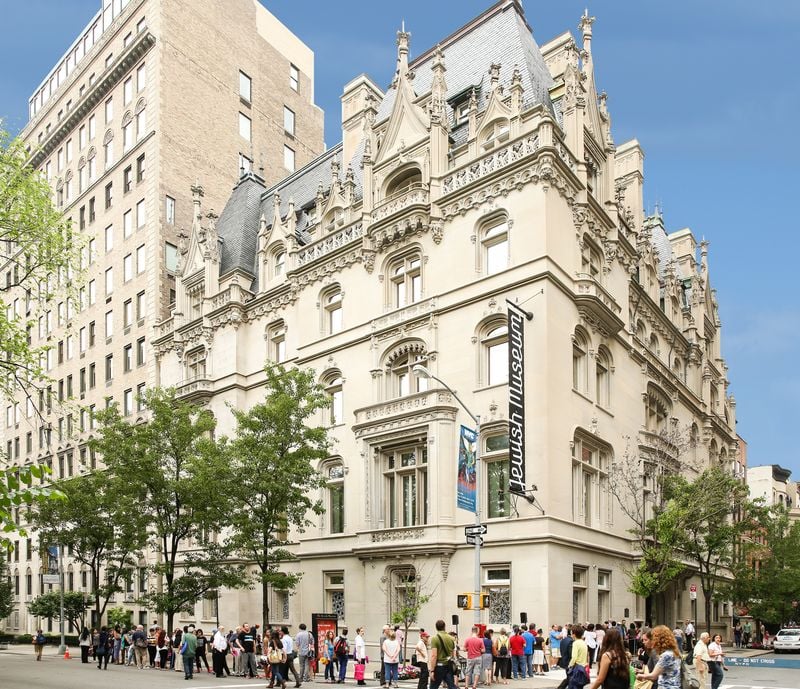
The Jewish Museum in New York City is a renowned art and cultural institution located on the Upper East Side’s Museum Mile. It houses one of the world’s largest collections dedicated to Jewish culture, with nearly 30,000 objects spanning 4,000 years of global Jewish history. Its collection includes religious artifacts, fine art, ceremonial objects, and media, making it the largest collection of Judaica in the world. The museum is also recognized for its wide-ranging exhibitions, which explore Jewish heritage, history, and perspectives while engaging broad and diverse audiences.
I would like to thank the esteemed Joanna Yamakami, Resnicow and Associates, for her support and guidance.
Museum
The Jewish Museum, located at 1109 Fifth Avenue on Manhattan’s Upper East Side is situated at the corner of Fifth Avenue and 92nd Street on the renowned Museum Mile. The museum attracts a steady audience of art enthusiasts, history lovers, and visitors interested in Jewish culture and heritage. Although smaller in scale than nearby institutions such as the Metropolitan Museum of Art, the museum is internationally recognized for its distinguished collections and exhibitions.
Founded in 1904, the Jewish Museum is the oldest Jewish museum in the United States and one of the oldest in the world. It is housed in the historic Felix M. Warburg House, a landmark mansion built between 1907 and 1908 for German American financier Felix M. Warburg and his family. Designed by architect C. P. H. Gilbert in the Châteauesque style, the mansion features a striking Indiana limestone façade with elegant French Gothic details around its windows and roof line, providing a dramatic setting for both historical artifacts and contemporary art.
The mansion occupies a lot measuring approximately 102 by 100 feet, about the same area as two regulation NBA basketball courts placed side by side, making it an impressive yet intimate setting for one of the world’s leading museums of Jewish art and culture.
Collections and Exhibits
The Jewish Museum is home to the world’s largest and most comprehensive collection of Judaica, featuring nearly 30,000 objects that span more than 4,000 years of Jewish history and culture. Highlights include over 1,000 historic Hanukkah lamps, intricately decorated marriage contracts, ketubot, rare ceremonial objects, archaeological artifacts, paintings, sculptures, photographs, and contemporary works that reflect the diversity of Jewish life around the world.
Alongside its permanent collection, the museum presents a dynamic program of exhibitions that connect historical narratives with modern artistic perspectives on Jewish identity, culture, and community.
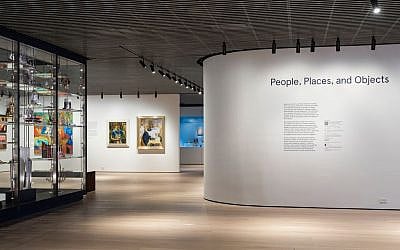
Exhibit on the Pruzan Learning Center (Source: Kris Graves)
Featuring more than 200 works, Identity, Culture, and Community: Stories from the Collection of the Jewish Museum and Pruzan Family Center for Learningunfolds across the Museum’s third floor in a thematic and chronologically integrated presentation of its unparalleled holdings, from delicate archaeological artifacts and Jewish ceremonial works to large scale contemporary painting and sculpture.
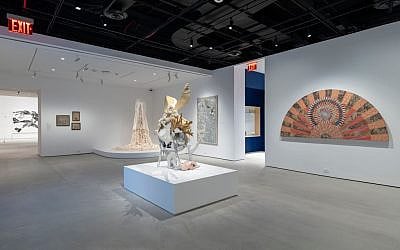
Identity, Culture, and Community: Stories from the Collection galleries (Source: Joanna Yamakami)
Identity, Culture, and Community: Stories from the Collection of the Jewish Museum is an ongoing exhibit from the Collection of the Jewish Museum and Pruzan Family Center. The exhibit showcases more than 200 works from the museum’s holdings. Displayed across the third floor, the exhibition explores Jewish history through archaeological artifacts, ceremonial objects, decorative arts, paintings, sculpture, and contemporary installations, highlighting themes of identity, faith, and community across centuries.
Paul Klee: Other Possible Worlds exhibit, through July 26, 2026, is the first American museum exhibition dedicated to the artist’s remarkable late career. The exhibition examines works created during the final decade of Klee’s life after he left the Bauhaus, was dismissed from his teaching position by the Nazi regime and continued producing deeply imaginative paintings despite political persecution and declining health.
Circa 1776: Jews in Colonial America, through August 9, 2026, commemorates the 250th anniversary of the Declaration of Independence by exploring the experiences, contributions, and daily lives of Jewish communities in colonial and early America through portraits, documents, ceremonial objects, and historical artifacts.
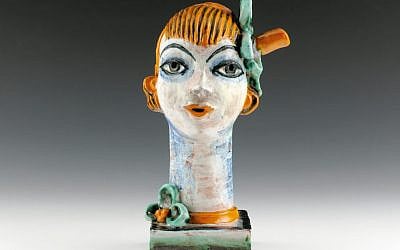
Vally Wieselthier, “Girl’s Head with Blue Outlined Eyes,” 1928. (Source: Jewish Museum of NYC)
Modernity and Opulence: Women of the Wiener Werkstätte, July 17 to November 15, 2026, highlights the influential role of Jewish women as artists, designers, patrons, and innovators in early twentieth-century Vienna. Featuring more than 200 works by approximately 30 artists, the exhibition showcases furniture, ceramics, textiles, jewelry, fashion, and graphic arts that helped define modernist design.
Featured Programs
The Jewish Museum offers a diverse lineup of public programs that complement its exhibitions and collections. Visitors can attend curator talks, artist lectures, panel discussions, concerts, film screenings, and live performances, while hands-on art-making workshops and interactive activities provide engaging experiences for children, families, and adults. Designed for visitors of all ages and abilities, these programs encourage deeper exploration of Jewish art, culture, and history in an inclusive and welcoming environment.
Group Visits
The Jewish Museum offers a variety of guided experiences for groups, schools, families, and community organizations. Visitors can arrange in-person or virtual tours of current and past exhibitions led by knowledgeable museum educators, providing deeper insight into the museum’s collections and special exhibitions.
Students can participate in onsite or virtual gallery tours, outreach programs, and interactive workshops. Specially designed tours and hands-on activities are also available for summer camps and school groups, encouraging creative learning through art and history.
Accessibility is a cornerstone of the museum’s educational programming. Multi-sensory tours and customized experiences are available for Deaf and disabled visitors, ensuring that participants of all ages and abilities can fully engage with the museum’s collections.
Lox at the Jewish Museum
Lox at the Jewish Museum is the museum’s popular OU Kosher-certified restaurant, known for its modern take on classic Jewish comfort food. The menu features handcrafted bagels, smoked and house-cured salmon, smoked fish, blintzes, herring, fresh salads, chef-crafted sandwiches, and pastries, making it an ideal stop during your museum visit.
Historical Background
In 1654, what is now the United States was made up of scattered European colonies and Indigenous nations, with only about 50,000 to 60,000 people living in all the English colonies combined. Travel was slow and difficult, relying on dirt paths, horseback, or sailboats, and New Amsterdam, later New York City, was a small Dutch trading post with just a few hundred residents.
That year, 1654, is the year Jews first arrived in what is now New York City. A group of 23 Jewish refugees fled Portuguese persecution in Brazil after the Portuguese recaptured the Dutch colony of Recife. They arrived in New Amsterdam, the Dutch settlement that later became New York City, marking the beginning of Jewish settlement in the city.
Although Governor Peter Stuyvesant initially tried to expel the Jewish refugees who arrived in New Amsterdam in 1654, they were allowed to remain after intervention by leaders of the Dutch West India Company. This small group helped lay the foundation for New York’s growing Jewish community.
Jewish life in New York expanded steadily through the 18th and 19th centuries, beginning with the establishment of Congregation Shearith Israel in 1730, the city’s first synagogue. Growth accelerated dramatically in the 19th century as large waves of Jewish immigrants arrived from Germany and later Eastern Europe, bringing new languages, traditions, and forms of worship. These communities built synagogues, mutual aid societies, and cultural institutions that helped shape Jewish life in the city.
It was in 1845 that 37 German Jewish immigrants founded Congregation Emanu-El on Manhattan’s Lower East Side, which later became the first Reform Jewish congregation in New York City. By 1868, New York City had become the largest Jewish city outside Europe and the Middle East, setting the stage for institutions like Temple Emanu-El.
Which brings us to 1904.
The Jewish Museum traces its origins to 1904, when Judge Mayer Sulzberger donated a collection of Jewish ceremonial objects to the Jewish Theological Seminary. The collection grew through additional gifts, including works sent from Poland for safekeeping at the start of World War II in 1939. In 1944, Frieda Warburg donated the family’s Fifth Avenue mansion to house the museum, which officially opened to the public in 1947. Designed by C.P.H. Gilbert in the Châteauesque style, the landmark building was later expanded in 1959 and 1963.
Since the 1970s, the Jewish Museum has expanded both its collections and public programming. Under Director Joy Ungerleider-Mayerson, the museum acquired hundreds of ancient artifacts from Israel and presented landmark exhibitions, including Jewish Experience in the Art of the 20th Century (1975) and Andy Warhol’s Ten Portraits of Jews of the Twentieth Century (1980).
During Joan Rosenbaum’s tenure, 1981 to 2010, the museum launched the New York Jewish Film Festival in 1992 and completed a major renovation in 1993 that expanded exhibition and education spaces while preserving the historic mansion’s Gothic Revival character. In 2006, the museum began opening to the public on Saturdays. Claudia Gould served as director from 2011 to 2023 and was succeeded by James S. Snyder in November 2023.
Today, the Jewish Museum in New York City continues to serve as a leading cultural and educational institution, offering programs for adults, families, and students, including concerts, film screenings, lectures, and symposia connected to its exhibitions. Established on January 20, 1904, it is the oldest institution of its kind in the United States and among the oldest Jewish museums in the world, with a legacy spanning more than a century of preserving and presenting Jewish art, history, and culture.
Contact Information:
Jewish Museum, 1109 5th Ave at 92nd St, New York, NY 10128
Phone: 212-423-3200
Email: pressoffice@thejm.org
Website: https://thejewishmuseum.org/