
 View of Manhattan, New York. Clipart Korea
Manhattan apartment rents are climbing even higher amid New York City’s move to introduce a so-called pied-à-terre tax, as wealthy buyers shift toward renting rather than purchasing second homes. With landlords pulling listings and rarely showing units, Manhattan residents are struggling to find rentals.
The median rent on newly signed leases in Manhattan reached $5,000 last month, up 6.4% from a year earlier, Bloomberg reported on the 13th, citing appraisal firm Miller Samuel and The Real Deal. That was double the 3.2% national increase in housing costs measured by the U.S. Bureau of Labor Statistics over the same period.
The inventory of rental listings in Manhattan plunged more than 39% from a year earlier last month, the steepest drop in a decade. Across the East River in Brooklyn, the median rent hit a record $4,500, while listings fell 27%.
“There’s a considerable amount of inventory you can’t see,” said Jonathan Miller, director of the market segment at StreetMatrix. “This is not a normal situation.”
Experts pointed to landlords and brokers keeping listings off public portals as one reason inventory has shrunk. A growing number of “off-market” units are trading without going through sites such as StreetEasy or RentHop. Increasingly, tenants must pay at least one month’s rent or join a paid service costing $4,000 or more to be shown available units.
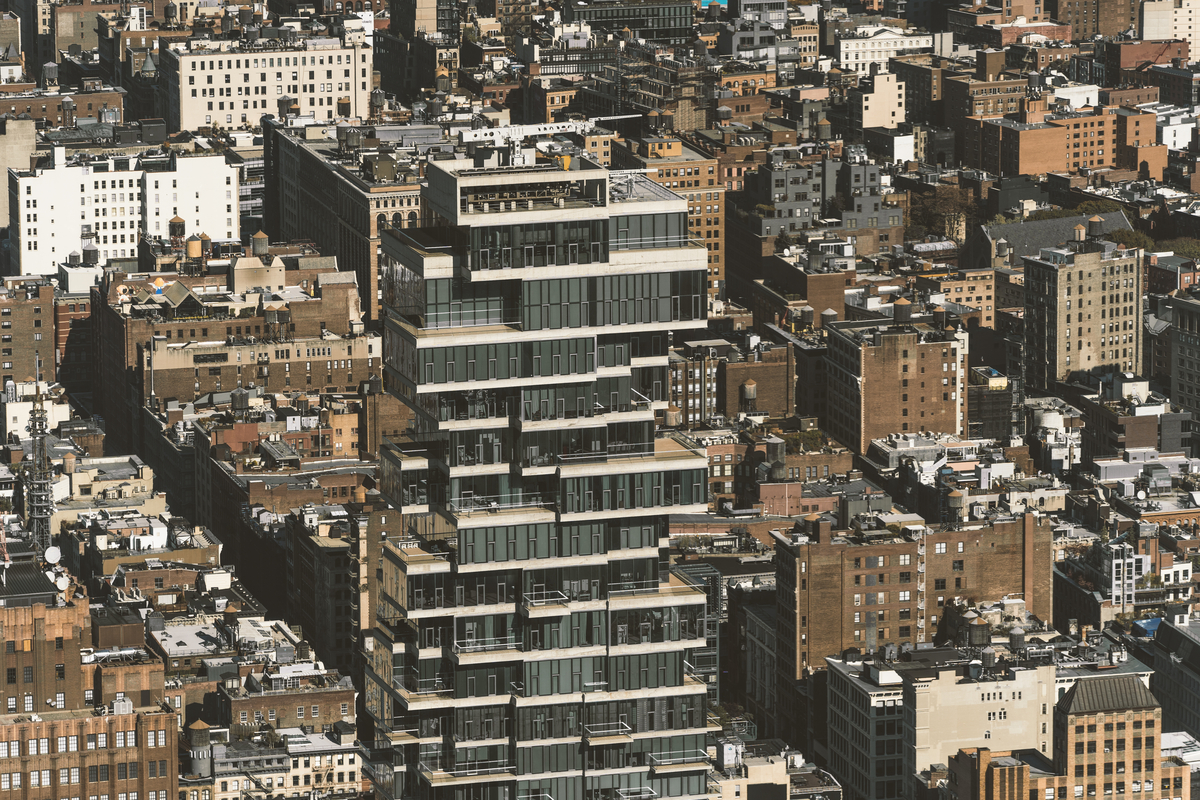 Luxury mansion in Manhattan. Clipart Korea
Not Online: Manhattan Luxury Complexes Advertise Only With Entrance Signs
The median rent for the top 10% of luxury apartments jumped 31% from a year earlier to $13,750, more than $1,000 above the median in June. The number of luxury listings fell to half the level of last July, a sharper decline than the broader market. Miller said luxury rental complexes in sought-after neighborhoods such as the Upper West Side and West Village are putting up signs at their entrances to alert passersby, rather than posting listings online.
He also cited uncertainty over New York City’s pied-à-terre tax, which took effect on the 1st of last month, as a factor squeezing the luxury supply. The pied-à-terre tax is an additional levy imposed on high-value homes that are not the owner’s primary residence. Because it targets wealthy owners who do not live in the properties full time, those who had considered buying second homes have delayed purchases and turned to renting luxury apartments, adding to demand.
Tenants have been pushed into competition. According to Miller Samuel data, more than one in four Manhattan apartments were leased only after a bidding war. Some tenants paid a $4,000 broker fee just to view hidden listings.
Molly Shepardson, 35, who works in marketing, began her search in early May, inquiring about more than 100 listings and touring 20. In a semi-basement studio in Chelsea, she spent a sweltering day alongside more than 30 others who had come to see a $2,500-a-month unit, and she spent several nights watching StreetEasy for listings that posted at midnight. She eventually found a rent-regulated studio on the Upper East Side for $2,000 a month. “You have to put in the time, and you have to be ready to drop everything at any moment,” Shepardson said. “I went to a weekend open house and there were 50 people there — it was complete chaos.”
Meanwhile, the national median rent for studios in July was unchanged from a year earlier. According to a report from the rental site Zumper, studio rents in San Francisco jumped 23% from a year earlier while active listings fell about 30%. In other major cities such as Los Angeles and Miami, by contrast, rents declined.