
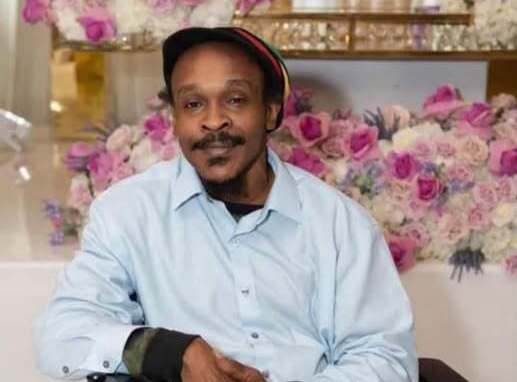
Nearly a year after a Brooklyn man died, and more than 25 years after he was paralyzed in a shooting, his family learned something they never expected: his death was a homicide.
The city’s medical examiner on Aug. 4 determined that the injuries Nurlan John, 48, suffered when he was shot on Eastern Parkway in 2000 contributed to his death last year.
An autopsy report showed that his death was the result of the gunshot wound to the chest, thoracic spinal cord injuries he suffered in the shooting, as well as hypertension and cardiovascular disease.
And, now as relatives struggle to come to grips with the reclassification of John’s death, they say they want the same thing any victim’s family would want — justice.
“No one paid for it,” John’s sister, Adonis John, 51, told the Daily News. “There was no person who did time. We had to help my mom wrap her head around that this is now a homicide.”
“She’s 74 years old. All she knows is that her son is dead, and nobody had to pay for it,” Adonis said.
John managed to lead a productive life — deejaying at parties, cooking for friends and family — despite living in a wheelchair.
On Sept. 23, a home health attendant, who would check in on him every morning, found John dead in his apartment. Then, months after he died, the city’s medical examiner classified his death as a homicide.
Now what?
That’s the nagging question John’s four surviving siblings will ask when they gather at their mother’s Brooklyn home next month to mark the first anniversary of their brother’s death.
Two people were arrested in the months following the shooting, but no one was ever indicted for the attack.
“We are reviewing this case,” said a spokesman for Brooklyn DA Eric Gonzalez.
Adonis, the sister, said she doesn’t even know what that means.
“It’s been almost a year since he died, and they still don’t have answers,” she said.
For now, Adonis said she and her family will try to nurse old wounds that have been reopened now that her brother is officially a homicide victim. Even though they built warm memories together after John was shot, Adonis said she is seething over the fact that somebody is getting away with murder.
Much of her wrath remains focused on the Crown Heights neighborhood where John was shot — an area they once called home.
To this day, Adonis said she is convinced people there know more about the shooting than they are telling, and withheld details that could have put her brother’s shooter behind bars decades ago.
“People who we considered friends and family, they didn’t step up,” she said. “They let us down.”
So disgusted was Adonis with the neighborhood that she said she stopped visiting years ago. She said her brother used to try to tell her to let it go.
He certainly tried to move on. For years, he kept up with his deejaying gigs, taking Access-A-Ride when he had to to make it to venues on time, and sending mix tapes to family and friends.
“Even though he was still in the chair, he would still go places,” Adonis said, admitting that her brother didn’t remember much about the shooting. “He still continued his life. He wasn’t a homebody. “
Friends said John lived by himself in Marine Park, Brooklyn.
“He still had the bullet inside of him,” a longtime friend told The News. “He always used to tell me that.”
Despite losing the use of his legs, he frequently hung outside and helped his neighbors.
“He was a good person,” the friend said. “If you was hungry he would be in his wheelchair cooking, getting busy in the kitchen. He would come outside, bring out a table and play cards.”
An obituary at the time of his death said John was born in Grenada and moved with his family to Brooklyn when he was four. He graduated from William E. Grady High School, where he developed a talent for carpentry. He was also a popular local deejay.
John’s cousin said she saw him several days before he died.
“He came over to visit,” she said. “He didn’t seem like he was in pain. But if someone was in pain, they really wouldn’t say. Those guys are like strong,”
With John Annese