
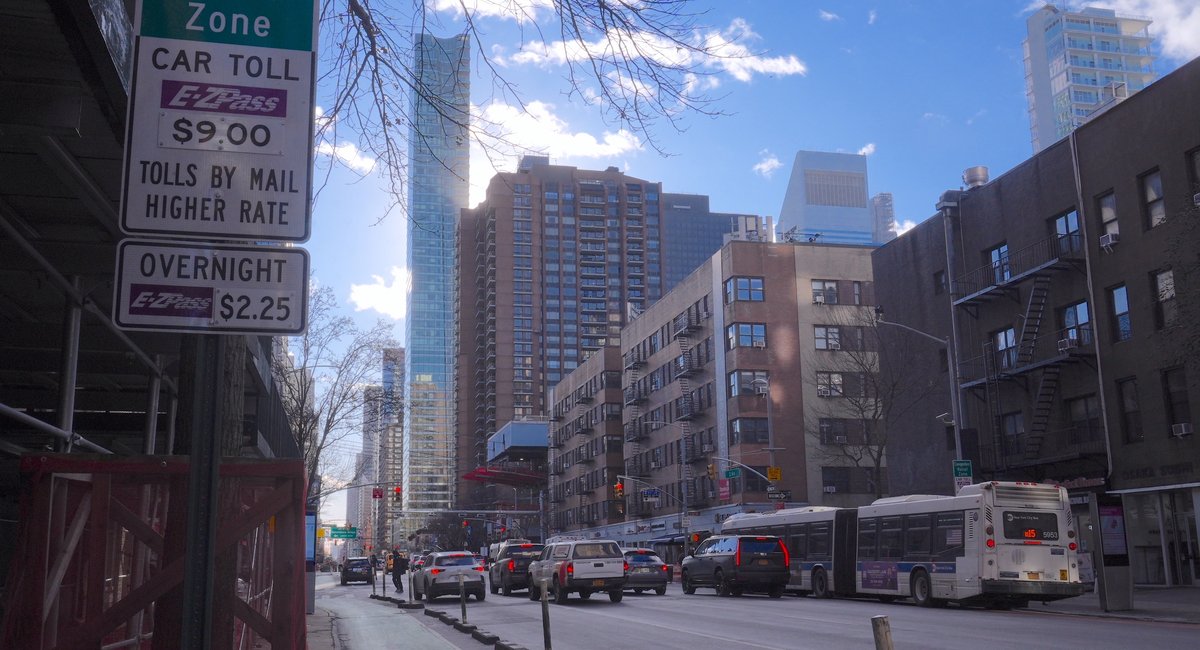
Congestion pricing has had only minor effects on air quality, with pollution levels either remaining stable or improving slightly around the city, according to a new report by the New York City Health Department.
“New Yorkers deserve to know how major policies affect the air they breathe,” NYC Health Commissioner Dr. Alister Martin said in a statement. “This report gives us the clearest picture to date of how air quality has changed during the first year of congestion pricing, and we now know that air quality across New York City was not any different because of congestion pricing.
Congestion pricing went into effect in January 2025, following an initial delay by Gov. Kathy Hochul. The goal of the program is to reduce traffic in Lower Manhattan while generating new revenue for the city’s transit system. Tolls are generally $9 per vehicle during peak hours and apply to local streets south of 60th Street.
The health department’s findings continue a nearly two-decade trend of citywide air quality improvement. The city’s air quality monitoring tracks particulate matter and ozone levels, but not greenhouse gas emissions.
The report, released late last week, found no increase in air pollution near major highway corridors outside of the tolling zone. Opponents of congestion pricing and environmental assessments conducted during the program’s planning had projected that these areas, such as neighborhoods along the Cross Bronx Expressway, would have dirtier air as truckers and other traffic sought to avoid driving through Lower Manhattan.
“Before we turned the cameras on, there was concern about the potential for increased pollution caused by drivers looking to avoid the toll,” MTA Chair and CEO Janno Lieber said in a statement. “As this study confirms, that didn’t happen, and congestion pricing is already funding additional investments to further improve air quality.”
That finding contrasts with a study released by Columbia University researchers earlier this year, which found that air pollution rose in the South Bronx following the implementation of congestion pricing.
The Bronx has some of the nation’s highest asthma rates. The MTA has committed to investing $70 million in pollution mitigation projects in the borough as part of the congestion pricing program. So far, that has translated to a $20 million commitment for cleaner refrigerated trailers at the Hunts Point Produce Market and $20 million for childhood asthma programs in the borough.
The health department report also found that congestion pricing did not drive any meaningful air quality improvements within the tolling area. But research from a Cornell University team last year found significantly cleaner air in Lower Manhattan after the tolls began.
City leaders touted the health department report’s findings that congestion pricing has been an overall win for the city by reducing traffic, funding transit improvements, and investing in pollution mitigation.