
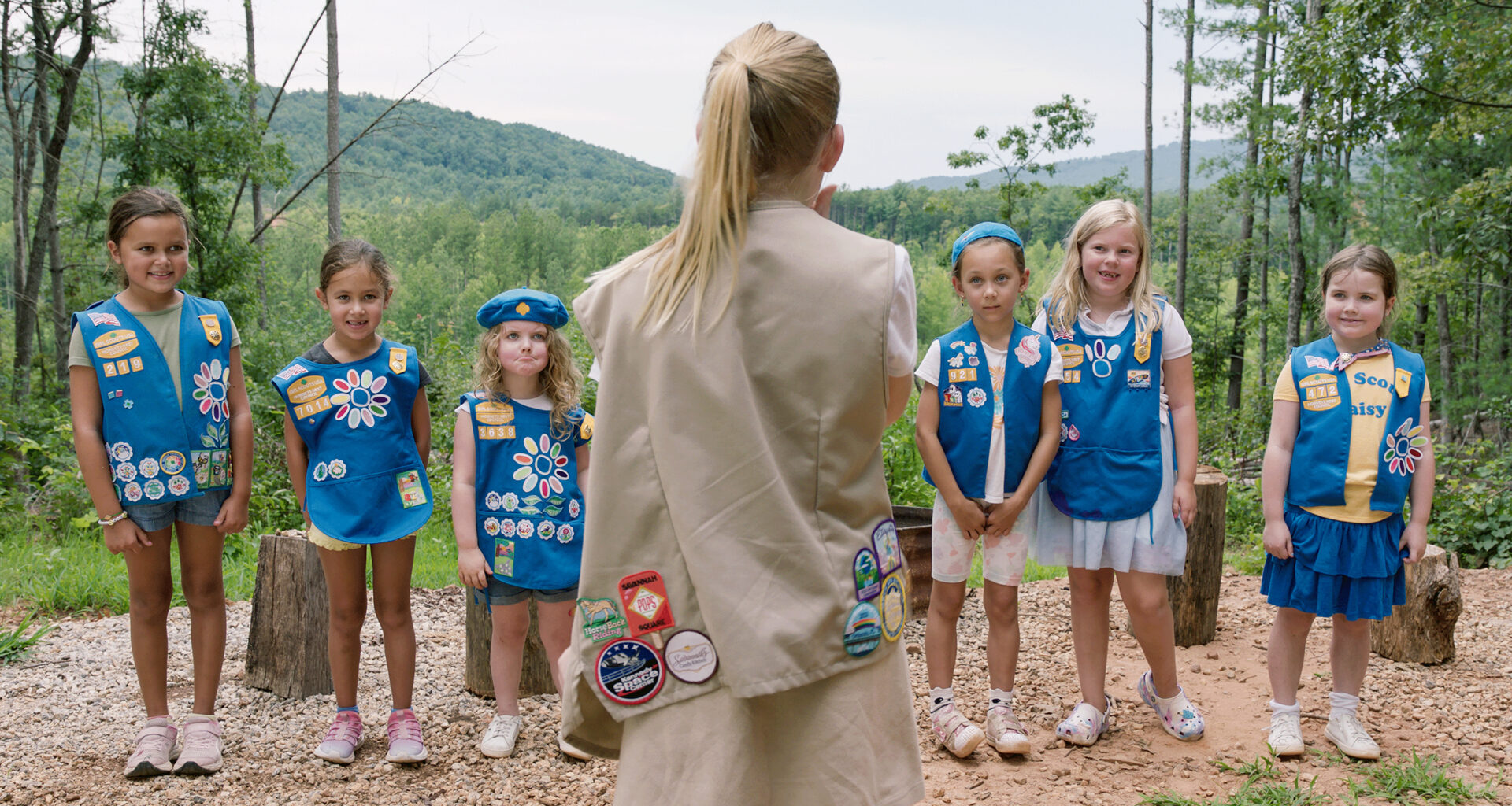
Why is filmmaking important to you? Why is it important to the world?
Stories are not just about who we are; in a sense they define who we are. To tell stories together is to (re)build our world, and filmmaking can be such a visceral, emotional, and accessible way to share our truths and create new realities.
If you weren’t a filmmaker, what would you be doing?
I’d happily return to architecture; I still love space, material, and abstraction. Or, is there a way to get paid to put together puzzles? I do love puzzles. Come to think about it, maybe puzzles are a common denominator of the creative process of both documentary and architecture.
What is something that all filmmakers should keep in mind in order to become better cinematic storytellers?
As a director, it’s my responsibility and honor to allow each person I’m collaborating with to shine — whether that’s behind the camera or in front of it. It is my job to recognize and uplift brilliance and truth whenever they appear. In documentary filmmaking, it’s also vital to embrace surprises, improvisation, and even contradictions. I over-prepare, and then I often leave my notes in my pocket as I witness and react to what’s actually happening in the moment. As Lawrence Weschler, one of my favorite nonfiction writers, once said, “nothing is too wonderful to be true.”
Tell us about your history with Sundance Institute. When was the first time you engaged with us? Why did you want your film to premiere/screen with us?
My first feature documentary, Unfinished Spaces, was programmed in the 2012 Sundance Film Forward global festival initiative. My directing work was later supported by the 2019 Sundance Momentum Fellowship and Women at Sundance. In addition, I’ve produced or executive produced films that have premiered at the Sundance Film Festival, including Unrest and I Didn’t See You There. I’ve also stayed engaged with Sundance Institute over the years as a mentor for labs and workshops including the Documentary Producing Fellowship, the Women’s Financing Intensive, and Catalyst.
In 2019, I met my fellow Cookie Queens producers, Michael Dweck and Gregory Kershaw, at Sundance Catalyst when I was matched to be their producing advisor as they pitched their stunning documentary The Truffle Hunters. We became fast friends, with an eye toward collaborating on something special one day.
With Cookie Queens, that dream has come true, as it’s been an exciting creative journey for the three of us. What’s more, our first funding for the project was raised in the Sundance Catalyst community. I’m thrilled to come full circle with the world premiere of Cookie Queens at Sundance.
Who was the first person you told when you learned you got into the Sundance Film Festival?
I was driving my daughter to school when I got a text from Sundance Festival programmer Ania Trzebiatowska along the lines of “any chance we could chat quickly at some point today?” I turned to my daughter, who just a few minutes earlier had instructed me to keep quiet so she could get a few more minutes of precious sleep in the car, and I woke her up with, “It’s Sundance!! They might be inviting Cookie Queens to the Festival! Do you want to be in the car when I talk with them?” Immediately, I got a text back from Ania – “haha!” – and realized that my car had voice-texted to Ania verbatim. As my daughter and I cracked up, I pulled over to call Ania back. Ania was already laughing, too, when she started off the call with, “It seems like you already guessed that we love your film and want to invite you to premiere at Sundance!” My daughter got to listen to our whole joyful conversation. We were beaming! It was perfect that she was right there with me. When I dropped her off at school, she said it was ok to give her a hug in front of others on campus — a rare gift to the parent of a high school freshman.