
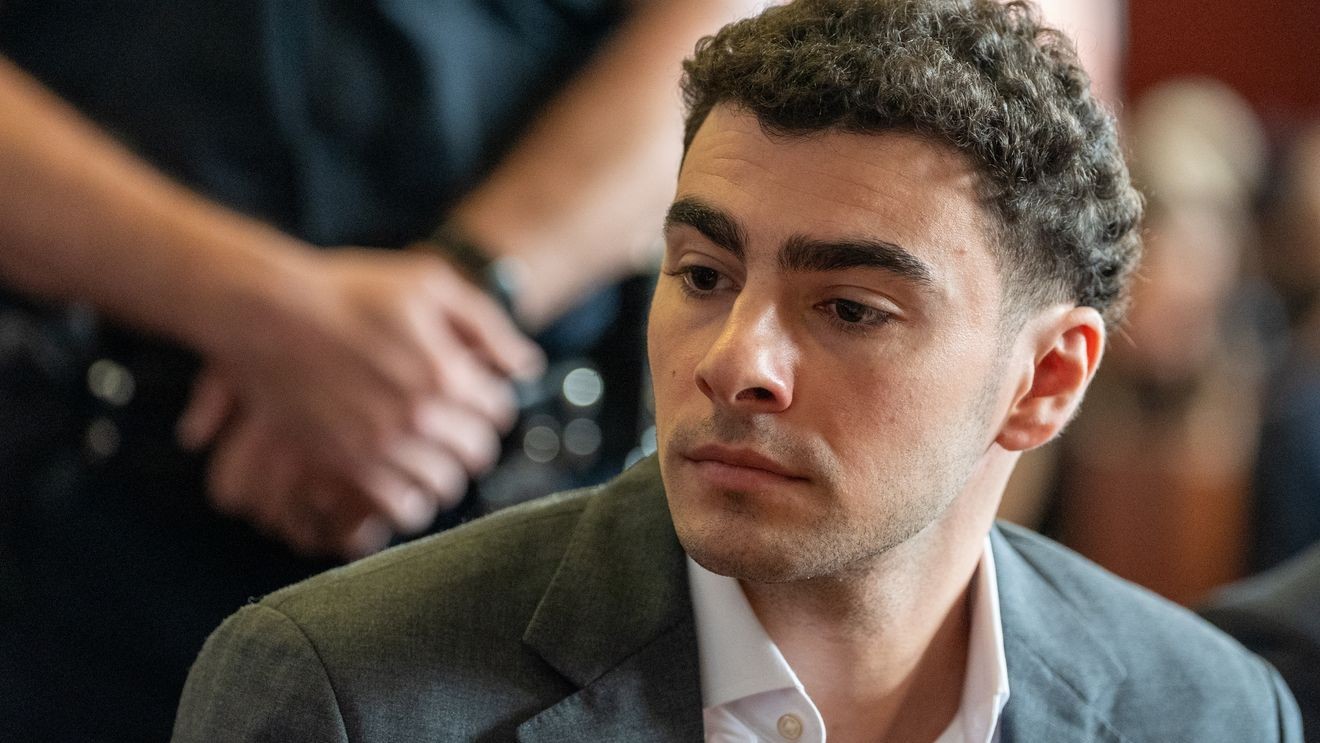
Luigi Mangione has admitted in federal court that he traveled to New York intending to kill UnitedHealthcare CEO Brian Thompson, but his guilty plea could now become part of an effort by his attorneys to derail a separate state murder prosecution.
During his federal plea, Mangione acknowledged researching Thompson’s travel plans, posing as an investor while contacting UnitedHealthcare and traveling to New York with the intention of shooting the executive. He told the judge, “I knew what I was doing.”
Speaking with The National News Desk, former federal prosecutor and former acting ICE Director Jonathan Fahey said the timing of the plea, coming shortly before Mangione’s state murder trial, appears to be part of a deliberate legal strategy.
“This is sort of an interesting strategy,” Fahey said.
At the center of that strategy is New York’s double jeopardy law. While the federal government and states can generally prosecute defendants separately under the dual-sovereignty doctrine, New York provides additional statutory protections against successive prosecutions involving the same conduct.
“The federal government and the state government could try somebody for exactly the same offense,” Fahey said. “However, New York has their own double jeopardy law by statute that says, basically, you can’t charge even the same conduct — not even the same offense, but the same conduct.”
Fahey said Mangione’s attorneys could argue that his federal guilty plea prevents New York from separately prosecuting him for conduct covered by the federal case.
“Their strategy is basically get the state case thrown out and have him just be sentenced on the federal case,” Fahey said.
Fahey noted, however, that New York law includes exceptions and that a successful challenge to the state prosecution would not necessarily mean Mangione avoids a lengthy prison sentence.
“I don’t know how this really helps him because he could face up to life imprisonment on the federal case,” Fahey said. “It’s sort of a strategy that may not put him in a better situation at the end of the day.”
Asked about the strength of the double jeopardy argument, Fahey said Mangione’s federal admissions could bolster his attorneys’ contention that both prosecutions concern the same underlying conduct.
“He may be able to have this dismissed, saying basically he pled guilty in federal court and it’s for the same course of conduct,” Fahey said. “And in fact, he admitted this course of conduct in his guilty plea. So I think that’s the play here.”
Even if the state case were dismissed, Fahey said a federal judge could still impose a severe sentence.
“Mangione may end up getting a life sentence in federal court,” he said, adding that the dismissal of the state prosecution could potentially factor into the federal judge’s sentencing decision.
If the New York case survives the defense challenge, Mangione’s admissions in federal court could create another significant hurdle for his attorneys.
Fahey said the defense could attempt to prevent prosecutors from introducing those statements at trial, but argued that the broader evidence against Mangione would still make defending the case difficult.
“The defense would first try to get his admission thrown out in federal court,” Fahey said, potentially arguing the statements should be inadmissible in the state proceeding.
“But I think ultimately, this case is so overwhelming in terms of evidence,” he added.
Fahey said one possible strategy could involve attempting to persuade jurors based on sympathy for Mangione’s stated motivations rather than disputing the underlying evidence, a concept commonly known as jury nullification.
“They seem like they have him coming and going in every respect,” Fahey said. “It would just be very hard for him to get found not guilty by a jury.”
The interview also turned to a separate criminal case in California involving a man who prosecutors say was released despite previous criminal charges and an alleged violation of home detention before being accused of fatally stabbing a senior citizen during a burglary.
Fahey sharply criticized the decision to release the defendant, arguing judges evaluating bail should consider both the danger a defendant poses to the community and the likelihood that person will flee.
“The judges, when they look at somebody whether or not to give them bail, they look at danger to the community and risk of flight,” Fahey said.
According to the account discussed during the interview, the defendant had previously faced burglary and domestic violence allegations and was also the subject of an immigration detainer.
Fahey argued the defendant’s history should have weighed heavily against releasing him.
“The fact a judge would allow him out on bond to begin with and then have him violate his conditions and rerelease him on bond is really inexcusable,” Fahey said.
Some of Fahey’s comments about the judge’s motives and broader immigration policies represented his own political and legal assessment rather than established findings about why the court made its decision.
Back in New York, the immediate question is whether Mangione’s federal plea will alter the course of his state prosecution. His attorneys could seek dismissal under New York’s double jeopardy protections, while prosecutors can argue that statutory exceptions allow the murder case to proceed.
Regardless of how that challenge is resolved, Mangione’s sworn admissions in federal court are likely to play a central role in the legal battles still ahead.