
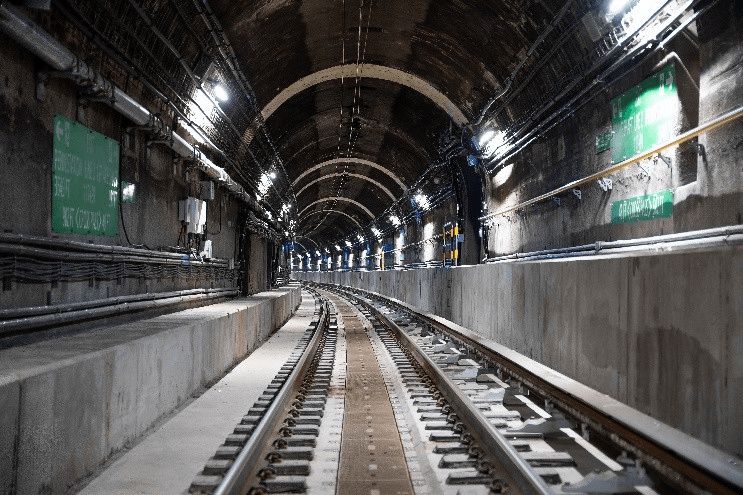
NEW YORK (PIX11) — It took more than 13 months to go two-and-a-half miles, but that span of time and distance fully rehabilitated a railroad tunnel that was badly damaged during Superstorm Sandy.
Still, the train delays, cancellations, and other problems that the work caused gave critics plenty to talk about on the tunnel’s first full day of operation, which occurred as work is beginning on the next phase of the underground project: the rehabilitation of a tunnel tube adjacent to the newly opened one.
The overall project of rehabilitating the two tunnels has a $1.6 billion price tag, and affects more than 230,000 daily users of the Long Island Rail Road, as well as many of NJ Transit’s 90,000 daily riders.
LIRR trains leave Penn Station for destinations on Long Island through the tube, called Tunnel 2, that runs underneath Manhattan and the East River. Many NJ Transit trains also traverse Tunnel 2 on their way to daily storage in a railyard in Queens during long breaks between runs back to New Jersey.
Amtrak carries thousands of passengers through Tunnel 2 every day. The public-for-profit corporation owns the tunnel and the tracks, even though about 90% of its traffic is on non-Amtrak trains.
On Monday, Amtrak led a celebration ceremony marking the completion of the tunnel’s rehabilitation. Getting to that point, however, was no easy task, as MTA Chairman Janno Lieber pointed out.
“There were five separate, maybe even six if you count it, events that really hurt service” during the rehabilitation process, Lieber said during a question-and-answer session following the midday ceremony.
“On those days, service was terrible,” he continued, “and we’re going to keep pushing [Amtrak] to learn from what happened here.”
Stay connected with community stories that matter: Visit our homepage
He was talking about how commuter headaches were made worse any time there had been an emergency during the nearly 14-month construction. Among the incidents was a tunnel fire in late May that shut down all service in and out of Penn Station.
Also, Lieber said that to accommodate the rehabilitation project, which was mostly financed through Bipartisan Infrastructure Law funds, the LIRR had to reduce its service by about 20 percent.
He said that that level of service can’t return until the next phase of tunnel rehabilitation is complete. That’s when a second tube — called Tunnel 1, which is next to the newly completed Tunnel 2 — is thoroughly worked on and renewed. That’s not expected to be finished until the end of 2027.
Lieber said that he and other transportation experts had called on Amtrak to do the work on nights and weekends, but the public-for-profit said that doing so would prolong the length of the rehab project even further, and would also raise costs due to workers having to shut down the project and restart it nearly every day.
“To take this tunnel down to its basic core and rebuild its systems up was the right investment to make,” said Warren LeBeau, Amtrak’s vice president of infrastructure delivery, during a tour on a specialized viewing train of the newly completed work.
“This tunnel is designed and constructed for the next 100 years,” with routine maintenance and repairs, said LeBeau.
Copyright 2026 Nexstar Media, Inc. All rights reserved. This material may not be published, broadcast, rewritten, or redistributed.
For the latest news, weather, sports, and streaming video, head to PIX11.