
Following a teenager’s death while riding an illegal e-bike, calls have increased for mandating license plates through Priscilla’s Law as a simple fix to the rising danger of motorized micromobility vehicles (MMVs).
But Priscilla’s Law has a fundamental logical flaw — illegal MMVs by definition cannot be licensed because they’re illegal. Yet they must be the highest priority for enforcement, as they are most dangerous.
Nonetheless, editorials and advocates often cite tragedies involving illegal vehicles to justify Priscilla’s Law. Former Councilmember Robert Holden writes he proposed the law following Theresa Valenti being killed by two men riding an illegal e-bike. Activists rallied following a Queensboro Bridge tragedy when an illegal e-scooter crashed into a cyclist, killing both.
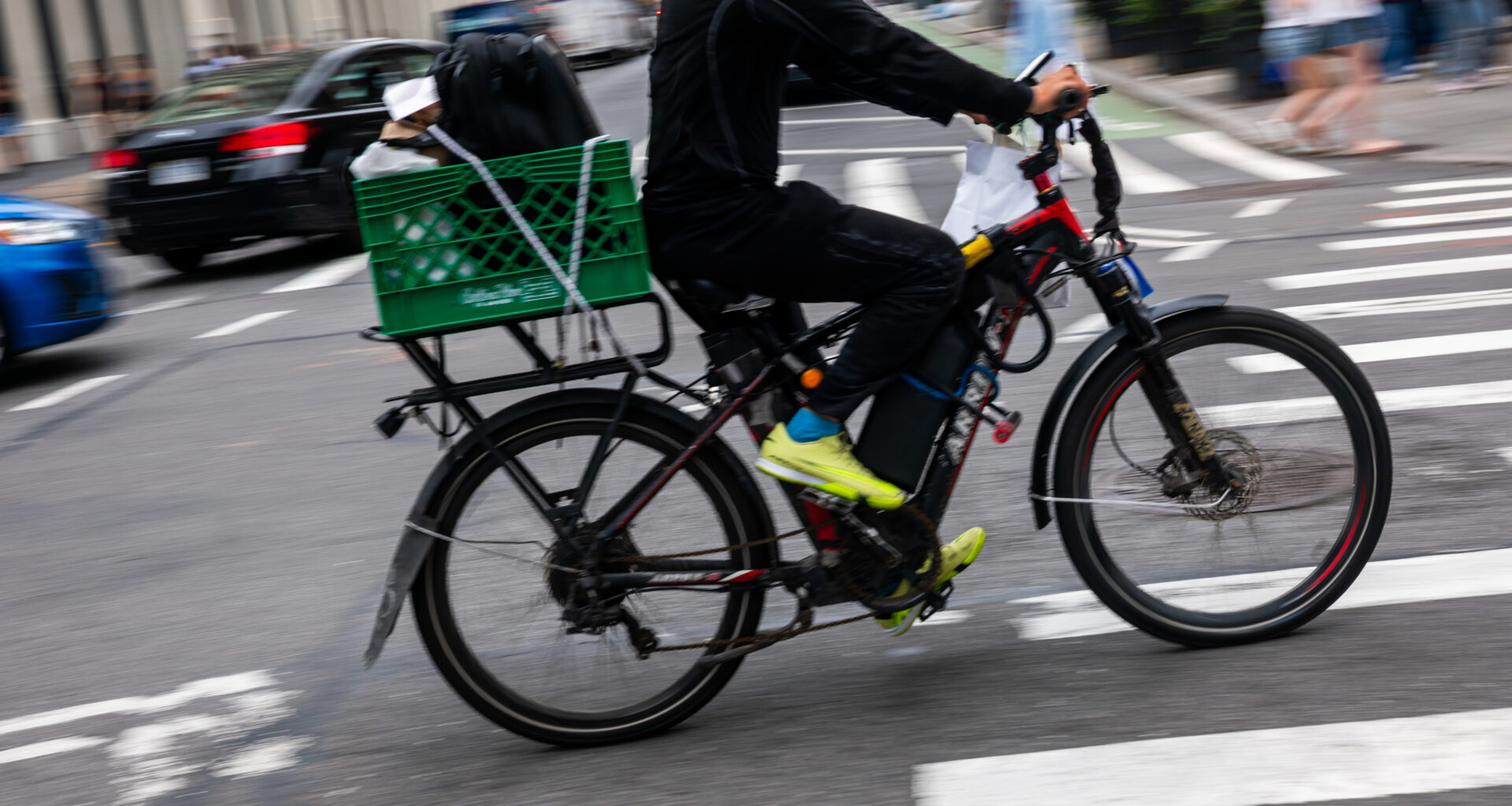
Moreover, enforcement of existing laws regulating MMV’s have been ineffective, making successful enforcement of Priscilla’s Law unlikely. §10-157 of the Administrative Code already requires a large sign with the business’ name and a unique ID affixed to commercial cycles, which account for about 50% of e-bikes, per a recent study. By my observation, few deliveristas comply, yet NYPD has issued only 38 violations to date this year. This suggests NYPD won’t effectively enforce a new law.
Further, e-Citi Bikes represent approximately 30% of e-bikes. In fact, Priscilla Loke, a beloved teacher for whom the proposed law is named, was killed by an e-Citi Bike rider. Currently, e-Citi Bike ID numbers are effectively hidden. The city could require easily-visible ID as a condition to operate sharing services without a new law. However, the Citi Bike and other sharing services need processes to accept complaints and discipline specific riders, something they don’t currently have.
While illegal vehicles are the biggest safety concern, and the city can also regulate approximately 80% of e-bikes (commercial and shared) without a new law, there still are many legal, privately-owned, non-commercial MMVs.
A monumental enforcement effort would be needed for licensing to be effective for these vehicles. NYPD would need to make significant efforts to ensure owners get plates, cameras would be needed to catch offenders, plates must be genuine and linked to the vehicle and owners’ addresses to send tickets, owners must pay fines, and unpaid fines would need penalization.
Our experience with cars suggests that we will fail in every regard, and the resources to ensure legal e-bikes have genuine plates would distract focus from more dangerous illegal MMVs.
Fake, obstructed, and missing plates are a major concern with cars and undoubtedly would be with MMVs. DOT recently reported that close to 3 million speed camera “events” in 2003 couldn’t be ticketed due to “ghost plates.” Further, the Council found nearly 20% of out-of-state plates don’t match the car’s VIN. (And e-bikes don’t even have VINs.) Many motorcycles and mopeds have obscured or missing plates. But through June, NYPD issued fewer than 500 tickets for this.
Holden recently posted, “With cameras everywhere, the plates can be read and it goes back to someone.” This is wishful thinking. Creating this surveillance state would be extremely expensive and would require Albany to exponentially increase the number of permissible cameras. Plus, the $50 cameras tickets are for owners, not operators. With cars, many repeat offenders don’t pay. And NYPD doesn’t check vehicles for unpaid violations.
Plates are minimally effective for hit-and-run motorists — just 3.6% are caught. Even for fatal crashes, only 54% were caught in 2022-2023. It surely would be worse for e-bikes.
Instead, New York should strengthen and enforce existing laws for commercial vehicles, require shared bike services to have visible IDs and implement systems to accept complaints and discipline riders, and, most importantly, crack down on illegal vehicles.
Robbins owns Upper West Strategies, a NYC-based small business that runs internship programs.