
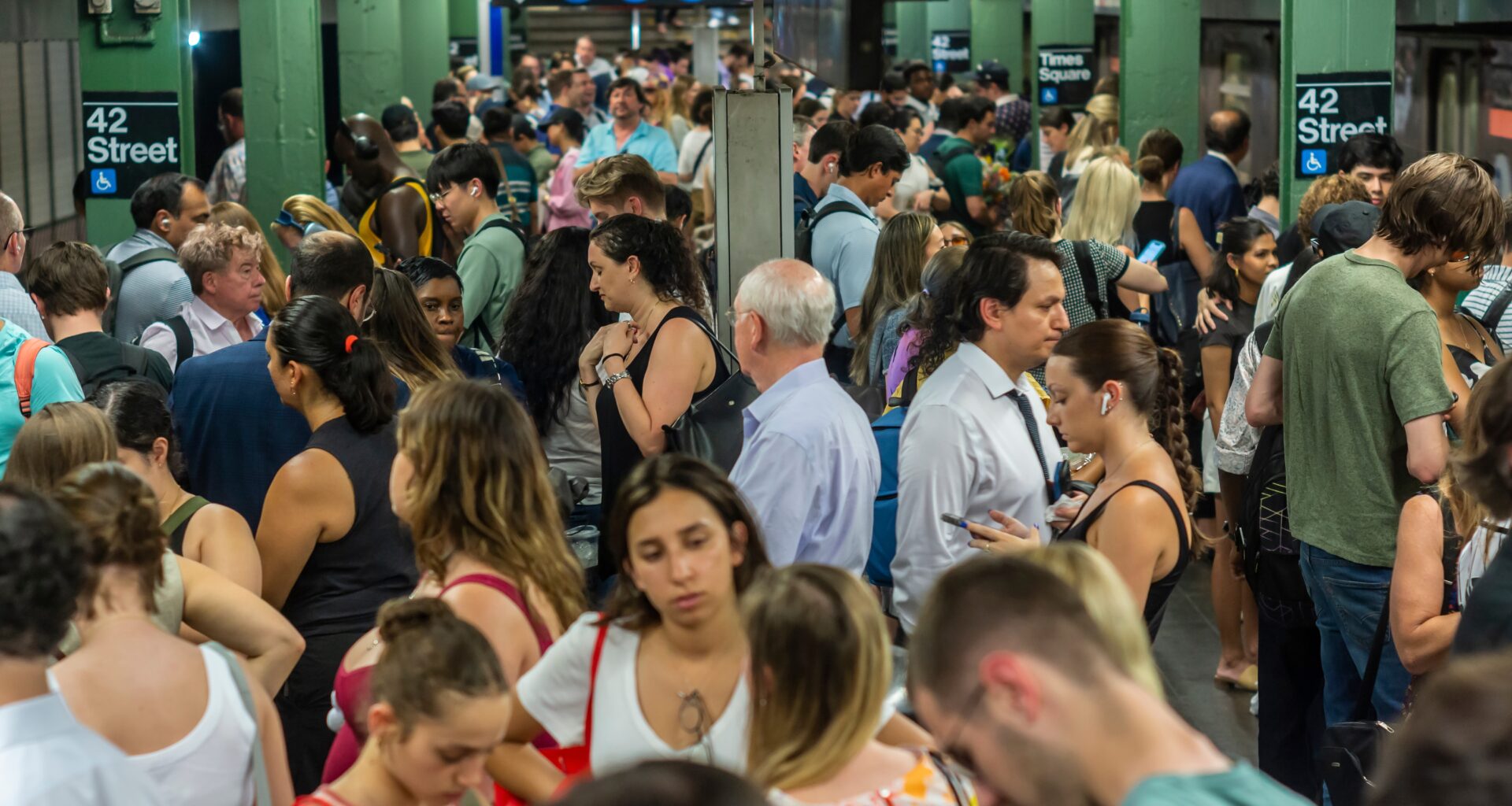
New York City transit riders might one day experience relief from the oppressive heat that plagues subway platforms in the summer — and provide heat to nearby buildings in the winter in the process.
The Metropolitan Transportation Authority recently launched a study to explore the creation of a Thermal Energy Network that would capture extreme excess heat on subway platforms in the summer, store it in geothermal boreholes and recycle it to warm nearby municipal buildings during the winter.
“TENs, already in use at several hospitals and universities, move heat between buildings, reducing reliance on fossil fuels. The MTA and city are set to assess the feasibility of using TENs and geothermal infrastructure to absorb, store and transport excess heat between subway stations and adjacent municipal buildings,” writes Noah Kolenda for Mass Transit.
The initial feasibility study, projected to cost $800,000, will test the process at the Brooklyn Bridge-City Hall 4/5/6 and Chambers Street J/Z station complex to determine how much cooling can be achieved and the potential energy cost savings for the city. It will use radiant cooling technology, which removes heat by circulating chilled water through panels and tubing embedded in floors and walls, allowing cool surfaces to absorb heat. The process can be up to 35% more energy efficient than air conditioning.
Read the full article at Mass Transit, below.