
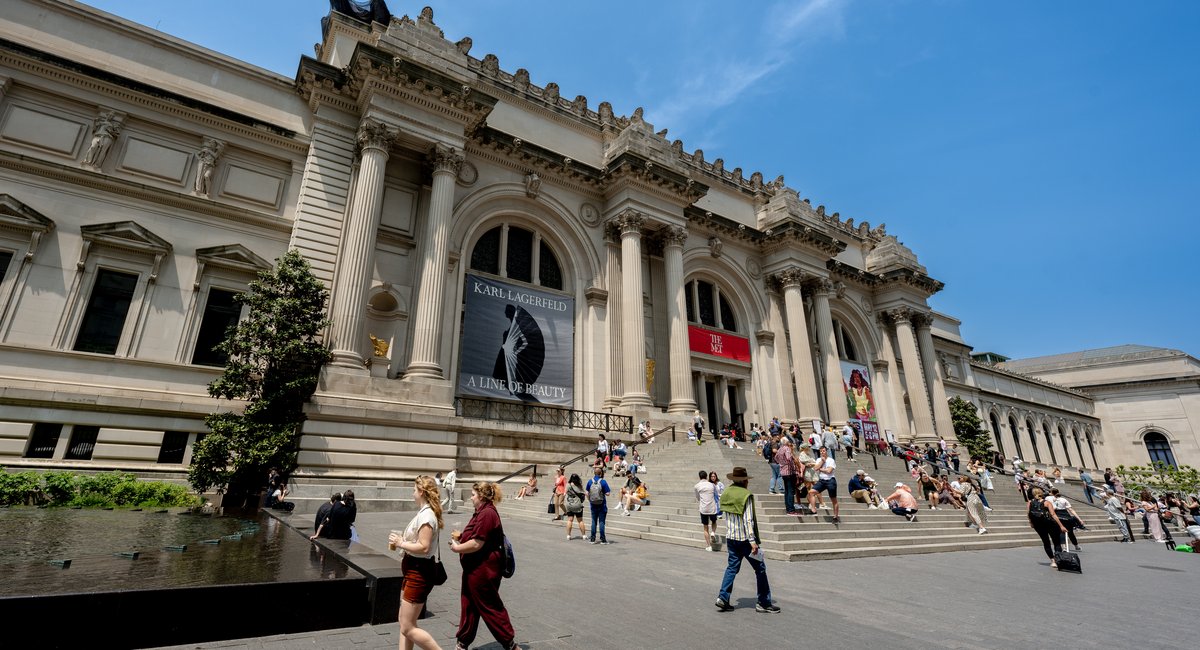
Some of New York City’s most cherished museums, cultural institutions and Central Park buildings have run up tens of thousands of dollars in fines for fire code violations in the past two years — but the city has not been collecting them.
From 2023 through 2025, the FDNY issued dozens of summonses at places like the Metropolitan Museum of Art, the American Museum of Natural History, and the Museum of the City of New York for failing to prevent fire alarms from going off when there is no emergency, records reviewed by Gothamist show.
But the institutions are part of public-private partnerships with the city, meaning they operate on city-owned property and receive public capital investments. Instead of issuing violations to the private institutions, the FDNY issued them to a city agency: The Department of Cultural Affairs. When the city fines one of its own agencies, it generally doesn’t collect — because that would be the same as the city paying money to itself, according to Marisa Senigo, a spokesperson for the city’s Office of Administrative Trials and Hearings.
The practice goes against a procedures manual for members of the Cultural Institutions Group, a coalition of nonprofits that operate museums and other institutions in the city. That manual says the institutions are responsible for paying any fines from regulatory agencies. A spokesperson for the Department of Cultural Affairs said the nonprofits are responsible for addressing all violations at their institution, but did not specifically say they are responsible for paying these fines.
The cultural institutions in question have a range of budgets, but they include some of the city’s most well-known and best-funded museums. The Metropolitan Museum of Art, for example, recorded a net income of more than $400 million in 2025.
The Metropolitan Museum of Art did not respond to a request for comment, and the Cultural Institutions Group referred questions to the city.
Stephen Louis, a law professor and former chief of the legal counsel division at the city’s Law Department, said the practice is likely a benefit the city gives its important cultural partners — but it could raise questions about fairness.
“One could open a whole other can of worms,” Louis said. “Like how come these entities … get covered by these advantages — official and otherwise — and others don’t?”
The violations
From 2023 to 2025, the FDNY assigned at least 65 summonses to the Department of Cultural Affairs, rather than to the cultural institutions where the violations occurred, according to records reviewed by Gothamist.
The vast majority of the summonses were for failing to prevent a fire alarm from going off when there was no emergency. The summonses for that violation were not signed and did not include a date or the printed name of the FDNY employee who issued it, details that are typically included on tickets.
The records show the violations happened at big-name institutions like the Metropolitan Museum of Art and the American Museum of Natural History, but also at less-frequented institutions such as Snug Harbor on Staten Island and the Brooklyn Children’s Museum in Crown Heights.
The FDNY issued at least eight violations at the Central Park Boathouse, but assigned the tickets to the Department of Cultural Affairs. The boathouse is city-owned property that is operated by Legends Hospitality, a private company, according to city records. In February 2023, then-Mayor Eric Adams announced the city would give Legends a 10-year lease for the space and allow it to operate boat rentals and a restaurant in the building.
Legends Hospitality did not respond to a request for comment, and the FDNY did not immediately say why it assigned Cultural Affairs to summonses issued at the Central Park Boathouse.
The FDNY also did not respond to a question about if the alarm issues at the buildings had been corrected, but the documents reviewed by Gothamist show repeated violations at some of the properties.
The FDNY assigned nine summonses to Cultural Affairs for violations at the Metropolitan Museum of Art in those years, for example. Five of those summonses were issued at the museum from March to May in 2025, according to the documents.
‘Trying to help’
Stephen Louis, the law professor, said the fines being written off at various cultural institutions could be because of the relationship the city has with the nonprofits that operate them.
Because the city invests in these institutions and gives them breaks on rent at city-owned property, the city turning around and collecting fines from them could be similar to the city fining itself, Louis said.
“Assuming this is a citywide policy … it would be based on a similar premise that the city is trying to help these organizations in various ways,” Louis said.
“So it’s like looking for any way, short of just writing them a big check, to help them out, and this would be another unofficial way of allowing them to not pay fines,” he added.