
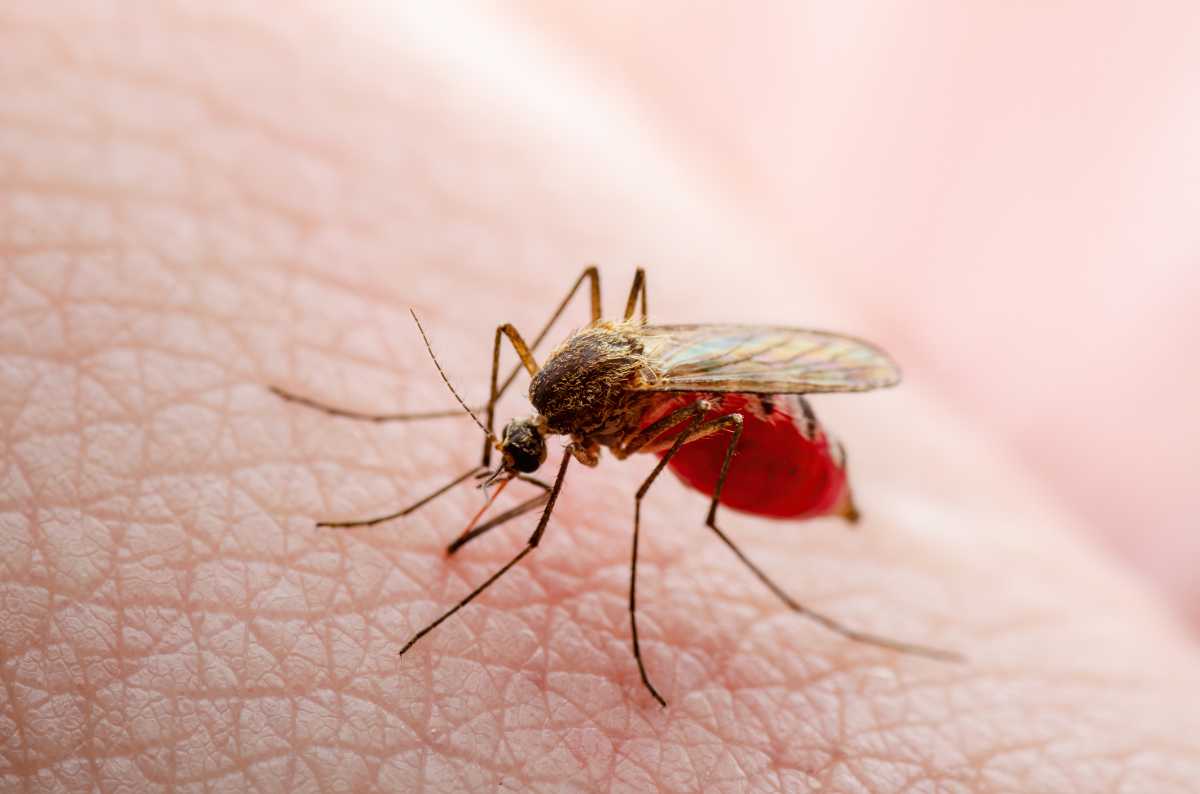
New York City has reported its first case of West Nile virus this year amid increased virus activity in mosquitoes across all five boroughs, health officials said Wednesday.
The city Health Department said the infected person lives in Manhattan and had spent time outdoors both in the city and at several locations outside of the five boroughs. The department did not say whether the infection occurred in NYC or elsewhere.
The case comes as the Health Department has identified 1,284 mosquito pools testing positive for West Nile virus citywide this year, including 504 in Queens, 354 on Staten Island, 252 in Brooklyn, 123 in the Bronx and 51 in Manhattan. Earlier this month, department data showed 612 positive pools, compared with 326 at the same point in 2025.
“West Nile virus is spread by mosquito bites and cannot spread from person to person. The good news is it’s preventable,” Health Commissioner Dr. Alister F. Martin said in a statement Wednesday. “With mosquito season in full swing, we’re encouraging New Yorkers to take extra precautions to minimize the risk of mosquito bites.”
The human case follows several weeks of increased mosquito-control efforts prompted by the department’s surveillance findings.
Since July, the Health Department said Wednesday, it has conducted eight targeted mosquito-control operations in neighborhoods where West Nile-positive mosquito pools were detected, including recent treatments in Queens, Staten Island and Brooklyn.
The department said those operations typically reduce adult mosquito populations by 70% and West Nile-positive mosquito pools by more than 85%.
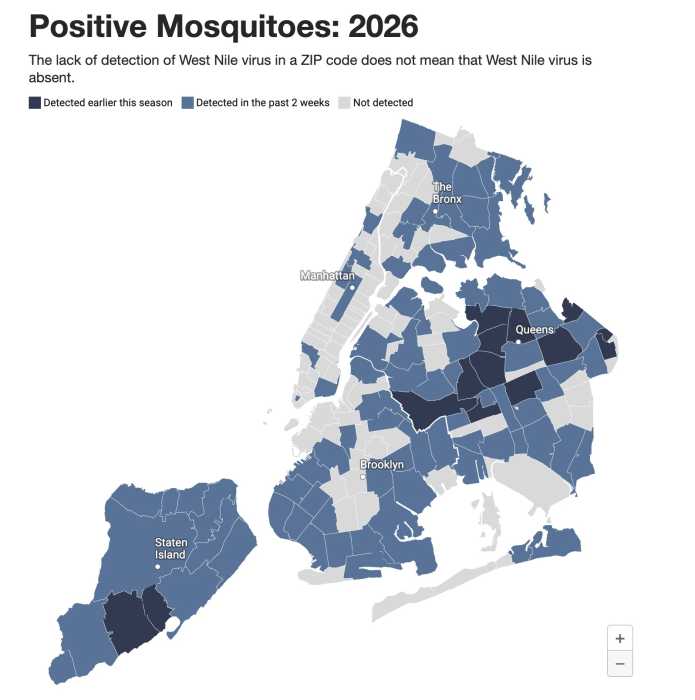
Mosquitoes carrying West Nile virus are present in New York City each year from June through October, with activity typically peaking in August and September, according to the Health Department.
Most people infected with the virus have no symptoms, the department said, while some may develop fever, headache, muscle aches, rash and fatigue.
About 1 in 150 infected people can develop West Nile neuroinvasive disease, a serious and potentially fatal illness affecting the brain and spinal cord that can lead to changes in mental status and muscle weakness and require hospitalization, according to the department. People 60 and older and those with weakened immune systems are at greater risk of severe illness.
Health Department surveillance data show one case of West Nile neuroinvasive disease listed in Manhattan, the more serious form of the infection that affects the brain and spinal cord. The department’s announcement did not provide the person’s age, current condition or whether they were hospitalized. amNewYork is awaiting further information.
Nationally, 222 human cases of West Nile virus have been reported so far this year, according to CDC data, including 76 in Arizona, 31 in Texas and 29 in California.
The Health Department is urging New Yorkers to use EPA-registered insect repellent, wear protective clothing, limit outdoor activity around dawn and dusk and eliminate standing water where mosquitoes can breed.