
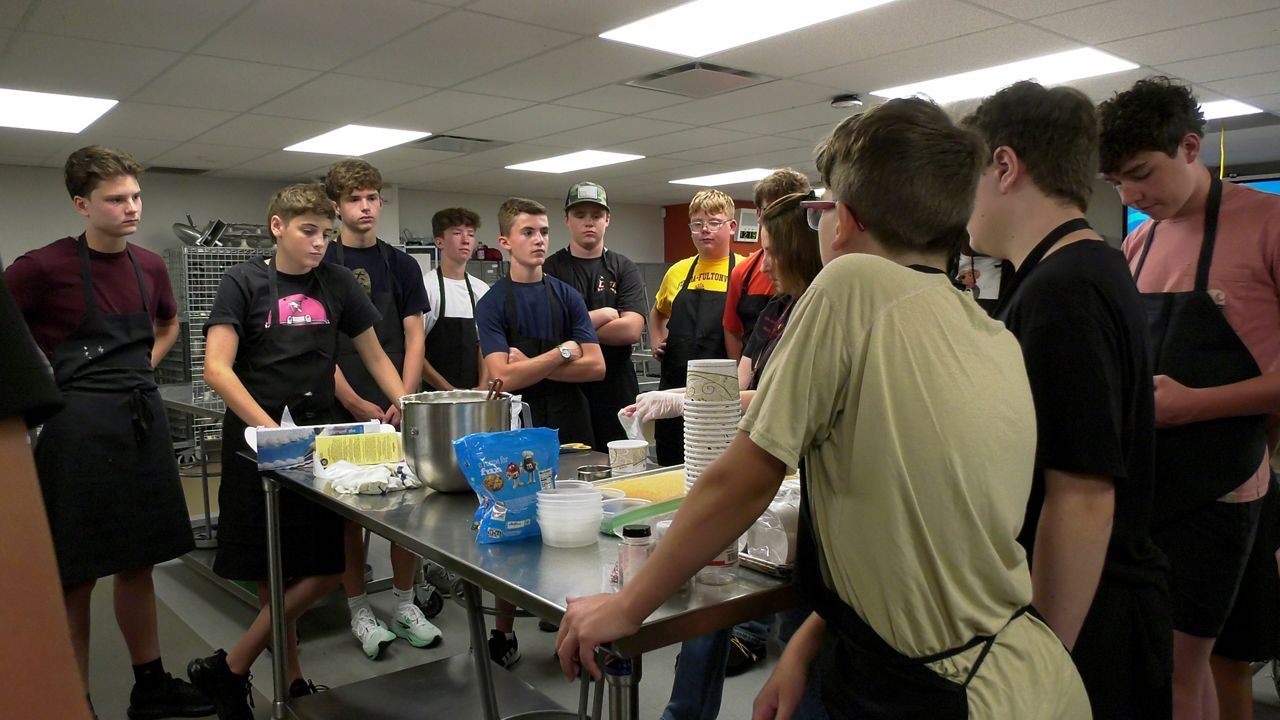
While many students spent the final weeks of summer vacation relaxing, dozens of Capital Region students used the break to explore possible careers at Questar III BOCES’ Career and Technical Education Summer Camp.
The camp gave students entering eighth through 10th grades hands-on introductions to fields, including culinary arts, automotive technology, electrical work, welding, construction and criminal justice.
For Jenna Plummer, an incoming eighth grader, the chance to try several different activities helped broaden her thinking about what she might want to do after high school.
“Learning how to make a switch for a place like wires and stuff,” Plummer said. “And then yesterday, it was building a birdhouse and learning how to use Johnson. And then today, it was probably making a pizza.”
Before attending the camp, Plummer said she was interested in becoming a nurse because she wanted to help people.
“I just wanted to help people that were in need,” she said.
Now, she said culinary arts has joined nursing on her list of possible future paths.
“I also want to be more of a chef, because I really love cooking and stuff,” Plummer said.
Questar III BOCES’ camp is designed to give younger students a preview of career and technical education programs they could pursue later in high school. The 2026 camp was offered to rising eighth-, ninth- and 10th-grade students and included exploration of automotive, construction and culinary fields, among others.
Eric Papandrea, principal of the Robert H. Gibson Technical School at Questar III BOCES, said the experience gives students and families an opportunity to see whether technical education may be a fit.
“They’re gaining some hands-on learning and some hands-on exposure,” Papandrea said. “And I think for not only them but their parents that want them to do this camp, they see the opportunity.”
Faculty members said the camp is not intended to force students to choose a career early. Instead, they hope it shows students there are multiple routes after high school, including college, career training and skilled trades.
Papandrea said the demand for hands-on workers remains significant, even as artificial intelligence changes other parts of the economy.
“AI right now can’t put in a new sink, right? It can’t do welding, right? We need skilled tradespeople for that,” he said.
The camp’s focus comes as more young adults say they are interested in construction careers. A National Association of Home Builders survey found the share of adults ages 18 to 25 interested in construction trades doubled from 3% in 2016 to 6% in 2026. The survey found 73% cited good pay as a major benefit of trade work, while 65% pointed to the opportunity to gain useful skills.