
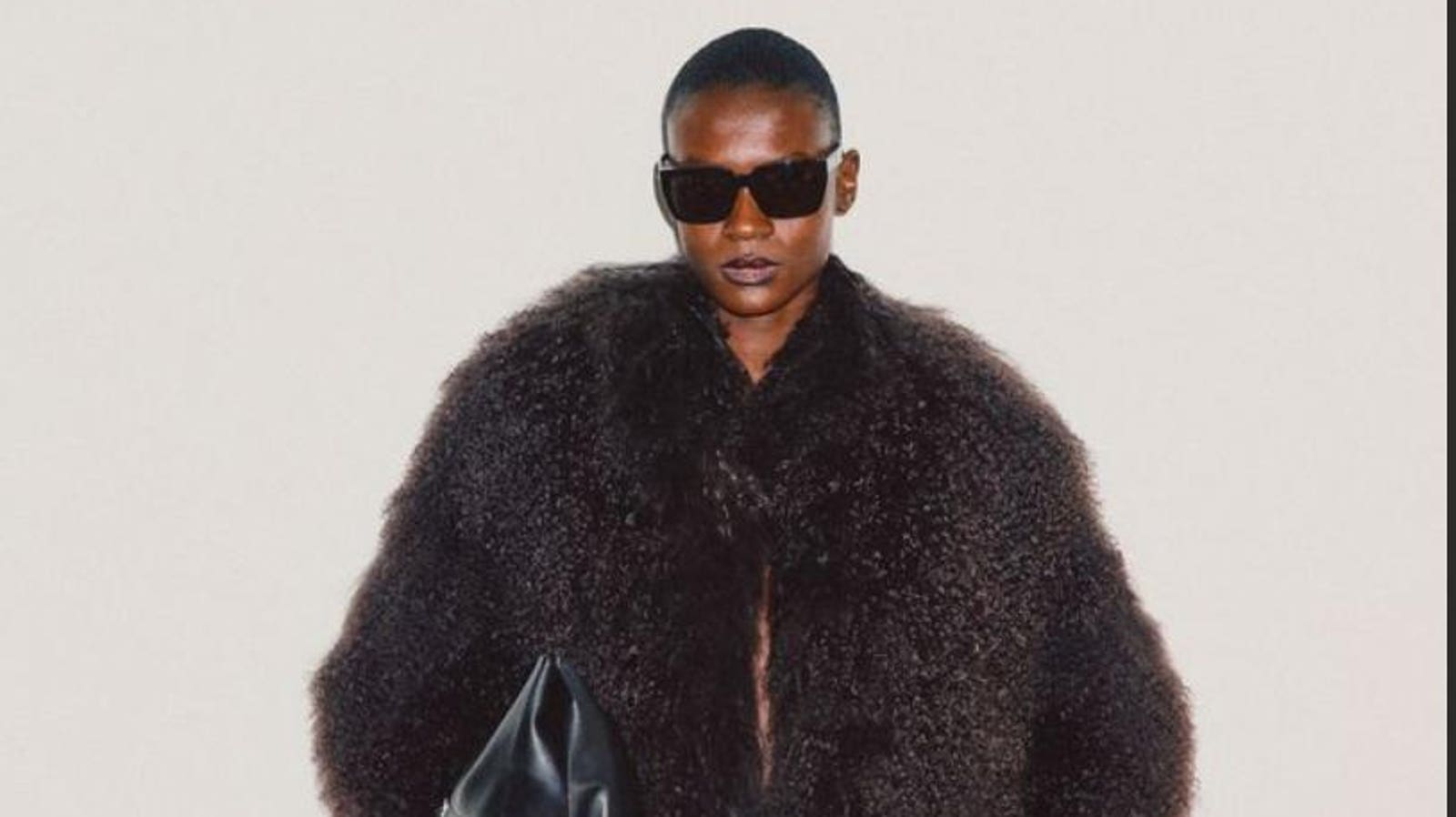
Robert Rodriguez is leading a new era for Derek Lam as its Creative Director through a reimagined vision of a New York woman.
Derek Lam
Like most fashion people in August, Robert Rodriguez isn’t frolicking on the Med. On this end-of-summer afternoon, he’s in his New York City office prepping for the fall shows. The designer is set to present the second season of his vision for Derek Lam, the line whose voice was loud in defining 2000s New York’s fashion with its constructed-but-unfussed look.
He’s been the Creative Director since the end of 2025, after Lam sold the entire brand and its assets to Public Clothing Company (PCC) in 2020. Lam himself exited the company entirely in 2023 after staying on as Chief Creative Officer for a few years after the sale.
And as PCC’s repositioning strategy is now very much in play, it’s calling on the thing that most brands with new Creative Directors hang their hats on: DNA.
The obvious nods are there. In Rodriguez’s first collection, he showed architecture, minimalism, warm tones, inspired construction, and a touch of edge to create an idea of modern casual that eschews Gen-Z’s baggy trousers and baby-tees for something with real tailoring. They’re clothes that hold true shape and that are built upon instead of merely put on.
Because in Rodriguez’s world, to be chic and to be casual is the definition of cool.
“I love fitting. I love textiles. And great design is great design, and I fit it all into this feeling of coolness in sportswear,” says Rodriguez.
“Every garment should have purpose, longevity, and emotional value to it, and I think that’s what American fashion should be.”
Robert Rodriguez
While both Lam and Rodriguez’s careers started decades apart, there are uncanny matches between their paths. Though they share similar footprints, it’s also interesting to see the opposite roads they took to converge on the same brand.
Both grew up in American garment manufacturing families started by their immigrant parents or grandparents. They are both bonded by a shared geographical history; the first place Rodriguez lived when his parents emigrated to the US from Cuba when he was 5 was in San Francisco’s Chinatown, the same place where Lam’s family’s factories were based.
“I was the only Cuban,” Rodriguez reminisces. “I didn’t speak the languages, Cantonese or English, I only spoke Spanish.” Rodriguez’s family relocated to Miami 7 years later.
They both hold design degrees from esteemed New York institutions, Rodriguez from FIT (he graduated in its golden era circa the Nina Garcia days) while Lam is a Parsons alum. They came up under luxury designer behemoths before diving into commercial projects at sportswear-oriented brands, and helmed major houses along the way–Rodriguez as Creative Director of Halston, and Lam in the same position at Tod’s.
Robert Rodriguez is recognized as one of fashion’s respected design talents. Having been hired at Christian Dior right out of college, he has helmed labels such as Halston, where he brought the house back to the Met Gala for the first time since in decades in 2021.
Derek Lam
Rodriguez believes casual clothing should be chic through construction, architecture and tailoring.
Derek Lam
Architecture runs deep in both designers’ work. Rodriguez developed his love for it through exposure from his father’s real estate development business, and Lam’s archive is an array of direct references to his love of architecture, such as the spring 2012 collection based on Richard Neutra’s most famous home, the Kaufmann Desert House. Lam’s SOHO store, void of walls and shaped with curved acrylic partitions instead, utilized architecture to create a container for clothes.
“I love shapes, and that’s why I love architecture because for me, designing clothing is like designing a building, it’s always about shape, right?” says Rodriguez.
With similar blueprints, it should hardly come as a surprise that their design vocabulary shares some of the same words–tailored, elegant, construction-heavy, detailed. But their careers were born of opposite training grounds.
“I think that women in New York have changed.”
Robert Rodriguez
Rodriguez cut his teeth at Christian Dior, and as he tells it, the job “wasn’t commercial, it was about fantasy and expressing myself however I wanted”, through gowns, embellishment, and technique for technique’s sake. It was later, as Creative Director of Laundry by Shelli Segal, which he touts as the “first pioneer of contemporary”, that he learned to combine artistic freedom with commercial sensibility.
“Ballgown skirt? Of course. Girls love ballgown skirts.” That’s Rodriguez describing the moment he figured out how to mesh Dior-trained fantasy with commercial sportswear by pairing cashmere sweaters with ballgown skirts at Laundry.
But Lam spent his formative years absorbing American sportswear’s pragmatism under the king of it, Michael Kors, a designer whose work was steeped in an exacting, construction-first approach to sportswear, never belittling the category, but rather, elevating it. And yet, it couldn’t be more different than Dior.
The result is two designers who learned to handle restraint. Lam learned it from precision, and Rodriguez through excess.
New York sensibility is the foundation upon which Derek Lam was built and is the basis of Rodriguez’s vision today.
Derek Lam
It seems almost unfair to compare the two, but it’s natural to do when a Creative Director takes over a brand while the namesake is still alive, especially when DNA is called upon to define a brand’s future. Each time this happens–Valentino, Dries Van Noten, Proenza Schouler, and Carolina Herrera had similar takeovers–the reporting and reviews read almost like a connect-the-dots of sorts between the outgoing and the incoming creatives.
Here, the connections especially make sense. Of all the strategic decisions the executives at PCC could have taken, including licensing the name or forgoing NYFW runway shows, the path they chose walk is to walk in the footprint Lam created and double down on it.
Danielle Alalu, President of Derek Lam, recognized Rodriguez as a foundational match to the brand. “Once Robert and I talked about his vision for the brand, I knew that we were headed in the right direction and making the right investment,” she tells Forbes.com.
Finding Your Roots
Rodriguez is a New Yorker. This matters. He wants the brand to have a say in defining current American fashion, just as it did at its start, and the heart of Derek Lam is New York.
“I think that women in New York have changed,” he says. It’s an observation well-earned after having lived in New York through the last drips of the 80s, the 90s, the 2000s, and now through the 2020s.
“Back then sportswear was different, very tailored. Everyone wore a suit. They worked in offices, on Wall Street, and dressed corporate because that’s how people wanted to see them,” Rodriguez says.
“But clothes have to have purpose today, and functionality, with a bit more freedom. I consider this every day, and it allows me to push a little more, and not be so focused on certain silhouettes or stereotypes.”
“The future of fashion, to me, is not about creating more, it’s about creating better,” Rodriguez says.
When asked what American fashion is versus what it should be, the answer is simple for Rodriguez. “Every garment should have purpose, longevity, and emotional value to it, and I think that’s what American fashion should be.”
It’s a designer’s quiet case against disposability, even if unnamed, in an industry that has trained its customers to expect it.
And still, Rodriguez is explicitly not nostalgic. “I’m not the type of designer that looks back too much, my job here is to evolve the brand.”
He’s hardly a stranger to evolution as his entire career is based on taking big chances. While his mother’s sportswear factory was his first training ground–he used to spend every day after school there–it could have been a place to start a design career without formal training, but he felt there was more to learn artistically as an avid sketch artist and illustrator since age 5.
Both Lam and Rodriguez imbue architecture into their designs with a focus on shape and construction.
Derek Lam
As Rodriguez’s parents expected him to attend college, “Before I decided to go into fashion, my parents wanted me to be a dentist, I said, there’s no way!” he laughs, so at age 18 he moved to New York to attend the Fashion Institute of Technology, pursued an education in formal fashion design training, and has lived in New York ever since. It all happened with his mother behind him, a woman who Rodriguez describes as one of his biggest supporters and someone he admired for her fashion business.
Indeed, it sounds comical today given how antithetical dentistry is to design, but his experience encapsulates the very well-known story of immigrant-family expectations towards education and excellence. All of his siblings and family are doctors or surgeons, “Except for me,” he says with a smile.
Today, his work at Derek Lam is less about a titanic shift and more about continuing on an instinct he sharpened at 25, the same one that inspired him to pair a ballgown skirt with a cashmere sweater, fulfilling the idea that fantasy can be made wearable every day.
And so it feels like a quieter, more clever ambition than most creative direction shifts. One not framed with fireworks, but on a bet that women still want incredible design they can wear every day, and that glamour, American sportswear, and New York fashion are all still synonymous.
“The future of fashion, to me, is not about creating more, it’s about creating better,” Rodriguez says.
It sounds a bit like a slogan, but it’s a reiteration of that initial double down on Lam’s original vision, and that in an industry obsessed with speed, the brand that invests in growing its roots instead of velocity might be the one that’s making the most radical move.