
Here’s a problem that anyone who wore a “Save the Whales” T-shirt back in the ’80s or ’90s could have only imagined:
Whales have made such a comeback off Long Island that lawmakers are taking steps to better educate the public on how we can safely share the water with them.
It’s an extraordinary conservation success story.
But first, some background.
Whales began disappearing from New York Harbor in the late 19th and early 20th centuries. Cleaner waters and baitfish drew them back.
But now they find themselves in some of the busiest waters in the U.S., putting them in the path of thousands of recreational boats, fishing vessels and commercial traffic on a daily basis.
With more whales in New York waters comes a new challenge: keeping both the whales and people safe.
So this month in Montauk, Gov. Kathy Hochul signed the New York Whale Awareness Act.
The legislation is aimed at reducing dangerous encounters between vessels and whales by putting more information into the hands of New York boaters.
And the timing is no coincidence.
Earlier this summer, the nonprofit Gotham Whale added the 500th individually identified humpback to its New York-area catalog.
“When [Gotham Whale] first began counting in 2012, researchers were identifying just a few dozen new whales each year,” said Carl LoBue, New York oceans and fisheries director for The Nature Conservancy. “There was a time when seeing a whale here was a rare event. Now, there are multiple whale watching boats spotting whales nearly every day and many times you can see them from the beach.”
What the law does
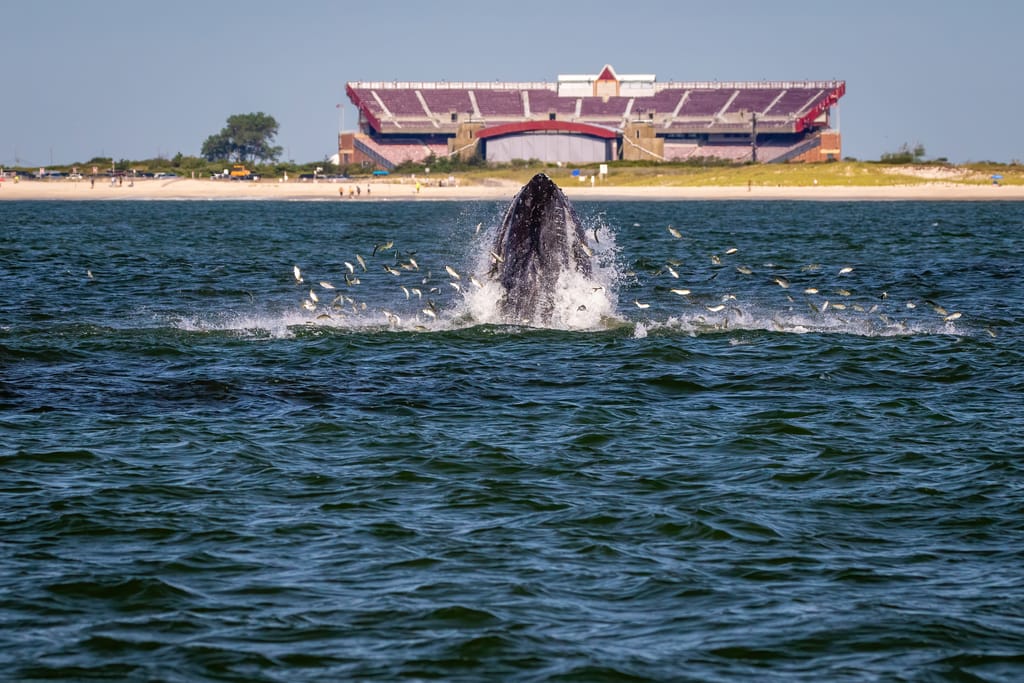 A humpback whale feeding off Field 6 at Jones Beach with the amphitheater in the background. (Credit: Brian Doherty, courtesy)
The new law directs the state Department of Environmental Conservation to establish educational guidelines and recommendations aimed at reducing interactions between vessels and marine mammals and preventing vessel strikes.
It also integrates whale-safe boating education into New York’s existing boater safety courses and vessel registration process.
The goal is to teach boaters best practices for navigating around whales and other marine mammals before an encounter happens.
“The New York Whale Awareness Act ensures that everyone enjoying our state’s waterways has the tools and knowledge needed to navigate safely, avoid dangerous collisions and protect these special creatures,” Hochul said in announcing the legislation.
LoBue sees education as an important part of addressing that problem.
“I was tired of seeing preventable injuries and near misses, that’s why The Nature Conservancy and our partners created the free Eyes on the Water: Boating with Whales course, which teaches boaters how to recognize signs of whale activity, understand common behaviors and navigate safely,” LoBue said. “The new law creates an important opportunity to get this kind of information to many more people.”
Why so many whales?
The answer begins with decades of conservation.
LoBue pointed to the Marine Mammal Protection Act, Endangered Species Act and the near elimination of commercial whaling around the world as important factors in the recovery of whale populations.
But there’s another major reason they’re showing up around Long Island: food.
“When whales are in New York they are here to eat,” LoBue said.
Many of the humpbacks appearing close to Long Island’s shoreline are feeding on Atlantic menhaden, commonly known as bunker, a schooling fish that serves as an important food source for whales and other marine predators.
The availability of those forage fish can play a major role in where whales congregate.
“Whales follow their food, so there isn’t one place where they’re always going to be,” LoBue said. “That’s part of what makes this comeback so exciting: these enormous animals are feeding and migrating through the same waters where Long Islanders fish, boat and spend their summers.”
Humpbacks account for many of the most noticeable sightings because of their acrobatics and tendency to feed close to shore.
But they’re hardly alone.
Fin whales, the second-largest whale species on Earth, and smaller minke whales are also commonly observed around Long Island. Critically endangered North Atlantic right whales, with fewer than 400 remaining worldwide, have been spotted in New York waters as well.
LoBue recalled seeing three right whales during a single trip to Hudson Canyon.
Whales have even ventured inside Long Island’s bays and harbors.
The new dangers
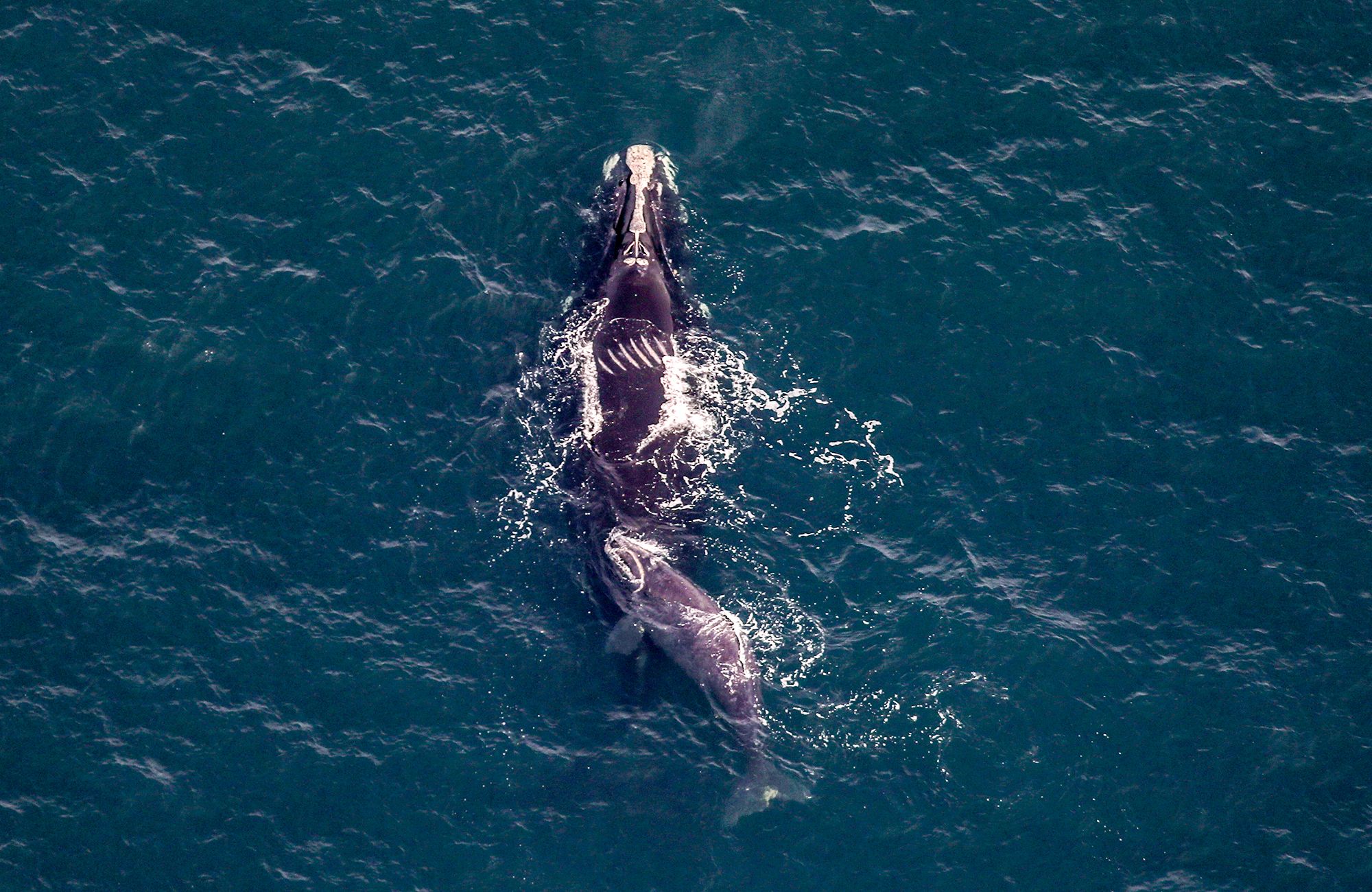 A mother North Atlantic right whale with propeller scars, along with its calf, taken in 2025. (Credit: NOAA Northeast Fisheries Science Center)
More whales inevitably mean more opportunities for them to encounter boats.
“It is wonderful to see more whales off Long Island, but they’re returning to an ocean that’s very busy, with recreational boats, fishing vessels and commercial traffic all sharing the same space,” LoBue said.
Vessel strikes can kill or seriously injure whales.
They can also put people in danger.
A collision with an animal weighing tens of thousands of pounds can injure passengers, damage a vessel or even throw people into the water.
“Protecting whales and protecting people aren’t competing goals,” LoBue said. “We need to be vigilant and practice responsible boating practices to protect whales, captains, and their passengers.”
“One of the first steps is demystifying the issue,” he continued. “If you are a whale, chances of getting hit by a boat or entangled in fishing gear are shockingly high — and there are steps we can take as boaters and fishermen to reduce that.”
And the lessons aren’t only for whoever happens to be behind the wheel.
“The course is not just for captains — everyone on a boat is crew,” LoBue said. “Even a 5-year-old crew member could be the first to notice when something is in the water.”
What to do
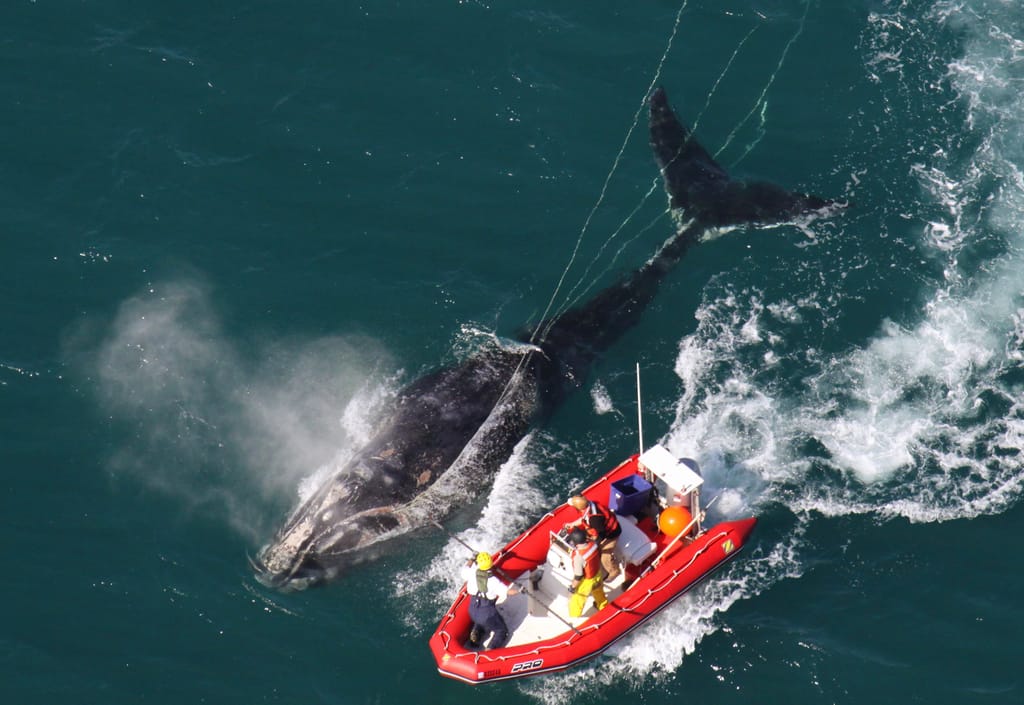 A marine rescue team attempts to disentangle a North Atlantic right whale. (Credit: NOAA)
If you happen to encounter a whale on the water, the first move is simple: slow down.
LoBue said boaters should determine what they’re seeing, watch which direction the whale is swimming and look for other whales before charting a safe course away from the animal.
There are also clues boaters can learn to recognize before a whale ever surfaces.
Feeding birds, schools of fish breaking at the surface and even clusters of boats can indicate whales are nearby.
One of the biggest mistakes LoBue sees occurs when people are fishing near whales, spot fish breaking the surface somewhere else and race toward them at high speed.
A whale may already be underneath.
“Whales can stay below the surface for 10 minutes or more, but in shallow turbid water like we often have here, they are particularly vulnerable,” LoBue said.
For LoBue, the point isn’t to make Long Islanders fearful of encountering whales.
Quite the opposite.
“Seeing a whale while you’re out on the water is an incredible experience, and it’s something we should celebrate,” he said. “We just want every encounter to end the same way: the whale is safe, the boat is safe, and everyone onboard gets home with happy stories to tell.”
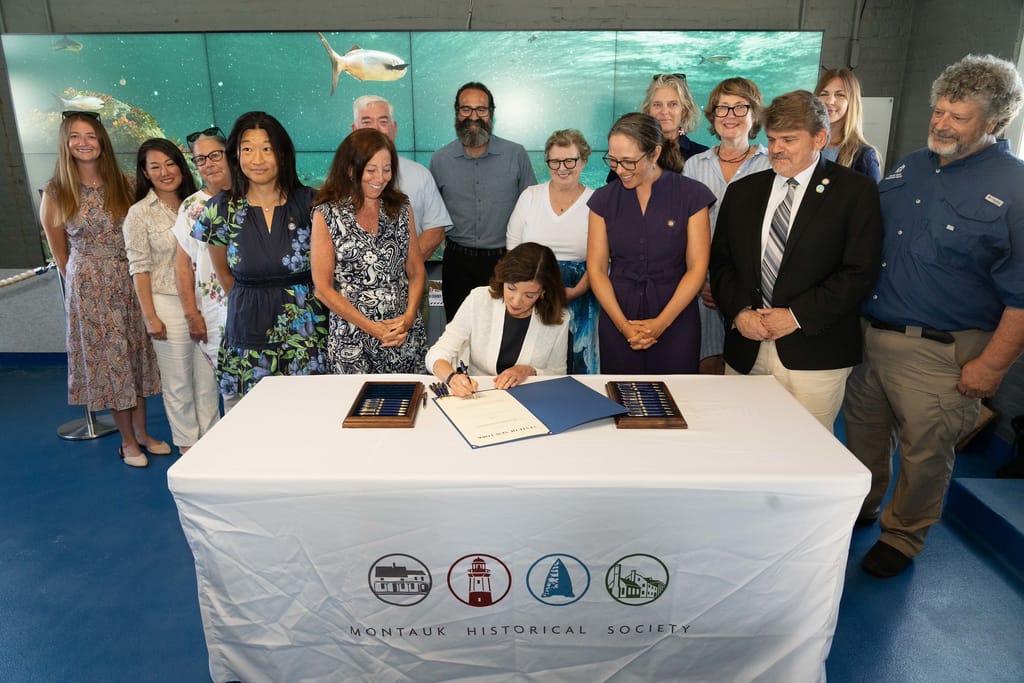 Governor Kathy Hochul signs the New York Whale Awareness Act in Montauk on Aug. 7. (courtesy/NYS)
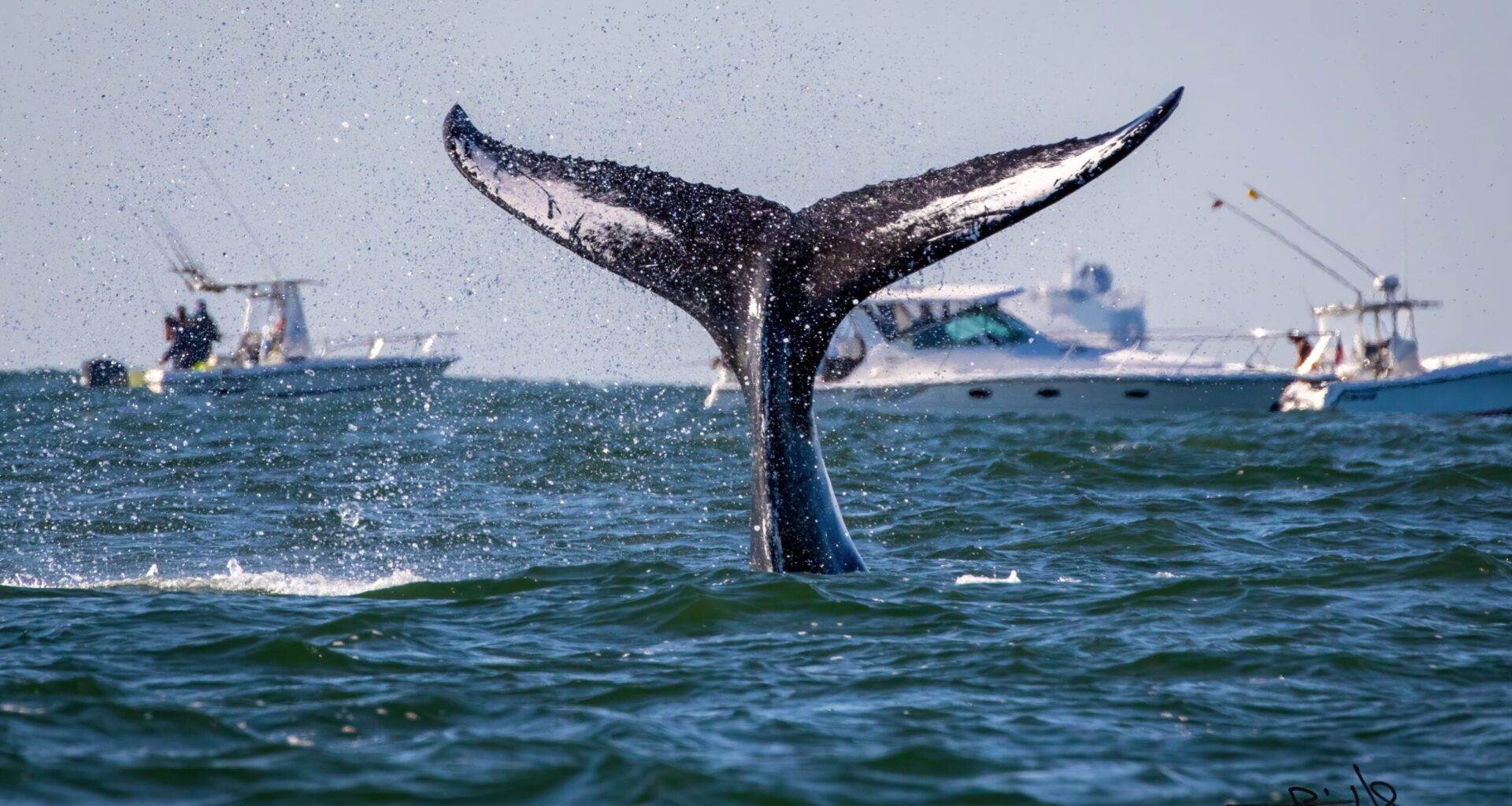
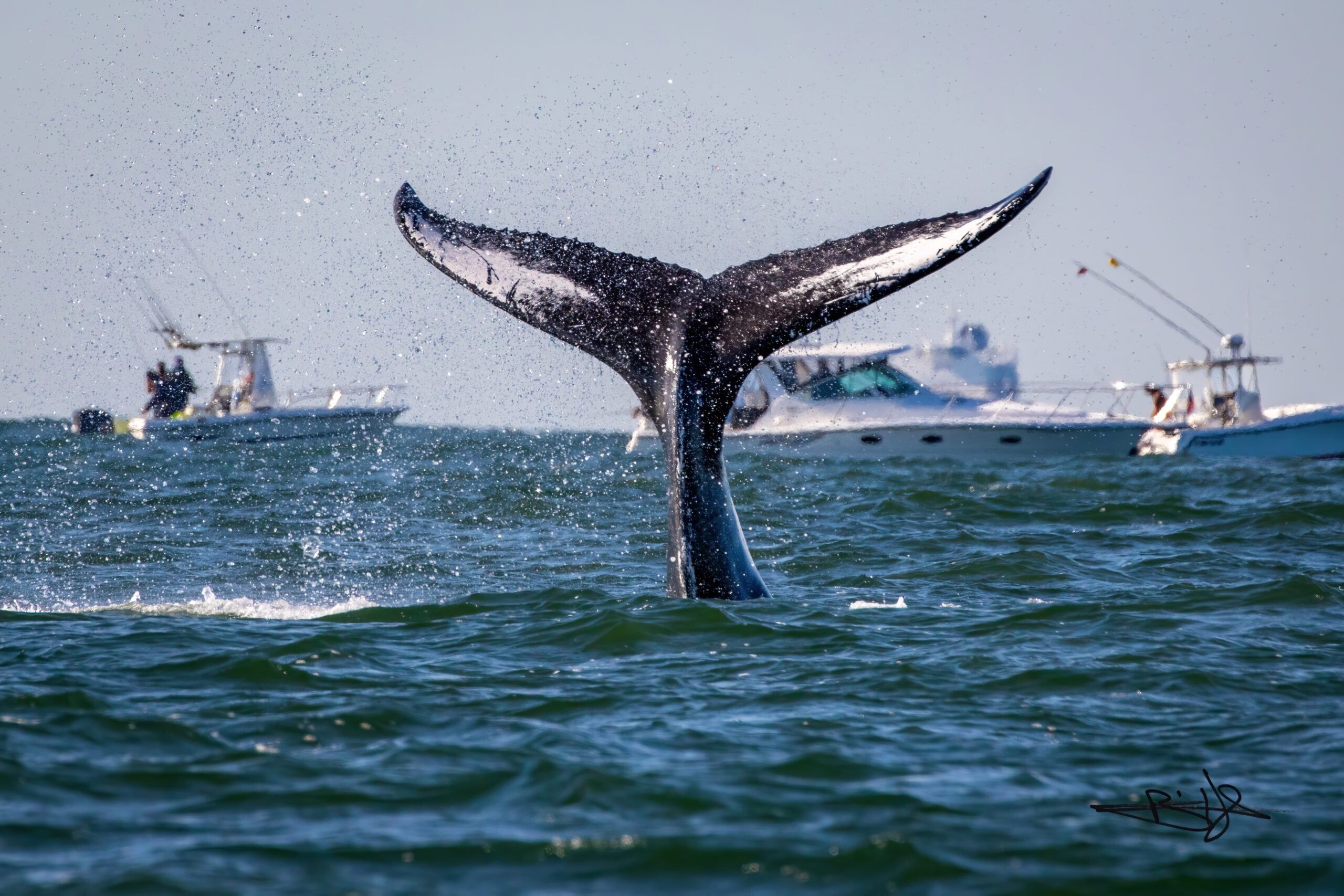
Top: A humpback whale swimming amid a group of fishing boats in the Atlantic Ocean off Nassau County. (Credit: Brian Doherty, courtesy)

Your Long Island news, delivered.
Subscribe to the GLI Newsletter — its free
Subscribe