
WASHINGTON — Gov. Kathy Hochul is directing agencies to process full November food benefits to 3 million low-income New Yorkers, even as the Trump administration Friday night asked the U.S. Supreme Court to prevent some aid from going out.
“We expect the first New Yorkers to begin having access to their benefits starting Sunday,” Hochul said in a statement Friday, the 38th-day of the government shutdown.
The decision by Hochul and other governors to issue full November benefits under the Supplemental Nutrition Assistance Program, or SNAP, came after word Friday from the U.S. Department of Agriculture, which oversees the food aid, that money would start flowing for the program again.
In a memo offering guidance to states, Patrick Penn, deputy undersecretary of Food, Nutrition and Consumer Services, had instructed that FNC is “working towards implementing November 2025 full benefit issuances” of SNAP, to comply with a U.S. District Judge’s decision on Thursday.
But as states like New York, Kansas, Pennsylvania and Oregon began fully resuming the food program — Trump administration lawyers were back in court, arguing that during the shutdown, the government should not turn to reserve funds to keep the funding at full levels.
By early evening, however, they were handed a second legal defeat in as many days in their fight to limit the funds going out. The U.S. Court of Appeals for the First Circuit refused to delay the full funding order from the judge the night before.
After that, the Trump administration quickly asked the U.S. Supreme Court to take up its request.
The food program formerly known as food stamps serves about 42 million Americans — 1 in 8 — mostly with lower incomes.
Other developments in the shutdown stalemate Friday included a new offer by Senate Democrats to resolve one of their central demands, that the renewal of expiring health tax credits be part of any deal to reopen agencies.
But the idea floated by Senate Minority Leader Chuck Schumer (R-N.Y.) — a one-year extension of those subsidies and a plan to continue broader talks next year — was quickly shot down by Republicans.
And a day that began with optimistic talk regarding negotiations closed with no hint, at least publicly, of real progress. A GOP bill written to ensure federal employees and active duty military troops get paid during the shutdown also got bogged down over Democratic concerns that President Donald Trump would not — like the SNAP benefits — follow what Congress passed.
The developments now leading to full SNAP payments in November was the biggest breakthrough, though.
A typical monthly amount that goes out in New York of SNAP benefits is approximately $640 million. The individual SNAP allotment is typically placed on an Electronic Benefits Transfer (EBT) card, and the benefits can be used to purchase groceries.
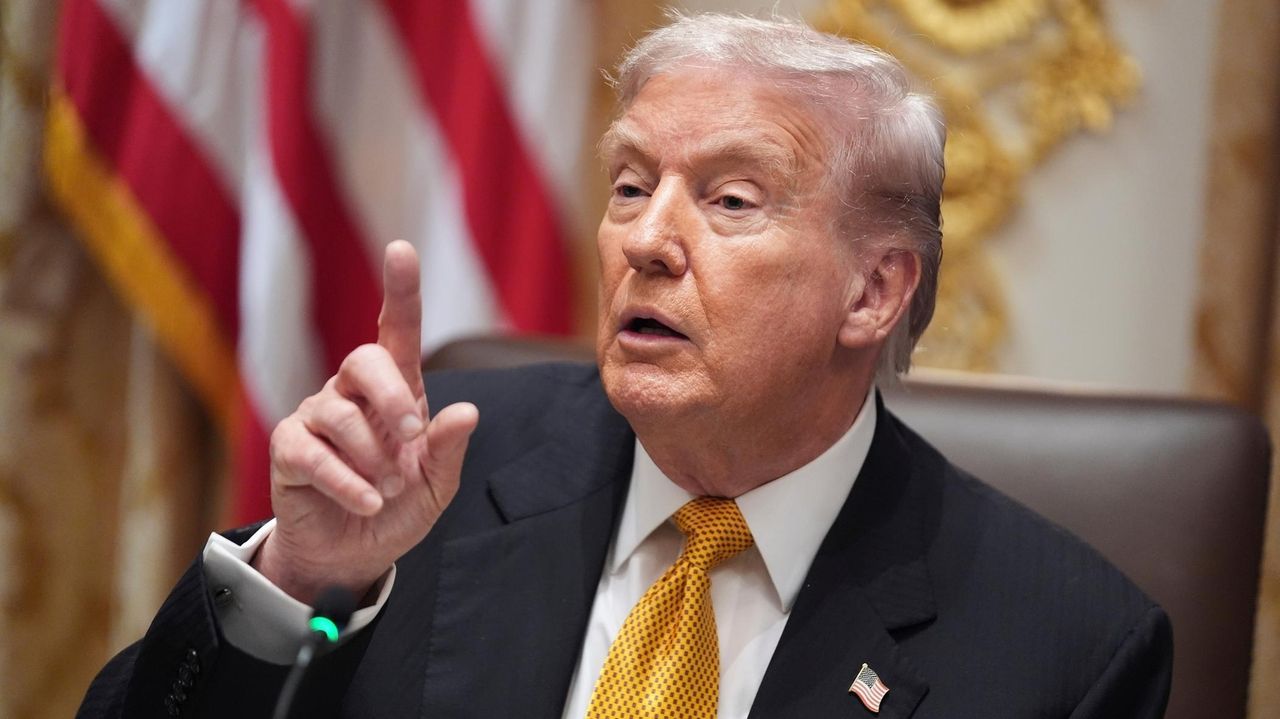
Meanwhile, Trump, speaking to reporters at the White House on Friday, continued to press Senate Republicans to eliminate the 60-vote filibuster threshold, which would allow major pieces of legislation including the short-term spending bill, to pass without Democratic votes.
“If we terminate the filibuster, the country will be open within 10 minutes after that termination,” Trump said when asked about potential off-ramps for the shutdown.
Asked by a Newsday reporter, what his push to scrap the filibuster meant for the prospect of bipartisanship over his next three years in office, Trump said: “If we terminate the filibuster we will have the most productive three years in the history of our country. If the filibuster is not terminated, then we will be in a slog with the Democrats, and very little for either party will be done.”