
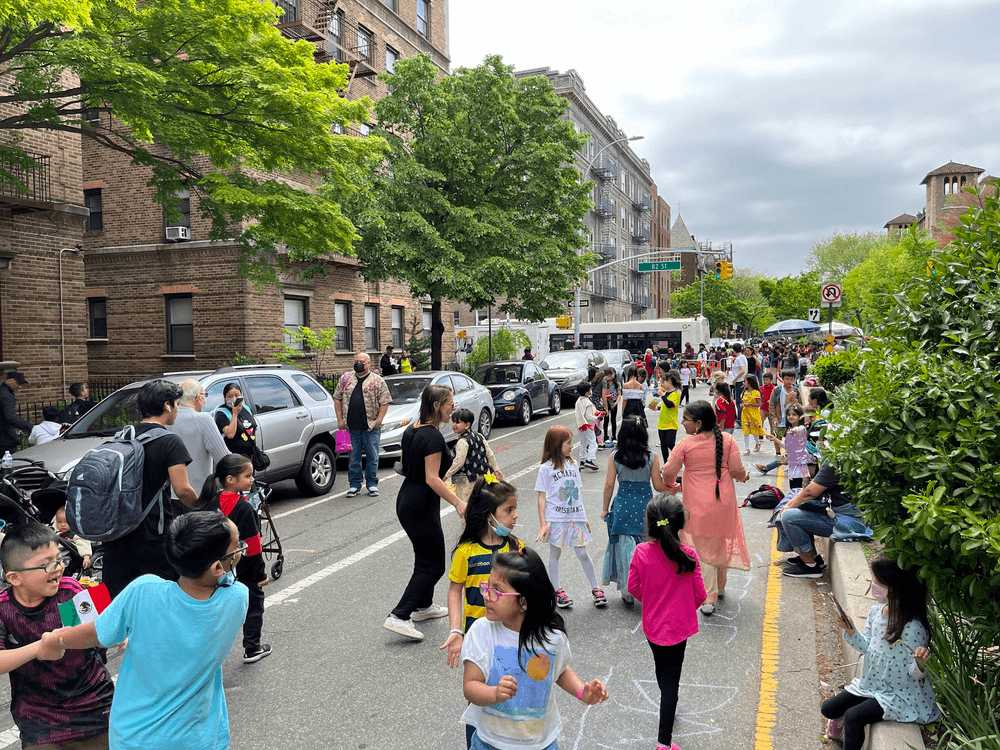
New York City Comptroller Mark Levine released Thursday a report detailing the low participation in “School Streets,” a city program designed to increase access to safe, outdoor space for NYC students.
The report, “The Right-of-Play: Expanding “School Streets” Access in NYC,” looked at the Department of Transportation operated program, part of the Open Streets program, and found that at the beginning of the 2025-2026 school year, 74 schools total and 48 public schools were taking advantage of School Streets.
School Streets allows schools to temporarily repurpose adjacent streets into outdoor spaces for physical education, outdoor lunch time, arrival and departure times, outdoor educational activities and other events. Levine said that around a quarter of NYC schools have no access to outdoor space at all.
“Students spend much of their day at school, and kids need to move, play and get outside in order to thrive – but too many New York City schools lack the outdoor space to give students those opportunities,” said Levine.
Schools that want to get approved to transform adjacent streets into outdoor spaces must go through a “cumbersome and lengthy approval process,” requiring that applicants develop multiple plans and get letters of support before a three month review period, according to the comptroller’s report.
Levine said the process was creating too many barriers and hindering School Street’s effectiveness and by extension, the health, safety and education of NYC students.
“Regular physical activity and time outdoors not only support their physical health but also their mental health, focus, and ability to learn,” Levine said. “We should make it as easy as possible to put that space to use. School Streets are a simple, low-cost solution to expand outdoor space, and we should make it as easy as possible for principals, parents and school staff to take advantage of it if they want.”
Levine’s report said out of 371 schools without any outdoor spaces, it identified 324 schools with an adjacent street which was likely eligible for the School Streets program.
To encourage a broader adoption of School Streets, the nonprofit policy organization Open Plans NYC partnered with transportation advocacy nonprofit Transportation Alternatives to create a toolkit helping with the School Streets application. Sabina Sethi Unni, a community planner at Open Plans told amNewYork in a statement that closing streets adjacent to schools would benefit communities in more ways than one.
“This program is a critical part of making New York’s roads safer for everyone while improving our children’s quality of life. Students shouldn’t have to worry about their physical safety when heading to and from school, or while they’re trying to play outside,” Sethi Unni said. “Open Plans continues to support schools that are interested in applying for School Streets, and we’re working tirelessly to ensure that the program grows and that the city pursues more permanent, robust solutions that create car-free plazas for our kids.”