
Common guidance holds that it can take about six months to acclimate to a new job. By that point, the nerves have calmed and it becomes easier to look clearly at what has worked, what should be avoided and what still needs to be discovered.
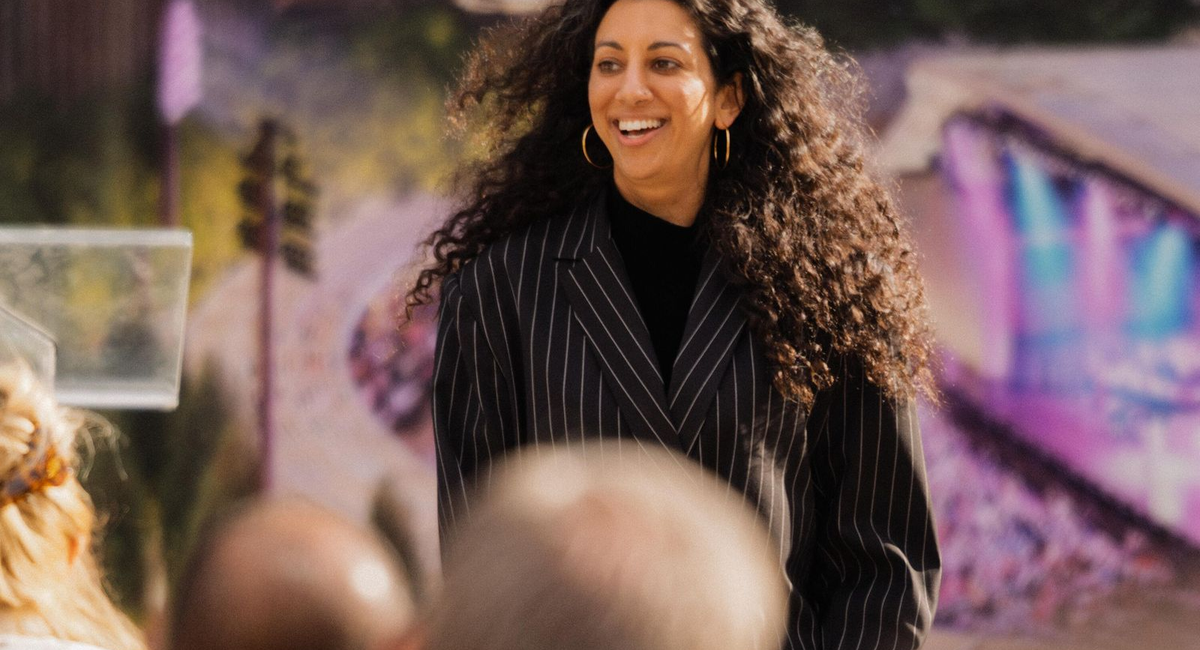
Diya Vij was appointed commissioner of New York City’s Department of Cultural Affairs — or DCLA — in late February, which puts her at six months overseeing the country’s largest municipal funder of artists and cultural programming. The department supports more than 1,200 organizations across the five boroughs, including major institutions like the Metropolitan Museum of Art, the Queens Botanical Garden and the Bronx Zoo as well as smaller nonprofits supporting public arts programming at the grassroots level.
Matters of the DCLA should concern all New Yorkers because, well, our tax dollars are funding it. But Vij said in a Wednesday interview with Gothamist that the department’s impact goes further: A healthy arts scene is vital to the city’s overall well-being.
“We know the presence of art in a neighborhood leads to better outcomes in health, safety and education,” she said. “We know it matters to the economy, to people’s bodies, to their relationships, to their ability to find each other. On a policy level, it’s essential to the full life of a New Yorker.”
Vij holds a prestigious and powerful position in the cultural world. But she said that she wouldn’t have been as eager to take it on had she not been asked by Mayor Zohran Mamdani. She was encouraged by his administration-wide focus on affordability, she said, as “artists are leaving the city for the first time in a really long time.”
“We know that,” she continued, “and that to me is a crisis to be solved.”
Budget negotiations consumed many of Vij’s earliest months on the job. DCLA received $323 million in the 2026-2027 budget, the highest amount ever allocated to the department. It allowed for the establishment of the Cultural Stability Fund, which Vij described as a pool of quick-fix grants intended to help struggling arts organizations, nonprofits and community organizations solve “the crises of the day.”
“Sometimes that’s like, your boiler burst or your rent just skyrocketed — everyday crises that might be the end of your business,” she said.
The fund, which will distribute $10 million annually over the next three years, will also help offset cuts to federal arts funding, rising health care costs and other financial pressures.
One of the keys to sustaining a healthy arts and culture scene is making it accessible to New Yorkers, Vij said. Among the department’s most recent initiatives is a partnership with the Theater Development Fund, which encouraged New York City high schoolers to enter a lottery giving away more than 2,000 free tickets to Broadway shows such as “Buena Vista Social Club” or “Two Strangers (Carry a Cake Across New York).”
The lottery is now closed, but high schoolers have until Sept. 13 to sign up for a free two-month membership to the Theater Development Fund, which grants them free and discounted tickets to participating museums and performing arts venues across the city.
Arts organizations “need these young people coming in, having their first encounters with art [and] going even deeper if they want to: joining a teen council, doing summer youth programs,” Vij said. “They are really diving in, because that’s the next generation of audience, of artists, of playwrights, of costume designers, of set designers.”
Vij was introduced to New York’s vibrant arts scene as a teenager making the trek from suburban Connecticut to see Broadway shows and concerts. But it wasn’t until she worked at the Queens Museum as a curatorial fellow that “my entire universe [began] to shape around art,” she said. Eventually, she followed the Queens Museum’s longtime director Tom Finkelpearl to DCLA when then-Mayor Bill De Blasio appointed him commissioner.
As part of her work in the department’s special projects unit, Vij helped launch a Public Artist in Residence program, which embedded arts in local government. She also managed various diversity, equity and inclusion programs.
“Having that stint in city government before really prepared me” for being commissioner, Vij said. “I came in [with] eyes wide open about the ways that being stewards of taxpayer dollars is really different than working in a private organization.”
She hesitates when asked about obstacles she has faced over the past six months, instead noting that the ability to allocate funding “is the greatest privilege and opportunity.”
“It’s truly amazing to be able to have that kind of impact,” she said. “But with anything you do, you also have to think about who you might be inadvertently leaving out, or what might be the unintended consequences of that. … The mayor has such a clear agenda and a clear way to get there. The pothole politics of it is really all of our mandates. How are people seeing that we’re working for them?”
Vij plans to continue drawing on her past stints at arts organizations such as Friends of the High Line and Creative Time as inspiration for how “art and life should be intertwined.” She was just a few months into a leadership role at Powerhouse Arts, a Brooklyn nonprofit, when she got the DCLA offer.
“I’ve been a part of a lot of different organizations, some really big, some really small,” she said. “The throughline is that I’ve worked with artists that love working with the community, that think community engagement is a big part of their art practice, and that are very interested in how art can be a catalyst to material change in the city.”
DCLA has hosted town halls across the city so Vij can hear as many firsthand concerns as possible.
“Something that is really important to me is being able to [devote] as much attention to individual artists and cultural workers as we do to the cultural organizations, from a policy perspective,” she said.
She added that New York City has funded the arts since the late 1800s, and she hopes to keep artists living and working in the city by helping alleviate some of their most pressing financial concerns.
“There’s a space for all the practices … the avant-garde, the experimental, the political,” she said. “All of it can happen here. But I truly believe it only happens here because there is robust public funding.”