
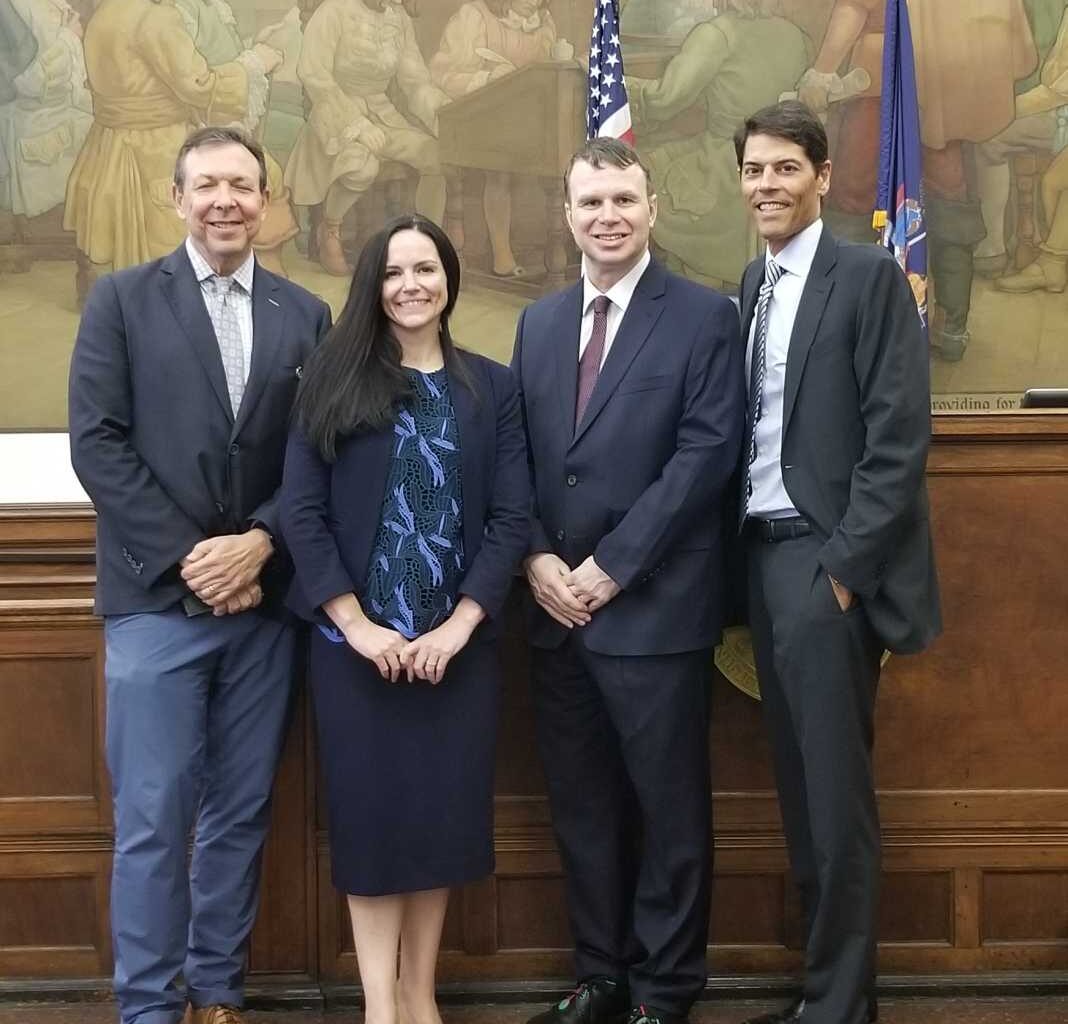
In collaboration with Administrative Judge Suzanne Adams and Justice James d’Auguste, the internship program has expanded in recent years. More than 400 high school, undergrad and law school students participated this summer and observed court proceedings, visited appellate courts, and assisted with legal research and drafting.
Interns are overseen by the judges for whom they work during the summer. As part of the program, the judges may choose their own interns, while others may prefer to have them assigned from a pool of resumes Justice Adams receives regularly.
The interns also participated in periodic “Lunch and Learn” sessions, featuring judges, lawyers and other professionals. The programs, curated by Kawtar Merfouk and Larisa Blinderman, provide opportunities to learn, network, and hear firsthand accounts about public service.
A wide variety of guest speakers participate in the Lunch and Learn series, including former Presiding Justice of the Appellate Division, First Department, Rolando Acosta, to Deputy Chief Administrative Judge for the Office of Justice Initiatives Edwina Richardson, a vast number of judges from New York and other counties, as well as lawyers from around the country coming to speak on a myriad of topics, including commercial litigation or transaction law, as well as aviation, insurance, criminal, family and entertainment law, as some of the topics interns have expressed their interests lay.
The following piece was authored by Tyrone Dayaram, a student at New York Law School who interned in the program this year:
Life as a commercial litigator, including how successful attorneys got there
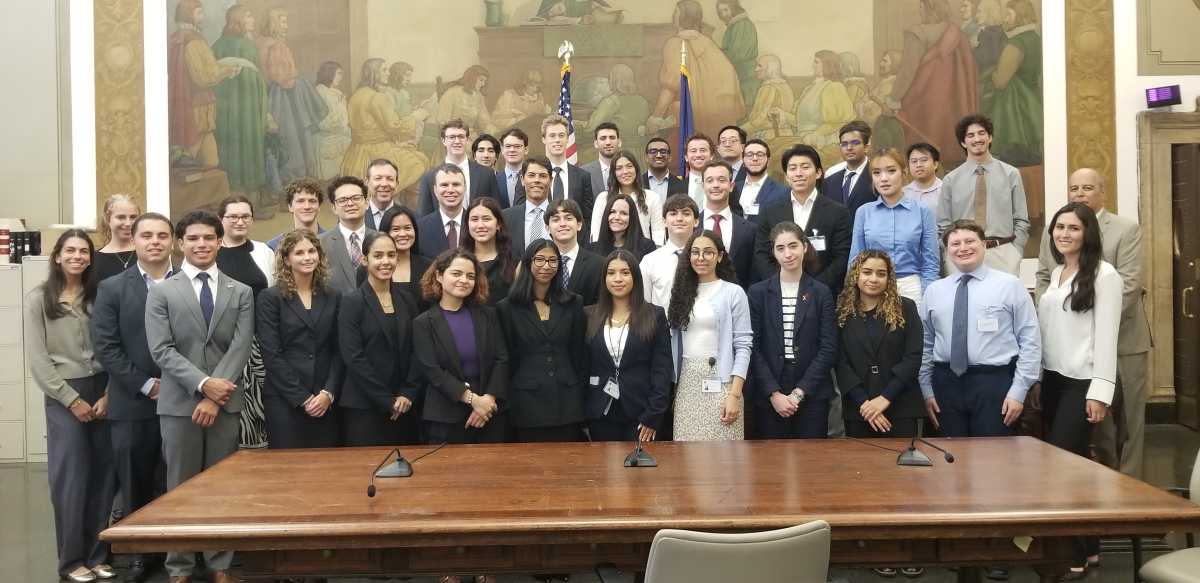 State Supreme Court Justice Joel M. Cohen and attorneys Andrew Rossman and Lara Flath with the summer court interns whom they spoke to.Photo by Larisa Binderman
By Annabel Greenberg and Emma Wey
From private practice to serving on the commercial division bench, the Honorable Joel M. Cohen’s rich career path has created a blueprint for legal excellence.
As professionals in law and the commercial field, Judge Cohen, along with attorneys Lara Flath and Andrew Rossman all provided interns with incredible career advice. Most of the audience listening to their presentation were law school students or those aspiring to attend.
When discussing the transition from law school to a legal career, Judge Cohen highly encouraged graduates to clerk, explaining the importance of viewing trials through a judge’s perspective.
He was first appointed to the Court of Claims in 2018, and then designated as an Acting Supreme Court Justice in New York County. Since 2019, he has served in the court’s Commercial Division, overseeing complex corporate disputes. After graduating from Binghamton University and Georgetown Law School, Judge Cohen served as a law clerk to Judge Thomas A. Clark of the United States Court of Appeals for the 11th Circuit before moving to private practice at an international firm.
On the other hand, Flath and Rossman — who did not have clerking experience — appreciate the method of learning by doing and throwing oneself into the courtroom, eager to get a head start on the job.
As a litigation attorney, Flath’s path to becoming a partner at the prestigious law firm Skadden Arps was also nonlinear. She explained that, as an undergraduate at Yale University, she had planned to go to medical school and become a doctor.
In an about-face that still bemuses her mother, Flath decided to forgo her medical dreams in favor of law school. Surprisingly, Flath knew what she wanted to do as soon as she got to the University of Chicago. She put it bluntly to the interns; she had no interest in being a transactional lawyer.
Litigation was where her passion lay. However, it was only after her first year of law school that she realized commercial litigation was her passion.
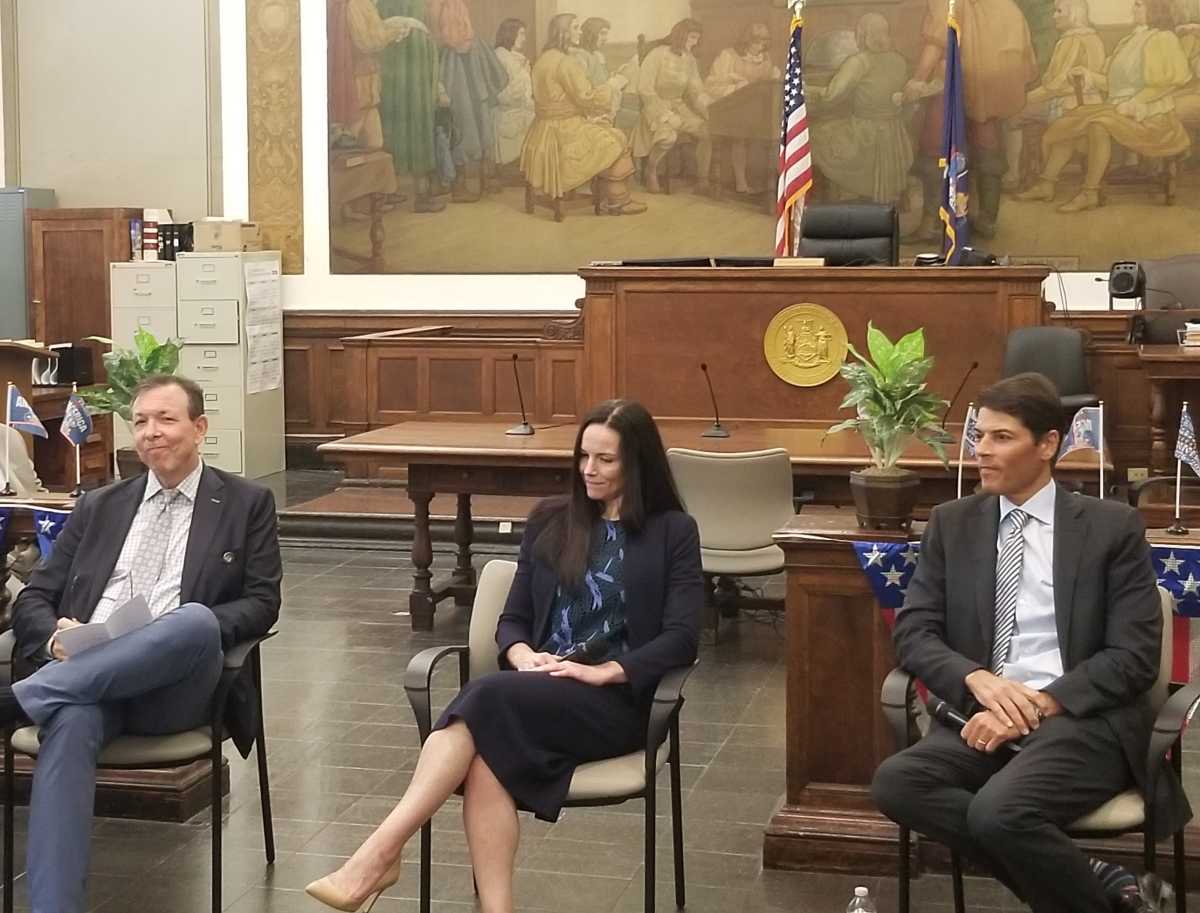 Justice Cohen, along with Flath and Rossman, speaking with the interns.Photo by Larisa Binderman
Andrew Rossman of Quinn Emmanual experienced an equally impressive journey. He attended Princeton University as an undergraduate, studying at the Woodrow Wilson School of Public and International Affairs, where he graduated cum laude. He then attended Harvard Law, where he came to a similar conclusion as Flath; he wanted to become a litigator.
Both Rossman and Flath have become incredibly successful, becoming partners at their respective law firms and taking on high-profile cases.
Rossman represented Tesla in the “420” case, and Flath has represented dozens of high-profile clients such as JP Morgan and Fortune 500. But through their success and career advancement, both Flath and Rossman have found time to lend their services to smaller cases, though no less important.
Flath maintains a strong emphasis on her pro bono work, focusing on children’s rights and access to reproductive healthcare. Rossman makes it clear that while the law practice derives its roots from ancient Rome, he is very much a man of the times, helping to litigate disputes from COVID and launching his practice into recent headline-grabbing cases like Elon Musk’s acquisition of Twitter.
On a cheerful note, Flath explained that her legal career had been an amazing experience. She wanted the interns to appreciate the joyful intellectualism of law school and treasure every case lost, as that teaches more than a case won.
The experts gave the interns practical courtroom advice as well: be on time, a late report is a useless report, and in trial, “the moment you fight everything, you don’t highlight anything” — telling the interns to focus on what really matters.
Judge Cohen, Flath, and Rossman know what matters. They love curiosity, grit, and empathy in an interview, but also in a person. They want to know they can trust someone while they are on vacation with their family (and yes, they do take time off from work). There is a lot to learn from these individuals, and the New York State Supreme Court judicial interns were immensely grateful for their insights into the world of commercial litigation.