
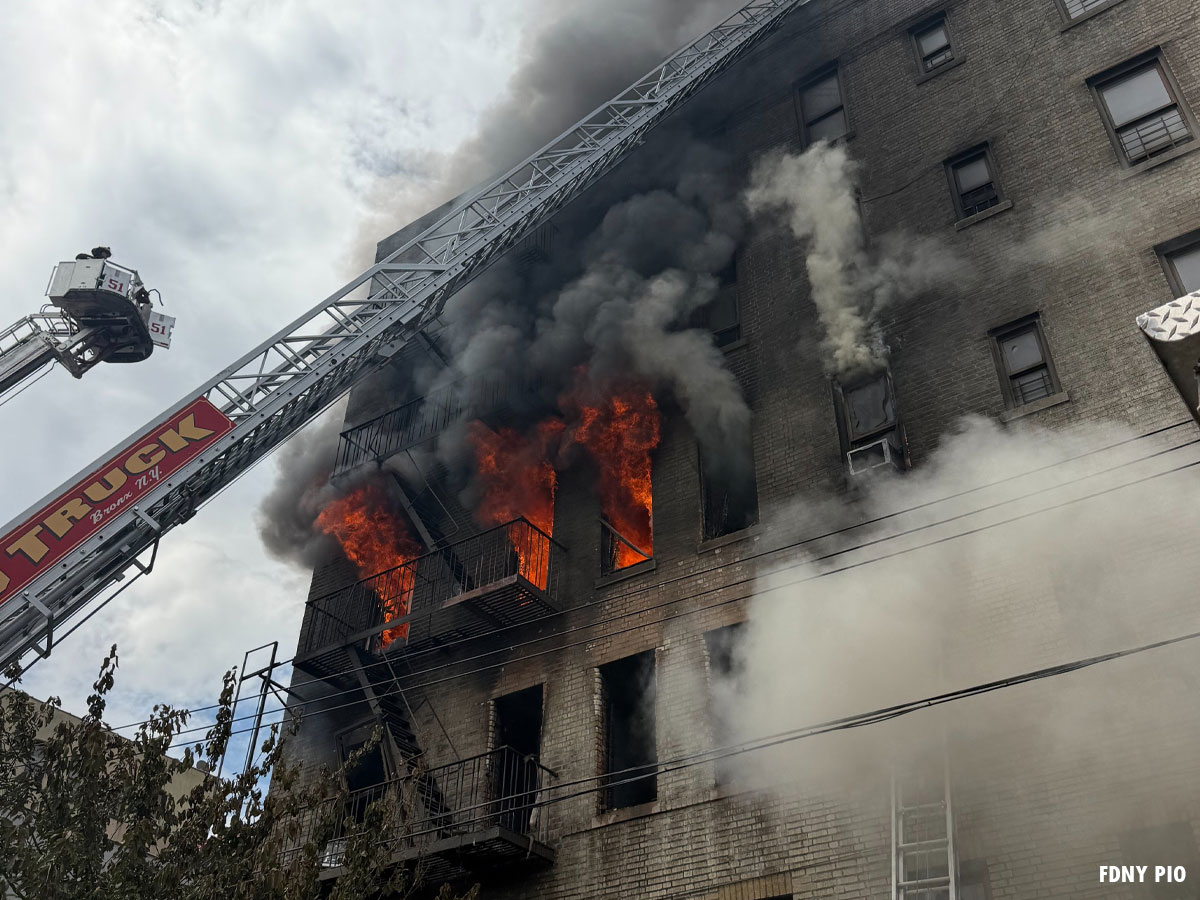
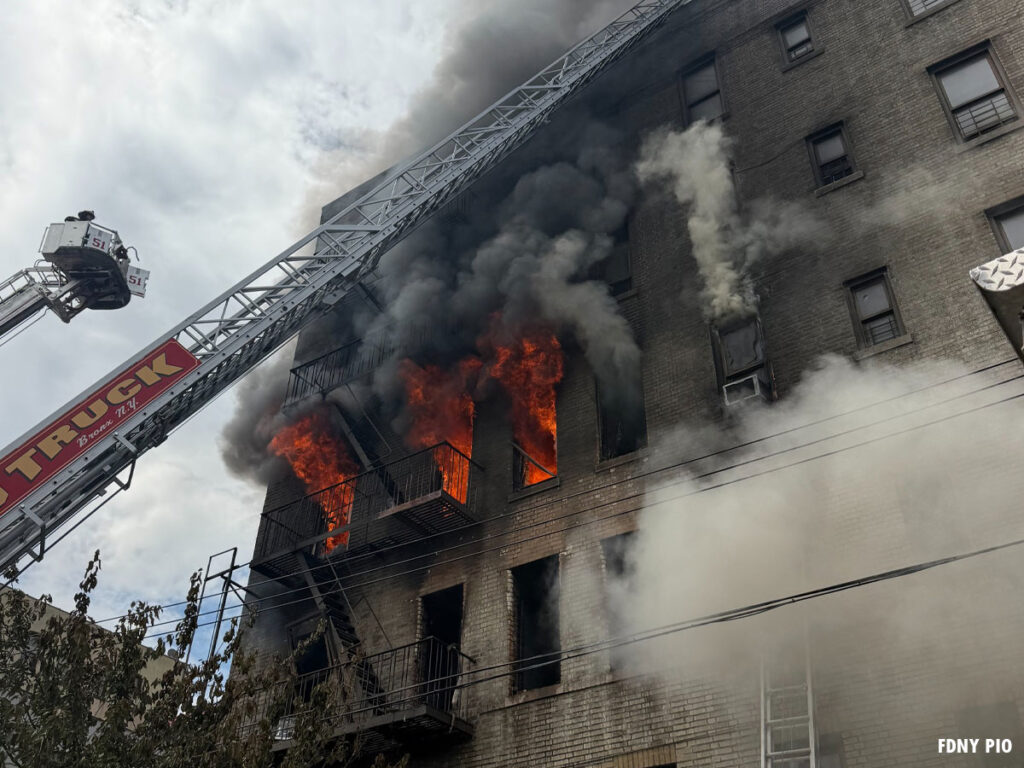
 (1) Firefighters respond to a fire and explosion at at 374 East 209th Street in the Bronx in August 2026. Units encountered heavy fire, with flames blowing out of multiple windows of the five-story building. The fire eventually spread to three floors, and members were removed from the building due to a collapse on the third floor. One civilans was killed and a total of 11 people were injured, including four firefighters. Photo courtesy FDNY PIO.
Part 3 of 3
Firefighters must maintain both mental and physical fitness to effectively perform their duties, regardless of age.A positive mindset is essential for firefighters to overcome physical challenges and remain motivated in their roles.Training is crucial for developing both physical skills and emotional control, enabling firefighters to respond effectively in emergencies.The legacy of dedicated firefighters underscores the importance of passion and commitment to the fire service.
One day as firefighters, we may reflect on the sentiment, “Oh to be young again,” having become unable to physically perform as we did when we first entered the fire service. At whatever age, it’s necessary to remain fit for duty, both mentally and physically. In terms of mindset, there’s an old saw that suggests “if you change the mind the body will follow.” In essence, if you mentally decide to embark on a venture, accept the obligations, and engage in the tasks required, from that mindset will arise the spirit and sweat to carry your decision through. This has been proven in athletics and the military, and especially the Navy Seals have embraced this philosophy. Although certain tasks may require muscular strength or prolonged physical endurance, mindset alone can often give you what you need to push yourself further than you thought was possible.
All of this, however, depends on a firefighter’s initial spirit, the spirit with which we first entered the profession, in search of achievement, fulfillment, and satisfaction. That should be the driving factor to keep the spirit alive and stay motivated. It can be quite humbling when one attempts to pull a hose, raise a ladder, force a door, or hold a power saw up above the waist to cut a lock or steel security door and you do not have the strength or stamina to perform the task. The lives of firefighters and the people we pledged to protect will rely on our training and ability to accomplish these tactics. Whether we are career or volunteer, the public expects to have a quick response, operate professionally, handle their situation, and do it perfectly every single time. They don’t care about the name is on your apparatus, what you were doing prior to this call, what your staffing or budget is, or what internal or external problems you or your organization may have. We must always have the mindset to be mission driven and win 100 percent of the time.
Although the majority of our members who enter this calling are young and vigorous, we are all subject to age and frailty. Humility should not be confused with weakness or shame; instead, it should provoke determination and a mindset to strengthen our character and body with a spirit of enthusiasm. That positive attitude that will foster in firefighters the moral principles and passion to perform to their utmost.
Train the Body, Train the Mind
Training is key, not only strengthening our muscles but also our brain (granted the brain is not a muscle but an organ). It is composed of soft, spongy nerve tissue and plays a crucial role in controlling cognitive functions, physical activities, and emotions. Our training will develop control of our emotions in those situations where rapid fire developments can change in an instant and remaining calm enables you to respond appropriately by being prepared. That preparation is reinforced with the repetition of performing a task mentally and physically over and over again, developing “muscle memory.”
When searching for life or fire, determine your second means of egress or escape route and means. Entering a room or space and the only second means of egress is a window and being equipped with a personal safety system to rappel out and down, your training will turn your attention to available anchor points or what means you will use with a tool to support your system for escape in an emergency.
Training instills confidence as you perfect the skills needed to perform the many tasks required of a firefighter. A positive attitude and mindset develops in your abilities and potential of achieving goals. Training is a process of development to get you from where you are to where you want to be. Firefighters take these attributes with them into the field, where skills should be practiced for function and proficiency, because seconds count in times of crisis. That should be accomplished through regular training sessions on each shift or scheduled meetings at the volunteer fire station or training ground.
Recruits and junior members should be encouraged and given the opportunity to lead and present a training session to smaller groups, to bolster their confidence and pride. This can be as simple as having junior members discussing everything they know about a specific tool at roll call or with the duty crew at the volunteer firehouse. Once they explain everything they know about the tool or operation, more senior members can add to the conversation or put the tool into an operational quick drill. We call this the “The tool of the day” overview. Programs such as this are the foundation in the development and growth of the body, mind, and spirit of each individual entering the fire service. With tenure in this vocation, a self-assessment may reveal that your skill set is weakening. Cultivate a positive attitude coupled with humility, which can spark the incentive needed to reinvigorate yourself at any age or level of fire service aptitude. It’s up to you to remind yourself why you started on this journey in the first place.
A Critical Look at Operations
Companies need to undertake a self-assessment of their performance on the fireground with respect to specific functions and activities to identify any deficiencies. That was the impetus for the Fire Department of New York (FDNY) to produce a training program back in 1996 at its academy titled “Back to Basics.” In a period of 23 months, the FDNY had experienced 11 line-of-duty deaths (LODDs), with water on the fire being a factor in one way or another. The focus of that particular program was “water,” and sought to remedy deficiencies and tactics to improve our efficiency. It entailed establishing a positive water supply, pump operations, the stretching of hoselines, nozzle placement, and the use of standpipes.
Andrew Fredericks was instrumental with the preparation and content of this program. In those years, Andrew was producing training programs for Fire Engineering specific to fire attack and efficiently stretching hoselines and conducting standpipe operations. He was also contributing to updating the FDNY’s “Firefighting Procedures on Engine Company Operations” with Firefighter John Grasso and John Salka, then the captain of 48 Engine in the Bronx. Because of their recognition and respect through their affiliation with Fire Engineering, many departments throughout North America implemented “back to basics” programs in their curriculum. Our ventilation practice would remain the same, as the research on ventilation and smoke management was not considered a topic of change at that time.
If you were to review the NIOSH LODD reports from these events, you will note many recommendations with regards to water. These recommendations are significant to not only its deployment and efficiency for extinguishment but how availability, nozzle flows, and placement are vital to the mission of life safety of both those we swore to protect and our firefighters operating together in the bowels of the beast. Continued training on our tactics and skill set will only enhance our ability to complete that mission. The reality is that firefighters must master a set of extremely perishable skills, and we need to continue to evolve and be firefighters in every sense—body, mind, and spirit.
ALSO
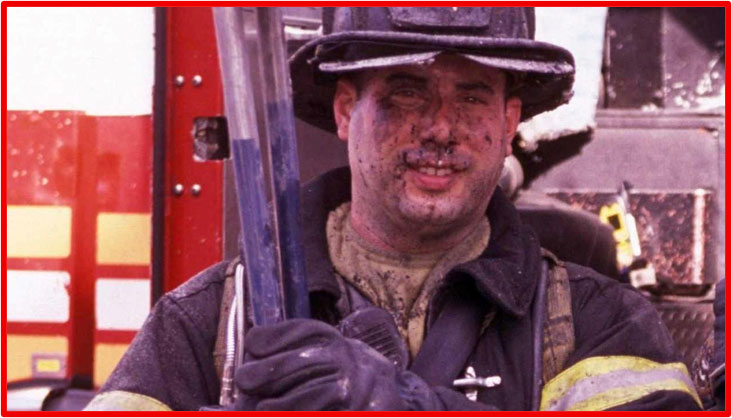 (2) Firefighter Joe DiBernardo Photo by Matt Daly.
Being into the Job
I am reminded of a phrase articulated by a true American hero, who passed from injuries he sustained on January 23, 2005, referred to as “Black Sunday.” This incident forced six FDNY members to bail out from a fourth-floor window of a tenement apartment in the Bronx; their means of egress were engulfed in fire, leaving windows as the only option to escape. Lieutenant Curtis Meyran and Firefighter John Bellew tragically lost their lives when they jumped as the room they were in began to flash over, landing in a below-grade alley five floors below,. Two other firefighters, Brendan Cawley and Gene Stolowski, also jumped and survived, but with life-altering injuries. In the adjacent room were Joey DiBernardo and Jeff Cool, a fellow member of Rescue 3. The heat grew so intense they both understood that they, too, had to escape. Jeff pulled a rope from his pocket to use for self-deployment in the event of a situation such as this.
Now what they needed was an anchor. Joey said to Jeff, “Throw me the rope! You have a wife and kids, you go first!” Joey secured the rope to himself and would be Jeff’s anchor as he slid down as far as the rope length would allow. He dropped the remainder of the height. Once Jeff was off the rope, Joey then secured the rope to the window frame and began to slide, but before he reached the end of the rope, the anchor let go and he fell to the alley below. His injuries were so traumatic that they would change his life and end his career. It should be noted that this was a personal rope and not department issued. Some years before, escape ropes had been issued by the department, but members were instructed to turn them in and the ropes were not reissued because of fiscal constraints. This event would reveal the fact that because of the refusal of funds, these members were denied equipment that may have saved the lives of two firefighters and eliminated or lessened the injuries of the other four members.
That phrase that I’m reminded of may be an expression you may have heard or repeated from those who knew Joey DiBernardo and heard him speak with reverence. That phrase was, “Are you on the job, or are you into the job?” Truly, Joey was INTO the job! This fine young firefighter lived his life with a passion for the fire service. Not only engaging himself totally with the FDNY, but also as a volunteer firefighter in the town of Setauket on Long Island. He was also a hands-on instructor for Fire Engineering at the FDIC for many years and spoke or taught at various fire academies and conferences. He always had the “mindset” and was the embodiment of what it means to be a firefighter in body, mind, and spirit. His devotion helped a fellow firefighter survive and influenced an untold number of others throughout the United States—thanks to his teachings, his presence, and his mindset.
JERRY TRACY served more than 30 years with the FDNY, retiring as a battalion chief. He began as a firefighter in Engine 90 in the Bronx and Ladder 108 in Williamsburg, Brooklyn. As a lieutenant, he was assigned to Ladder 4 in midtown Manhattan and captain of Tower Ladder 35 on the Upper West Side. He formed and became the first captain of Squad 18. He developed numerous training programs as well as refined firefighting policy and procedures for the FDNY. He was the catalyst to the research conducted by NIST, UL, and NYU Polytechnic Institute on smoke management and fire behavior in high-rise buildings, most specifically wind-driven fires. He was a keynote speaker at FDIC International 2017 and received the 2016 Fire Engineering Tom Brennan Lifetime Achievement Award. He is the co-author of the upcoming book High-Rise Buildings–Understanding the Vertical Challenges.
KEVIN YOOS retired after more than 24 years of service with the FDNY a lieutenant of Squad Company 270 in Queens. He has served with the fire service since 1988 as a volunteer and career firefighter and officer andcontinues to serve his community as a volunteer. He has worked in the FDNY Special Operations Command (SOC) for over 20 years, and prior assignments include Squad 61, Ladder 17, and Engine 50 in the Bronx. He was also a member of FEMA NYTF-1 and the SOC Task Force. He has served as chief of department for the Setauket (NY) Fire Department on Long Island and a former commissioner of the Setauket Fire District, and serves as a Suffolk County Fire Coordinator specializing in technical rescue. He is also the vice president and seminar coordinator for the Lt. Joseph P. Dibernardo Memorial Foundation and cohost of the Volly House Podcast.