
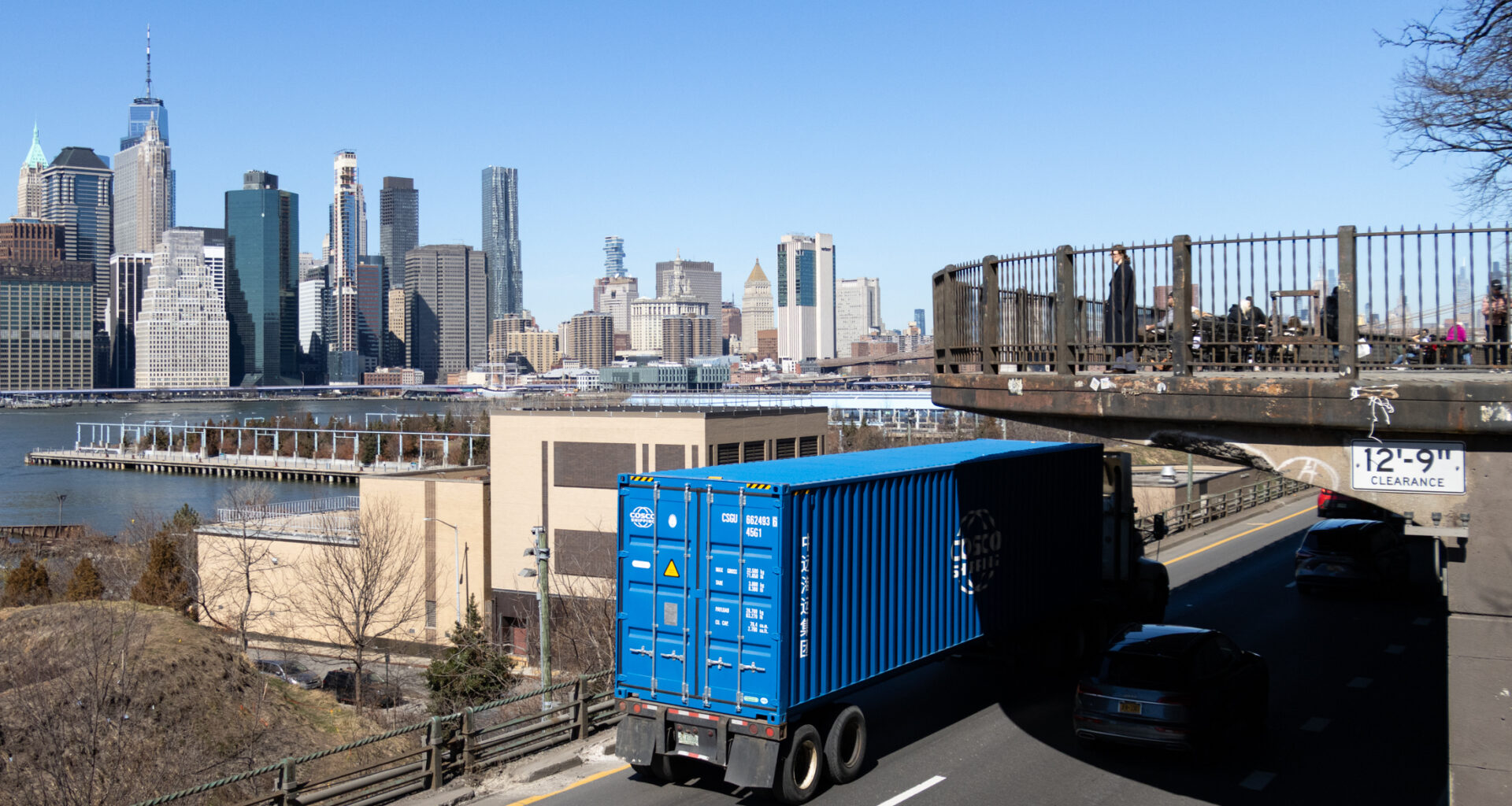

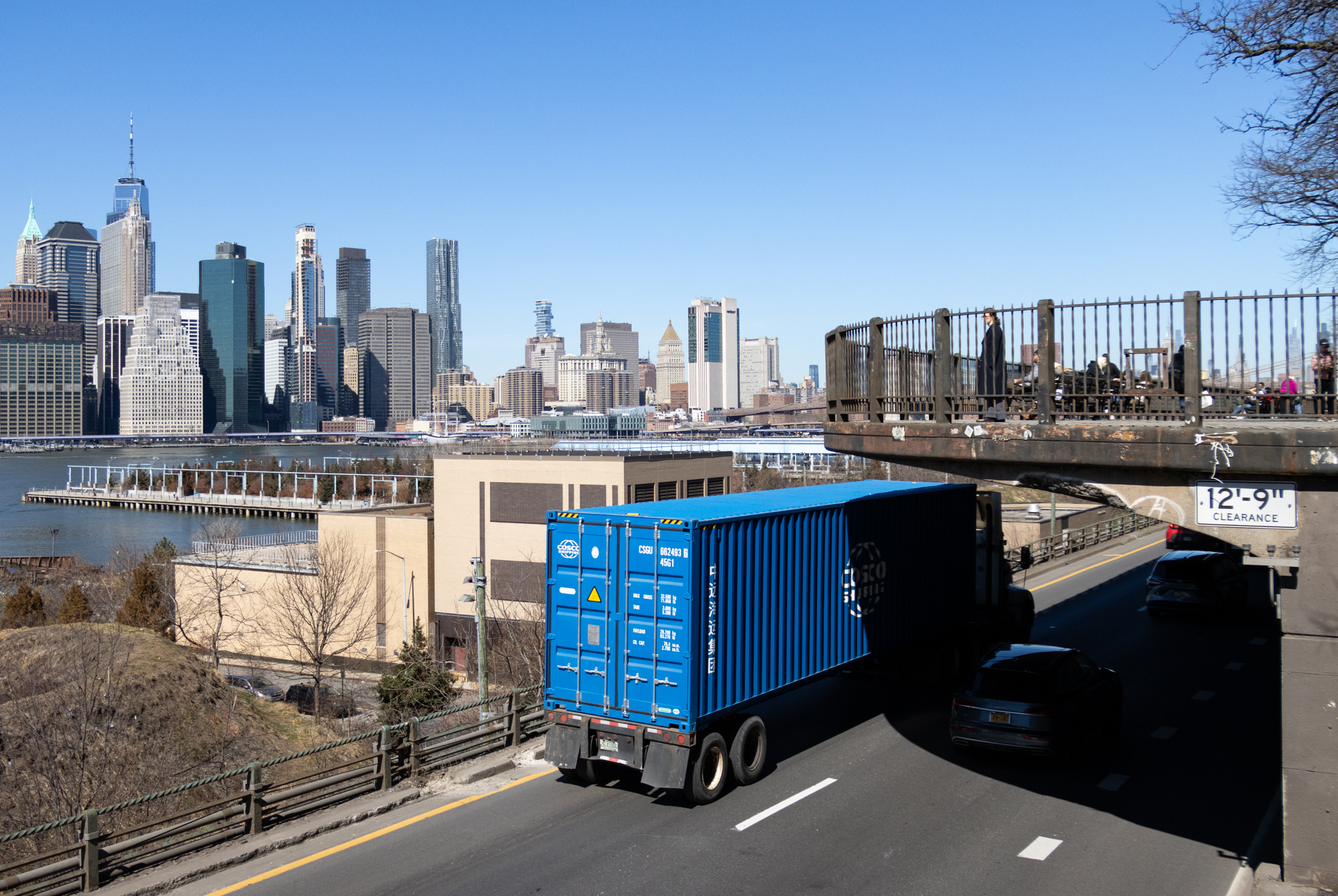
The cantilever in March of this year. Photo by Susan De Vries
by Ethan Stark-Miller, amNY, and Cate Corcoran, Brownstoner
Could Zohran Mamdani be the mayor who finally manages to fix the beleaguered Brooklyn-Queens Expressway’s triple cantilever on the Brooklyn Heights waterfront?
Mamdani’s Department of Transportation today unveiled a $4 billion plan to rehabilitate the part of the Robert Moses-era highway that runs through Brooklyn Heights, Dumbo, and Downtown Brooklyn between Atlantic Avenue and Sands Street — known as BQE Central. That section of the highway contains the triple cantilever, a tiered three-level structure built along the side of a cliff, with the first two levels accounting for each direction of traffic and the third containing the Brooklyn Heights Promenade, a special scenic landmark.
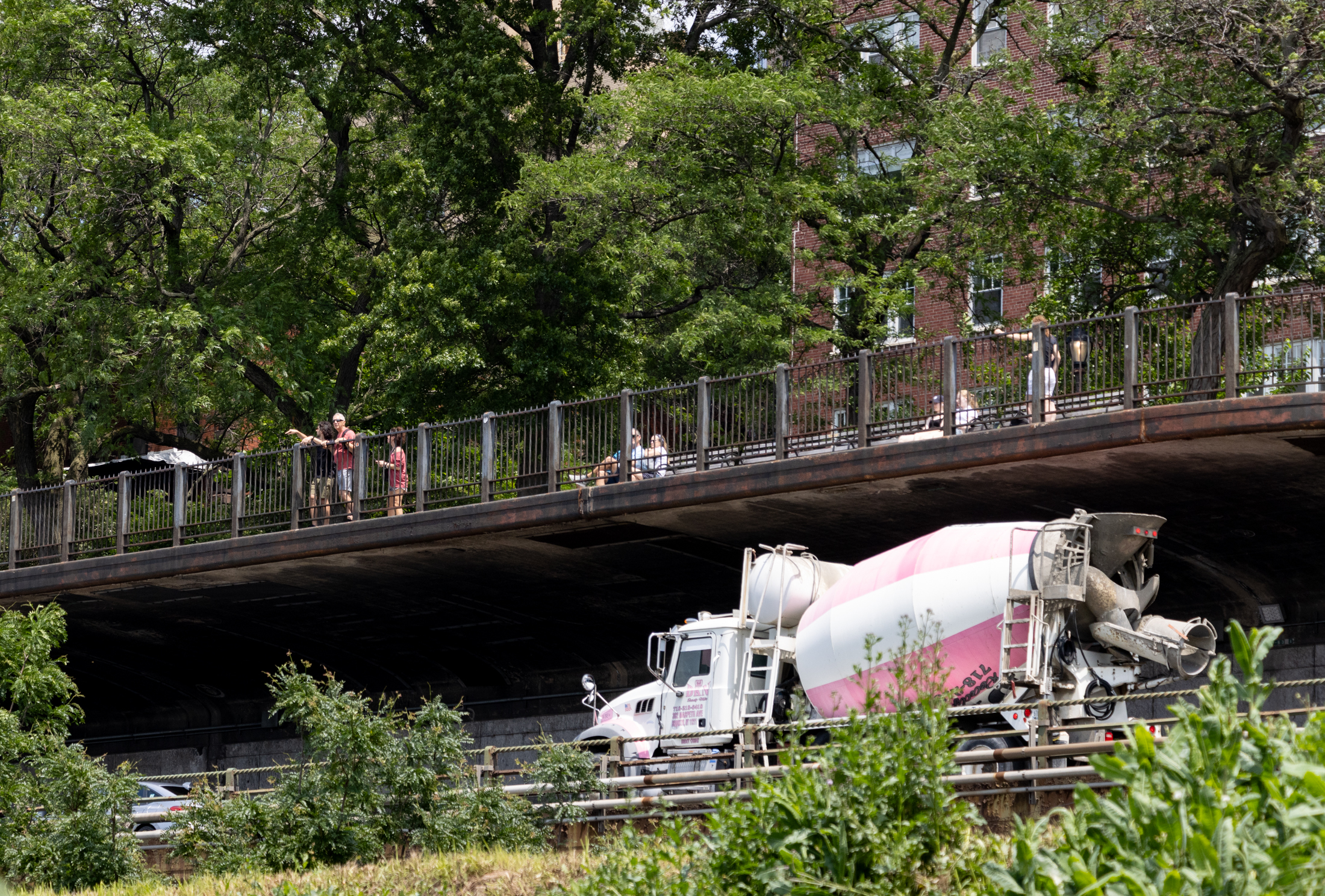 Pedestrians on the Brooklyn Heights Promenade above the cantilever in 2025. Photo by Susan De Vries
Unlike the previous administration’s plans, which sought to add lanes and cover the cantilever with some amount of green space using federal funds, the DOT’s new plan would simply bring the current structural configuration into a state of good repair for another four decades.
The plan involves building a temporary bypass road alongside the BQE on Furman Street so that traffic can continue to flow during the 10-year construction project, which the administration projects will start in 2030 and finish in 2040.
Mamdani, in a statement, said that while past mayoral administrations have flirted with various BQE rehabilitation plans without moving forward on any, the city has run out of time to wait for the “perfect solution” to present itself.
“We’re going to fix the aging concrete, repair the deteriorating triple cantilever, and build temporary roads that keep the highway operable during construction to avoid sending tens of thousands of cars and trucks onto local streets,” Mamdani said. “This plan allows us to safely fix the BQE without slowing our city down or wasting decades more on magical thinking. The cost of inaction is too high, and the risks to New Yorkers are too important to delay any longer.”
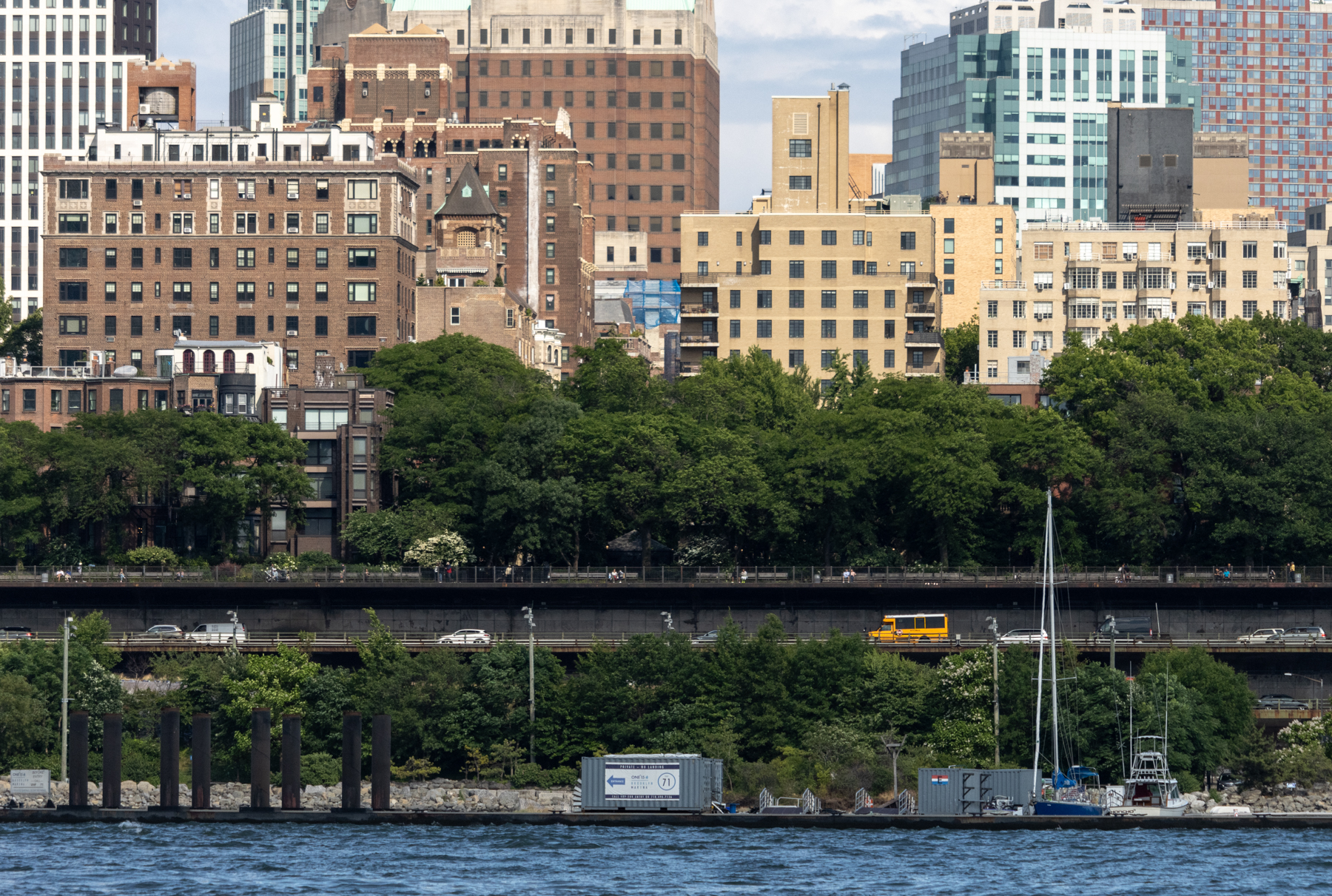 The cantilever in 2023. Photo by Susan De Vries
DOT Commissioner Mike Flynn, in a virtual briefing with reporters ahead of the official announcement, said that BQE Central was built to last about 50 years and handle roughly 50,000 vehicles a day. But instead, it has stood for 70 years — 20 years past its design life — and now suffers from the brutal wear and tear of bearing the burden of approximately 130,000 daily vehicles.
“The structure is safe right now,” Flynn said. “But with the time that it takes to gear up for major work, we really have pretty much run out of time to start to take action.”
What the BQE cantilever fix will entail
Flynn said the rehabilitation will involve replacing structural elements such as deteriorated deck joints and concrete as well as corroded rebar. He added that the city will upgrade highway systems, including drainage, traffic railings, and lighting, but it will not do any work on interchanges or local streets.
Additionally, Flynn said the plan does not call for widening the BQE, keeping the road at two lanes on each level.
When it comes to the temporary bypass roads, the city will construct them along two sections of the highway.
Flynn said one will be a two-level structure built over Furman Street between Atlantic Avenue and Columbia Heights, which runs parallel to the cantilever, that will not be taller than the current highway. He added that it will not be anything like a former Mayor Bill de Blasio-era proposal to use the Promenade as a temporary bypass road, despite its proximity to dozens of historic houses along it, closing the Promenade to pedestrians and making it a six-lane portion of the highway for several years.
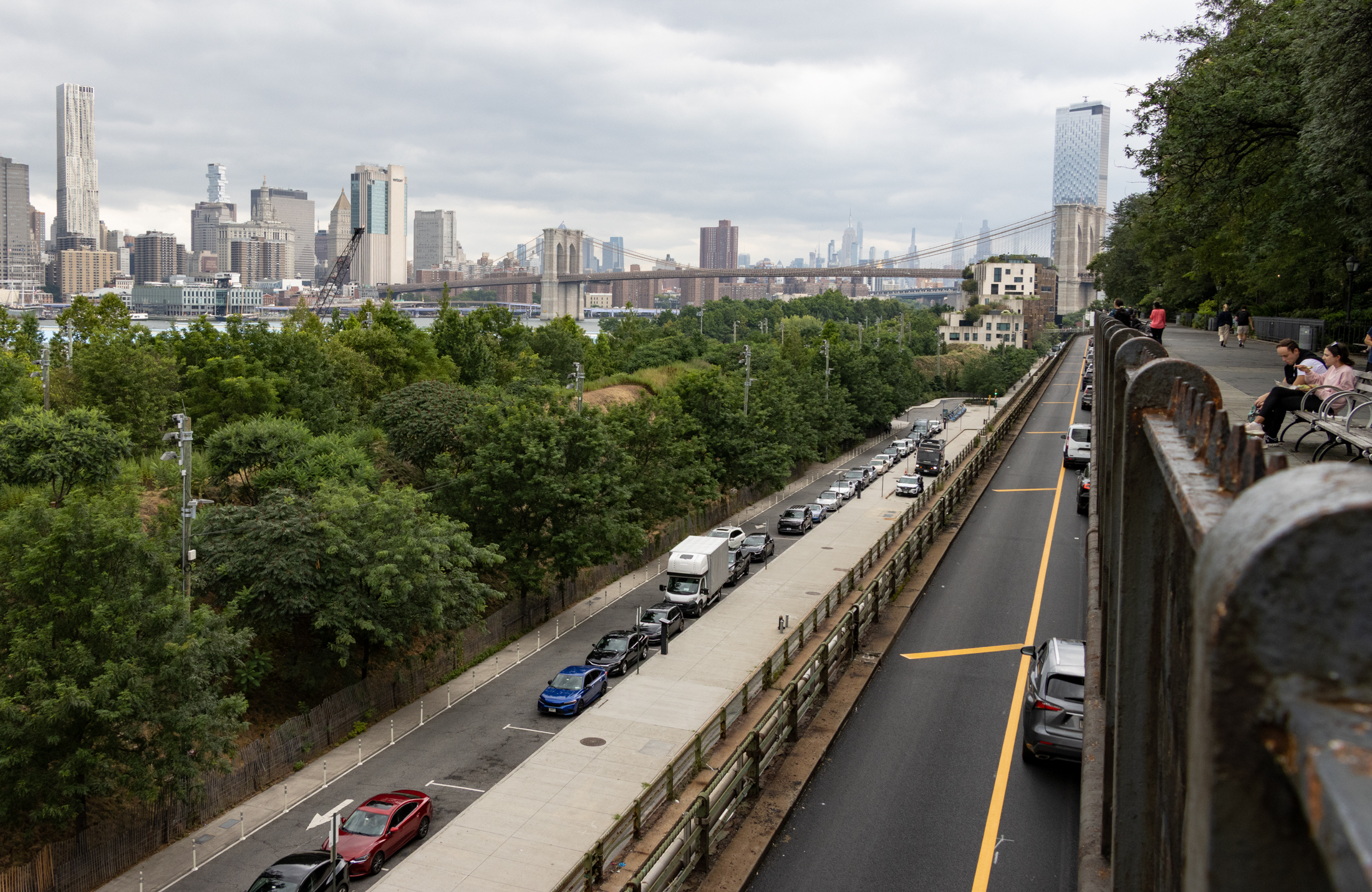 The plan includes building a two-level structure over Furman Street, seen here in 2025, which runs parallel to the cantilever. Photo by Susan De Vries
“It would be basically to the side of, and I think slightly below the current BQE structure, so…it’s not, you know, kind of a high thing like had been proposed a while back; it’s a little more down and kind of tucked out of view,” Flynn said.
The second bypass would be for the Queens-bound side of the BQE between the Vine Street on-ramp and Anchorage Plaza, he said. It would run over the Staten Island-bound side of the highway and the Brooklyn Bridge approach.
“We’re looking at alternative alignments for that because we know that that could be pretty impactful,” Flynn said. “We’re hoping that we can find other ways to make it work that would be less impactful.”
Flynn said that between now and 2028, the city will begin the land use and state-level parkland processes necessary to do the project. The temporary bypasses would then be built by 2032, when construction on the main road would begin.
Who pays for it?
In the past, funding the BQE reconstruction has been a major stumbling block for the project.
It remains unclear exactly where the funding would come from, as the city is seeking to avoid the required reviews that would come with applying for federal dollars.
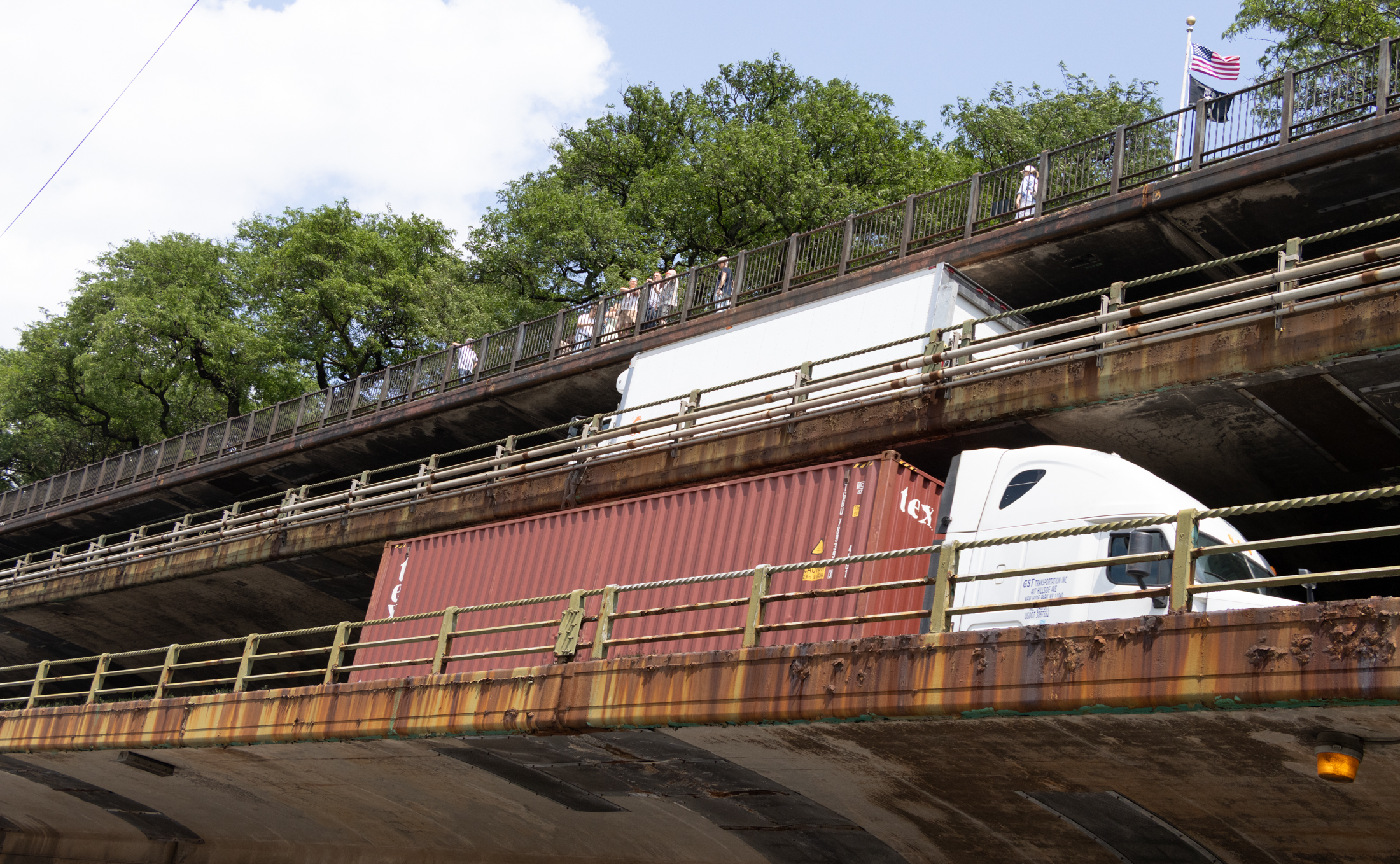 Traffic on the BQE triple cantilever in 2025. Photo by Susan De Vries
A city official said there is some funding in the city budget, but did not specify how much or where the rest would come from.
“At this point, what we’re looking at is a project that we can do ourselves as a city and not necessarily have to rely on external partners,” the official said. “The city has some funding in the budget, and we would be working with our partners to identify additional funding as needed.”
The future of Robert Moses’ highway
Meanwhile, the city and state will together devise a “long-term vision for the entire highway,” according to the city. A variety of ideas proposed by the public over the last decade have included running the Brooklyn portion of the highway under parkland or tearing down the entire highway throughout the city.
The city’s press release noted it and the state have been investing in highway alternatives including the Interborough Express and moving freight via rail, bike, and water. The city’s environmental review for the BQE repair starts this fall, with an environmental impact statement due in summer 2028.
Some locals support finding an alternative to the highway that would include scrapping the aging cantilever. The executive director of the Brooklyn Heights Association, Lara Birnbak, told Gothamist she finds the city’s new plan “depressing.”
A statement from BHA said the cantilever repair plan “locks in the BQE until 2080” and questioned the feasibility of the temporary highway. “Less expensive and less disruptive ideas have been proposed which deserve serious consideration,” the group said.
Carlo Scissura, president and CEO of the New York City Building Congress, said in a statement the construction industry association welcomes a “holistic, corridor-wide vision for modernizing or even tearing down and replacing the remaining roadway. There is a beautiful opportunity inherent in anything we do on the BQE to result in new, green open spaces and reunited communities.”
State Senator Andrew Gounardes, Assembly Member Jo Anne Simon, and City Council Member Lincoln Restler emailed a joint statement praising the plan to repair the structure rather than replacing it. However, they also expressed doubts about the construction plan and the temporary highway, and said they welcomed “future transformational change that communities up and down the BQE corridor have long advocated for.”
“Our hope is that this rehabilitation project will be an interim step that allows us to plan for a post-BQE era and create a real timeframe to finally retire this Robert Moses relic.”
Editor’s note: A version of this story originally ran in amNY. Click here to see the original story.
Related Stories
Email tips@brownstoner.com with further comments, questions or tips. Follow Brownstoner on X and Instagram, and like us on Facebook.