
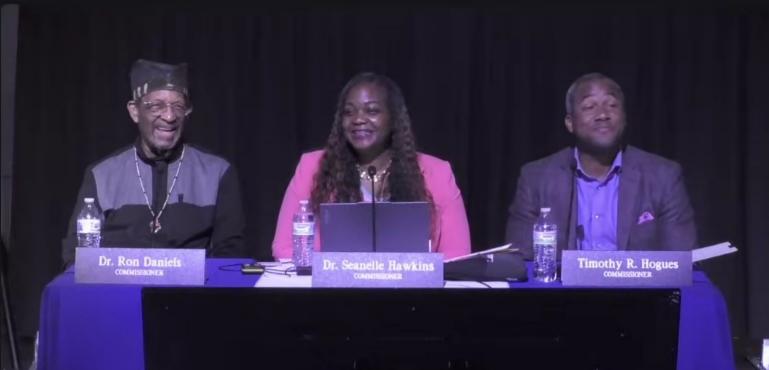
Activists and community members alike assembled in Hempstead High School in Hempstead, New York on May 23rd to discuss the issue of reparations for Black Americans.
The meeting, which attracted between thirty and forty attendees, was organized by the New York State Community Commission on Reparations Remedies (NYSCCRR), a commission established in late 2023 to “[examine] the legacy of slavery, subsequent discrimination against people of African descent, and the impact these forces continue to have in the present day.”
The meeting was hosted by Michaelle Solages, a Democrat representing the 22nd State Assembly District based in Valley Stream, New York. Leading the meeting was a panel of three commissioners, experts appointed by various state officials to run such meetings: Dr. Ron Daniels, Founder and President of the Institute of the Black World 21st Century; Dr. Seanelle Hawkins, President and Chief Executive Officer of the Urban League of Rochester; and Timothy R. Hogues, Commissioner for the New York State Department of Civil Service and President of the Civil Service Commission.
“This hearing was an important opportunity to ensure that the Commission’s work is grounded not only in historical research and data, but in the lived experiences of New Yorkers,” said Assemblywoman Michaelle C. Solages. “The testimony that the commission heard will help to determine the ways in which people of African descent continue to feel the effects of discrimination. No stone should be left unturned in the completion of a clear and evidence-based report that presents a detailed analysis of both past and present-day inequality resulting from systemic injustice.”
Dr. Daniels could not be reached for comment.
The meeting was opened with remarks from the commissioners, followed by remarks from Assemblymembers Solages and Noah Burroughs, who represents the Hempstead-based 18th State Assembly District. Viviana Russell, who represents parts of Hempstead in the Nassau County Legislature, closed out the remarks from elected officials.
Afterwards, there was an explanation of the role and history of the Commission and its members and an historical overview of slavery’s extent within the state of New York, which was practiced from the beginning of Dutch colonization in the 1600s until its formal abolition in 1827.
The room was then opened for public comment. Over ten individuals spoke, most of whom identified themselves as descendants of African slaves brought to the United States or the land that would become the United States. Some individuals spoke of recent ancestors enduring racism and discrimination because of legal racial segregation and how it hurt their family’s ability to accumulate wealth. Others spoke about ongoing harm from racism in areas like education, housing, and healthcare.
A common theme among speakers was feeling that their ancestors had contributed to building the American nation without compensation, only to have those ancestors—and their descendants, the speakers—face racialized poverty, neglect, and a lack of investment in their communities. All speakers agreed that it was necessary to provide financial reparations to compensate for the unpaid labor of slaves, address disparate economic outcomes in Black communities, and account for the historical harm that slavery had done.
“I’m aware that my family members who I do not know, were brought across the sea from Africa, and they did not do it willingly,” says Caprice Rines, a community advocate and former candidate to be a trustee for the Hempstead Union Free School District.
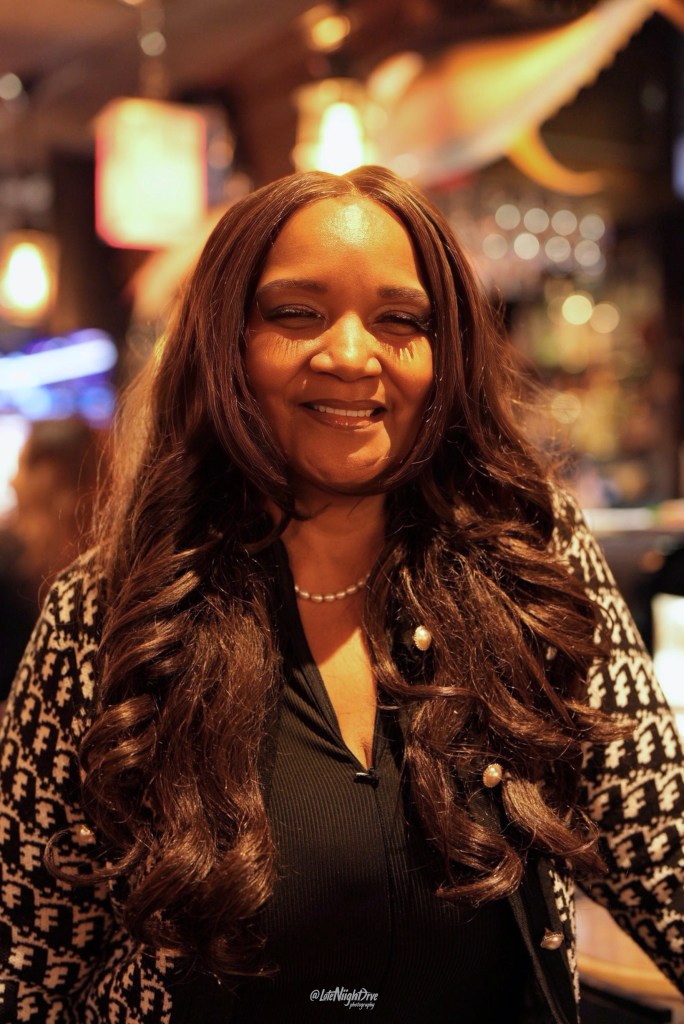 Caprice RinesCourtesy of Caprice RinesCC BY-NC-ND 4.0
“They were brought here, forcibly, and I do believe that they built this nation on their backs, and I do feel we are owed a debt…we were not treated fairly here. My grandparents, going through Jim Crow, seeing people being beat and being hung, even right now, we’re fighting for our right to vote. This is not a fair land to us, and we are due reparations.”
While all those present spoke in favor of reparations, a major point of debate was the question of who is eligible for reparations. Some argued that reparations should be in line with the NYSCCRR’s mandate: broad, addressing issues beyond slavery, and with eligibility for all Black people.
Others stressed that reparations should be for slavery only, and should be given to Foundational Black Americans (FBAs), a recent term coined to describe Black people who are the descendants of African slaves brought to North America. This grouping would mean that Black people who do not have slave ancestry in the country, such as most Afro-Caribbeans and Africans in the country, would be ineligible to receive reparations.
Proponents of making reparations eligible only for FBAs argue that it is necessary to address the unique harm that FBAs have faced from having enslaved ancestors.
“Reparations is back payment for services rendered…it was 300 years of free labor. That deserves payment, and back pay; it is not for anything else,” said Breuck Leen. She is a member of the United States Freedmen Project, a group advocating for New York’s statewide reparations bill to define eligibility for reparations based on lineage from slavery, not race, as the group argues making eligibility for reparations based on race is unconstitutional.
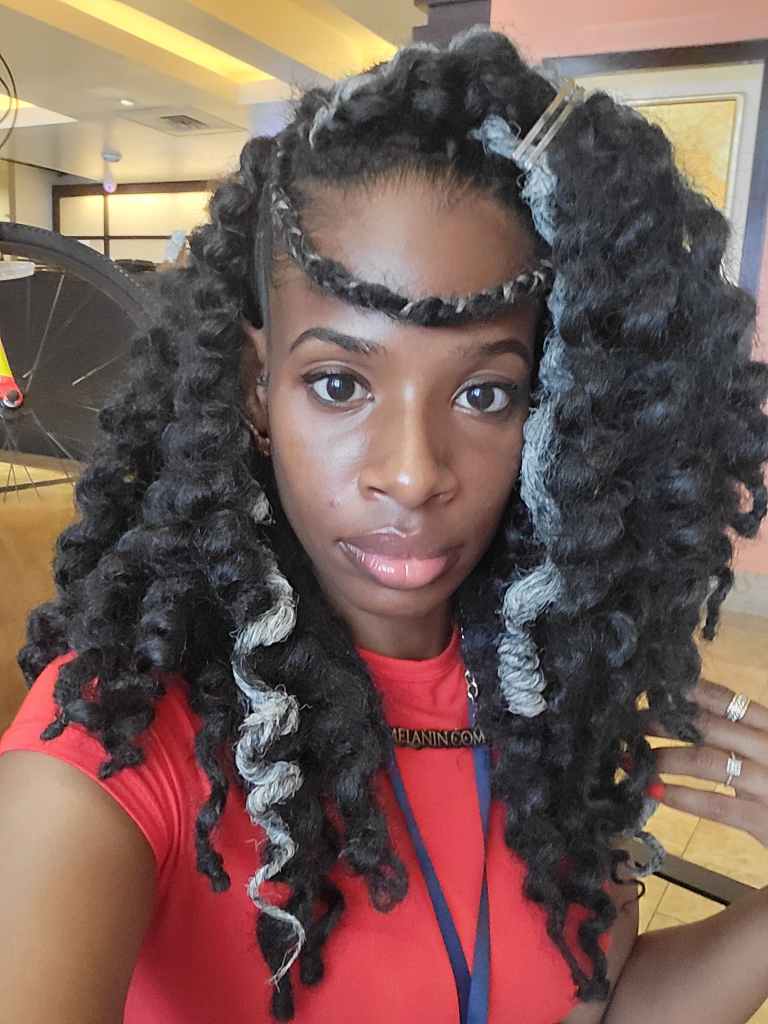 Breuck LeenCourtesy of Breuck LeenCC BY-NC-ND 4.0
“Now, everything else, Jim Crow, redlining, those are badges and incidents of slavery. Those are the results of slavery. And that, too, deserves some sort of compensation. But that is not reparations; reparations is for slavery.”
Kiana Bierria-Anderson, an activist and former candidate for New York’s 4th Congressional District, offered a third perspective.
“As someone who is a Foundational Black American…I am acutely interested in ensuring that reparations for my family looks different than reparations for a Black immigrant. However, that does not mean that an immigrant Black American, or a child of Black American immigrants, is not also deserving of reparations.”
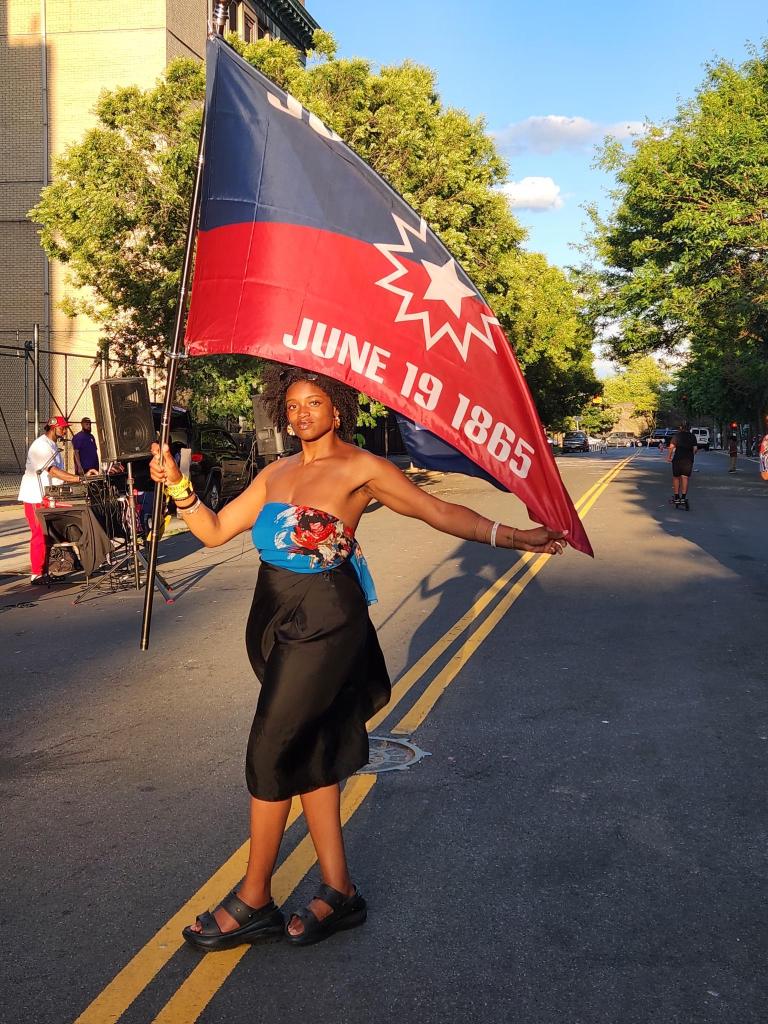 Kiana Bierria-AndersonCourtesy of Kiana Bierria-AndersonCC BY-NC-ND 4.0
She continued: “Addressing the harm that has been done to us [FBAs], indirectly and directly, will benefit the harms that have been done to Black Americans of immigrant descent or migrant descent. It is not as though one community will get over on the other; I don’t see the process of reparations like that.”
The Commission followed up on its May 23rd meeting with another public meeting in the Harlem neighborhood of New York City on May 30th. The May 30th meeting was the Commission’s last public hearing for 2026, per the Commission’s website. The Commission has an upcoming Business Meeting on September 11th, which involves internal deliberation among Commission members without public comment.
The Commission is mandated by the state to issue a final report on statewide reparations by 2029; the deadline for the report was originally set for 2025 before the State Legislature extended it earlier this year.