

Time to read [7 minutes]
Aggressive Poaching: Compass-Anywhere is aggressively recruiting top talent despite holding massive market share, raising anti-competitive and market-control concerns.
Transparency vs. Dual Agency: Agent frustration over StreetEasy’s listing fees is being used to justify private listings, sacrificing consumer transparency to maximize dual-agency commissions.
Industry Hypocrisy: After a decade of lawsuits over Compass’s aggressive tactics, legacy firms like Corcoran have shifted to adopting the same practices.
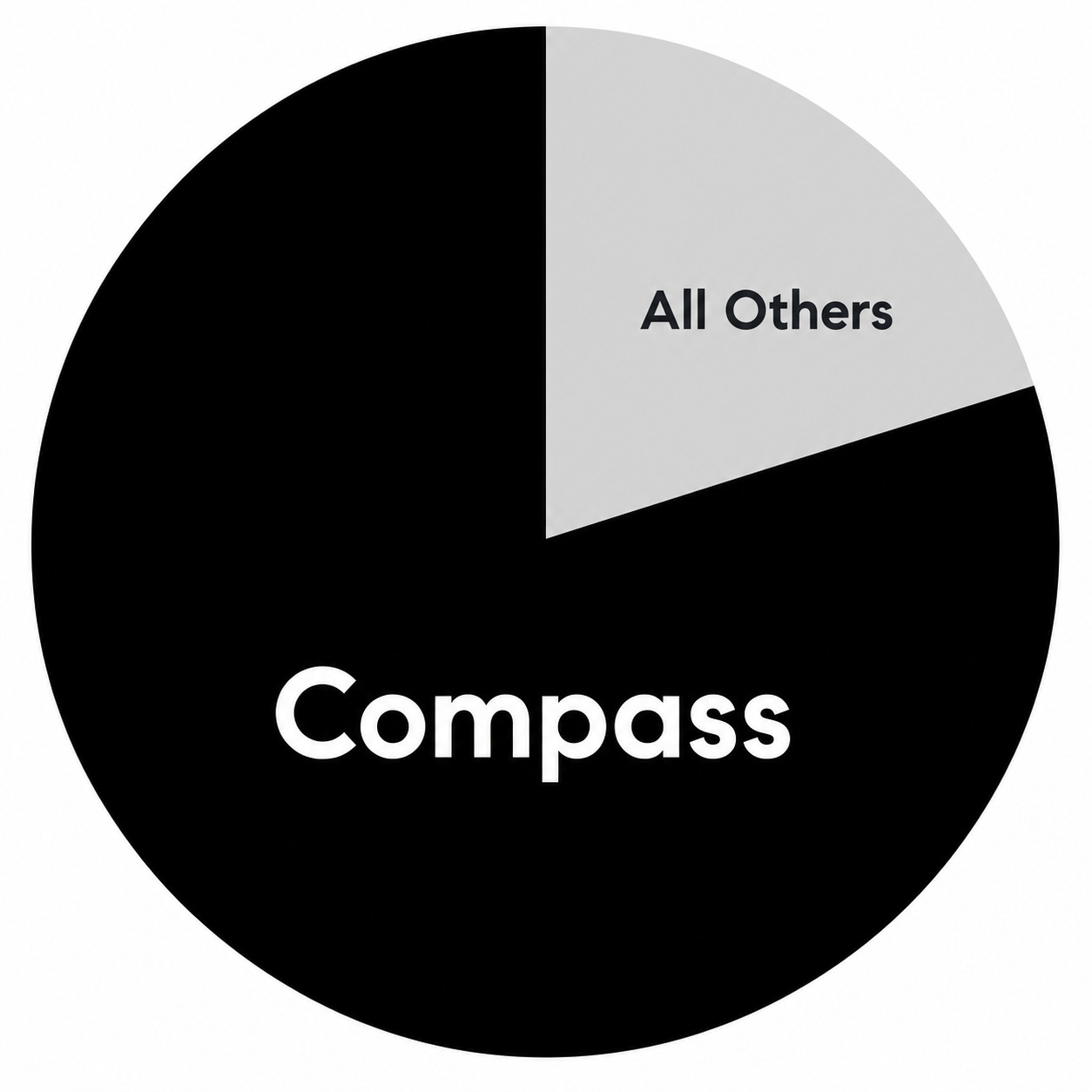
Why would a publicly traded company with what one might call a non-competitive market share continue to recruit agents aggressively? Senior leaders at a handful of non-Compass-Anywhere firms have told me their top talent is being aggressively recruited by senior leadership. Of course, recruiting agents from one firm to another is a way of life in the brokerage industry; nothing wrong with that in principle. But when a firm has an 80% market share, the optics look very different. It makes me wonder why they are being reckless, almost flaunting their current control over the local market by being so aggressive. It is also reasonable to assume the same thing is happening in other markets where they dominate market share.
After my last Housing Note: Corner the Market, Get Cornered: The Class Action Against Compass was shared by The Real Deal over Instagram, and normally quiet Compass agents flooded the comments with outrage – here’s a sample:
Um, HIDING LISTINGS from StreetEasy???? Come on. StreetEasy charges agents $7 per day for the “privilege” of manually entering their rental listings into StreetEasy. StreetEasy stopped pulling from the RLS automatically to scam us out of Money! WHO are you for? People need to do their research.
“WHO are you for?” Well, I’m for the consumer first, and real estate agents should be as well. The real estate agent/client relationship can have a fiduciary relationship for a reason. The relationship occurs when the broker or salesperson is actually acting as that party’s agent.
New York Real Property Law requires an agency-disclosure form that describes the relationship and the agent’s duties, including “loyalty, confidentiality, disclosure, reasonable care, obedience.” For a buyer’s agent, the statutory disclosure says the agent “acts solely on behalf of the buyer” and owes fiduciary duties including “reasonable care, undivided loyalty, confidentiality, full disclosure, obedience, and accounting.” The seller-agent disclosure similarly states that the agent acts solely for the seller and owes the same core fiduciary obligations.
Agents’ frustration with StreetEasy was apparent in the agent’s comments, and it has morphed into justification for hiding information to promote dual agency. This war began in 2017 when REBNY got into a listings war with StreetEasy. StreetEasy does not take the REBNY RLS rental feed as its StreetEasy inventory feed. That is the key distinction. REBNY can distribute RLS data to many participating sites, but StreetEasy chose not to participate in that syndication arrangement and instead requires manual listing entry. Why?
Manual entry gives StreetEasy control over which agent appears as the advertiser and receives leads. The economic explanation is straightforward: StreetEasy has historically treated its NYC renter audience as a scarce commodity. Once an agent needs visibility on the dominant local consumer portal, a $7 per-listing, per-day fee monetizes that demand, especially in rental markets where listings can turn quickly, but agents still need immediate exposure. REBNY’s RLS was built partly as an industry answer to exactly this kind of portal gatekeeping: a centralized database with syndication to consumer sites, with no RLS fee to list a rental or sale property.
Love them or hate them, StreetEasy brings the market the benefit of transparency for consumers. At the same time, I understand agents’ frustrations; but it doesn’t justify hiding listings from the public. That’s a separate topic. Better yet, allowing a monopoly in the industry to hide information from the public at scale seems unconscionable to me, especially given the rationale that followed the claim of “Seller’s Choice,” since sellers have ALWAYS had the choice of how they want to market their property. Zillow/StreetEasy broke the gatekeeper status of the brokerage industry decades ago towards better transparency for the consumer.
As the frustrated Compass agent exclaimed, “WHO are you for?” Well, I’m not for a monopoly hiding information from a consumer making what for most is the largest purchase of their lives. Supporting consumer transparency isn’t a vote for StreetEasy, as if it were an either/or decision.
The clash between The Corcoran Group, led by CEO Pamela Liebman, and Compass, co-founded by Robert Reffkin, was one of the biggest rivalries in New York City real estate history. It began in 2014 as Compass aggressively expanded in Manhattan. I saw similar optics firsthand at Douglas Elliman during this period, but Corcoran took more of a leadership role in this battle.
I recently got a whiny email from a Compass broker who overlapped with me at Douglas Elliman for eight years, but I’d never heard of him. He weirdly sent both my company and me an email titled “Enough with the Compass Agenda,” where he said I had a “fixation” and “obsession” with my constant criticism of the firm. I offered to correct anything I have said that was inaccurate, but he preferred to be an armchair psychologist instead. He also said:
I didn’t find you particularly credible then, and your recent commentary has done nothing to change that view.
Oof.
I shared this agent’s quote because 2014 is roughly when I began my regular criticisms of the firm for what they said and did. This isn’t a recent “obsession”; it’s been a long-term obsession, probably because it’s been so easy to chronicle.
The additional importance of 2014 goes back to something I thought I saw in a Compass press release where Robert said they were reverting to a “traditional brokerage.” I believe this was during their transition from Urban Compass, a stagnant techy rental brokerage, to the Compass rocket ship, the largest real estate brokerage firm in the world. A few years later, I went to find that press release and found it scrubbed from the internet. Since then, they have burned a lot of calories claiming to be a technology company that does brokerage, which at the time was a smart play to help their valuation exceed the legacy brands, even though they’ve always been a traditional brokerage.
Around 2014, they began targeting top-producing agents from legacy brokerages, particularly Corcoran, so Corcoran sued. So did Douglas Elliman. So did Brown Harris Stevens, Realogy, and more. Corcoran and Anywhere (then Realogy) sued Compass a lot. They filed multiple lawsuits and sent cease-and-desist letters to former managers and agents who moved to Compass. The disputes centered on non-compete clauses, non-solicitation agreements, and allegations that departing brokers took proprietary client lists and exclusive listing data to their new firm.
They quickly changed the industry as they poached many top producers.
During the pandemic years, the Real Estate Board of New York (REBNY) fined Compass $250,000 for improperly poaching exclusive listings from rival brokerages, including Corcoran. In response, Compass sued REBNY alongside Corcoran and Douglas Elliman in March 2021, alleging the legacy firms conspired through REBNY rules to stifle market competition and penalize departing agents. To be clear, Compass HATES REBNY.
It must be tough for Anywhere executives to switch hats and positions overnight after more than a decade of fighting the good fight for consumer rights and transparency.
As a disruptor by capital, not innovation, Compass became an industry bully early on. Perhaps that’s why, even with an 80% Manhattan market share, they continue to recruit aggressively.
The Actual Final Thought – Way too many thoughts about teal.

My Housing Notes column also appears several times a week over at The Real Deal!
