
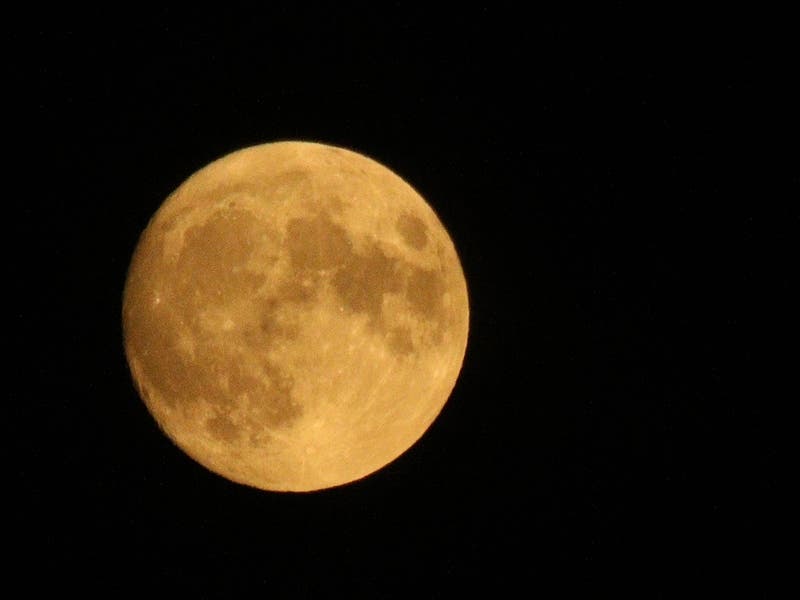
The term isn’t universal among Native American tribes. Other names for the August full moon include the Green Corn Moon and Grain Moon.
Once Seen As An Omen
Folklore surrounding lunar eclipses often casts the darkening or reddening moon as a sign of trouble brewing in the heavens.
Across cultures, eclipses have been blamed on dragons, wolves, jaguars, serpents and other creatures said to be swallowing or attacking the moon. Some traditions called for beating drums, shouting or making other noise to scare the creature away, while others viewed the red “blood moon” as an omen of war, death, famine or political upheaval.
Other beliefs focus on protection and purification. In some traditions, pregnant women were warned not to watch an eclipse or were told to carry charms or metal objects, while some people fasted, discarded food or bathed afterward. Despite the differences, many eclipse traditions share a common idea: The normal order of the sky has been temporarily disrupted, and rituals can protect people or help restore it.
When To See It Again
The next total lunar eclipse, on Dec. 31, 2028, will be visible in totality from Alaska and Hawaii, while parts of the western continental United States will see only partial or penumbral phases. North America gets another total lunar eclipse on June 25-26, 2029, followed by a third on Dec. 20, 2029, although viewing of totality during the December eclipse will vary by location.