
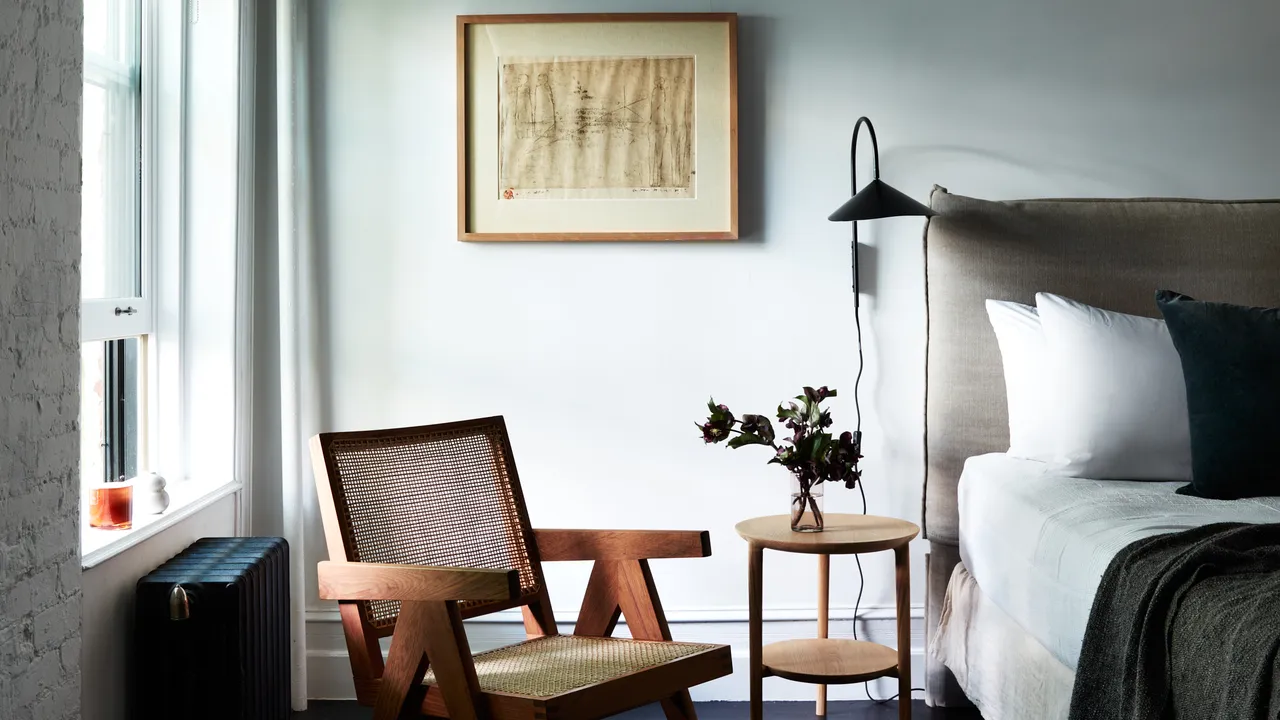
A restored brownstone restoration defined by European restraint and prewar grandeur, a transformation that balanced history with understated modernity.
Not every house search spans years, but the right home is worth the wait. For a young Belgian-born couple, both doctors raising two children in Manhattan, the quest took them through dozens of Upper West Side properties before they found this 1899 Charles Guilleaume brownstone on a quiet, landmarked block. The proportions stopped them first: human-scaled, symmetrical, flooded with light. Then the wife descended to what would become the kitchen, glimpsed the ornate plasterwork ceiling, and simply knew. “She turned to me and said, ‘This is it,’” her husband recalls. “I asked if she needed to see the rest of the house. She said yes, but that she didn’t need to; she could feel it was ours.”

Photo: Tim Lenz
Part of that feeling was possibility. The brownstone, one of seven built by Guilleaume in a graceful Queen Anne row, had been carved into a two-family dwelling with awkward flow and a kitchen buried at garden level. But beneath the subdivisions lay soaring ceilings, original millwork, and generous bones. The couple called Aurora Farewell, the architect and designer they’d been working with throughout their search, and embarked on a gut renovation that would honour the home’s 1899 pedigree while recalibrating it for contemporary family life.