
The trade war between the United States and Canada took an unexpected turn Tuesday morning, when President Donald Trump threatened to change the name of the smallest of the Great Lakes, which is entirely surrounded by both countries. The body of water that Trump wants to rename Lake America wasn’t always called Lake Ontario, either.
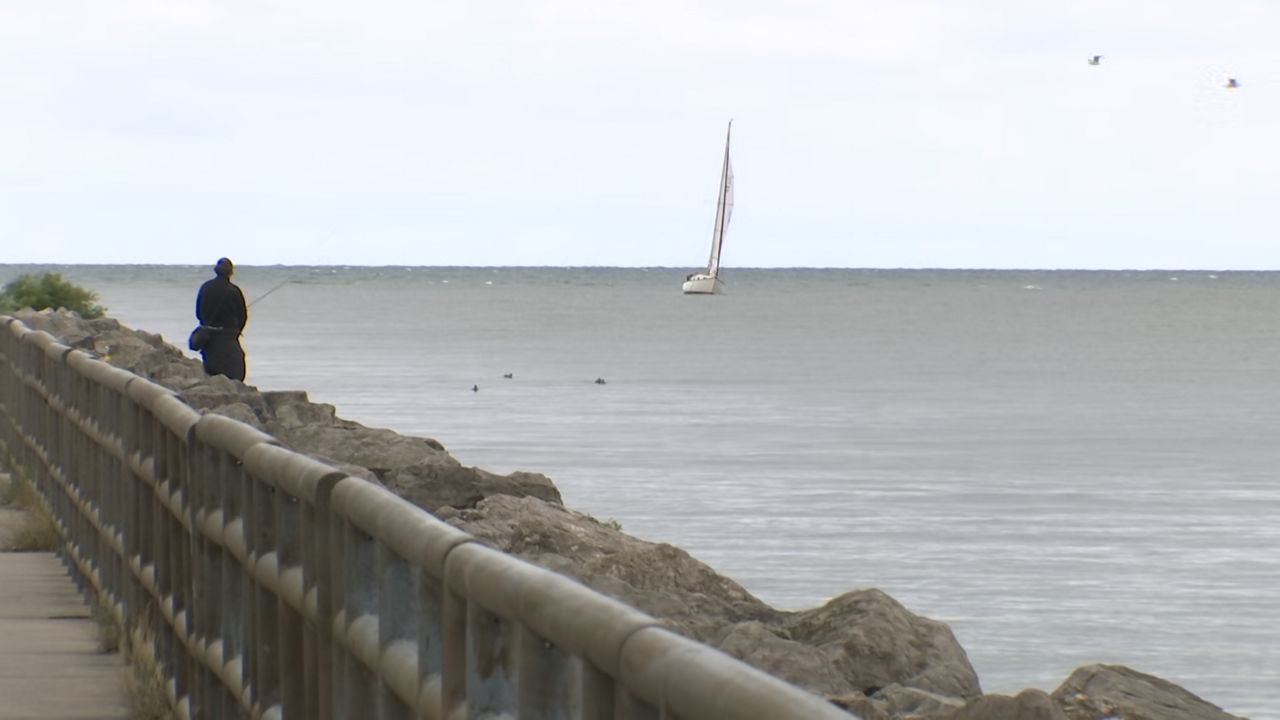
You can’t see it from Rochester, but the Canadian shoreline is located about 55 miles from the Port of Rochester, directly across Lake Ontario. At the park named after the lake, there are plenty of opinions about an early morning social media post by President Trump, saying he’s considering changing the name.
“It’s just hideous, you know,” said Joseph Hernandez of Rochester. “Changing the name of the lake makes no sense to me.”
Hernandez goes bass fishing on the Genesee River Pier, which juts out into Lake Ontario, every chance he gets.
“There’s a lot of bigger fish to catch than changing the name of Lake Ontario,” he laughed, while holding up one of the bass he caught.
Of the more than a dozen people we talked to about changing the name to Lake America, none expressed support for the move.
“The attempt to rebrand everything under the guise of nationalism feels very hokey,” said Craig Hertel. He believes talk of a name change is a distraction from more pressing issues, including climate change and the economy.
“We just keep going back to these issues of, like, a very disingenuous patriotism,” he said.
When President Trump changed the name of the Gulf of Mexico to Gulf of America in 2025, he did it through executive order — a move which generally is not recognized by other countries.
The name Ontario is indigenous in its roots. According to Michael Galban, director of the Seneca Art and Culture Center at Ganondagan State Historic Site, it is a Seneca or Haudenosaunee term which means “a beautiful lake.” Ontario is one of the many names of indigenous origin that still exist across New York and North America, including Ontario, Canada.
“When you name things, you’re kind of asserting ownership over it,” he said. This happened during the colonial process. Lots of renaming of land, renaming of people, even giving them names in your language is a way to kind of assert your ownership and control.”
The English name Lake Ontario dates back to at least the 1600s. For a time, the French had their own name for it, Lac de St. Louis. Changing it now, to Hernandez and others, is hard to make sense of.
“Let’s quit changing the names of everything and start working on America,” he said. “Let’s get serious. Let’s make America great again.”