
History books routinely talk about how George Washington and the Continental army escaped from Brooklyn after losing a major battle, turning a short-term defeat into a major victory.
They, however, rarely explain who helped evacuate the 9,000-strong army after the Battle of Brooklyn in what proved to be possibly the first turning point in the war. Some Brooklynites, though, have been shining a spotlight on heroics in Red Hook that may have saved the Revolution.
“For years I heard Washington escaped,” said Carolina Salguero, founder and executive director of PortSide New York. “There was no description of who helped and what happened.”
PortSide New York, Friends of Fort Defiance and the Red Hook Business Alliance on Saturday, Aug. 22, held events in Valentino Park, the former site of Fort Defiance, highlighting Red Hook’s pivotal role in history.
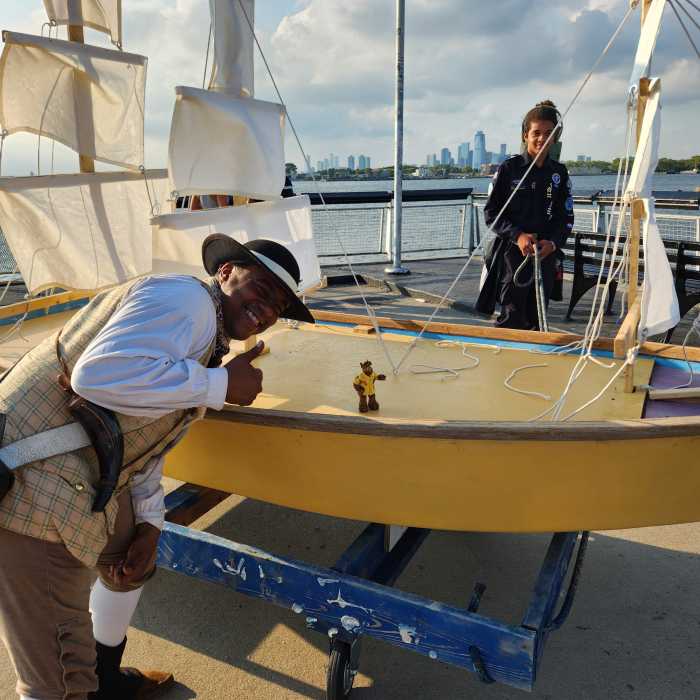 Revolutionary War demonstrations, reenactors and historical displays filled Valentino Park on Aug. 22 as local groups highlighted Red Hook’s overlooked place in the Battle of Brooklyn.Carolina Salguero/PortSide NewYork
They focused on how soldiers at Fort Defiance fought off the British Navy after Washington’s defeat in the Battle of Brooklyn, and how a mixed-race regiment ferried the defeated soldiers across the East River to safety, averting what easily could have been an early end to the Revolution.
“It’s been hard for Red Hook to get respect for its history. Our historic buildings are regularly torn down. The big Battle of Brooklyn retrospectives and reenactments have generally not included Red Hook,” Salguero said. “This is the first time that Red Hook has raised its hand. Red Hook played an important role in the Battle of Brooklyn, but Red Hook is forgotten.”
While the Battle of Brooklyn was recently reenacted in Prospect Park, the Red Hook events focused more on remembering than recreating.
“This was two separate events running at different times on the same day and place, in Valentino Park,” said Matías Kalwill, project director, Friends of Fort Defiance. “We shared resources and coordinated on a number of things.”
Friends of Fort Defiance and the Red Hook Business Alliance presented a panel on “Red Hook’s Proclamation of Historical Significance” as part of the Brooklyn 250 boroughwide program commemorating 250 years of the Battle of Brooklyn, funded by New York state.
“We call it a community celebration,” Salguero said. “Our idea is educating our community about the role of Red Hook in the American revolution.”
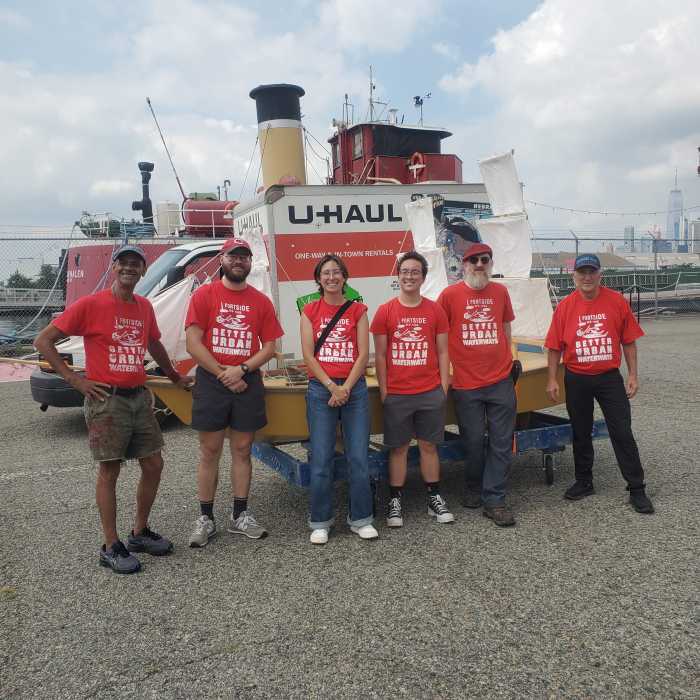 Members of the PortSide New York team gather during an Aug. 22 event in Valentino Park highlighting Red Hook’s overlooked role in the American Revolution.Carolina Salguero/PortSide NewYork
Council Member Alexa Avilés, who, along with Con Edison, also provided funding, said it’s important to remember “Red Hook’s remarkable role in maritime and revolutionary history.”
PortSide presented Living History reenactors, a model of the HMS Roebuck and screened a portion of Ken Burns’ documentary series “The American Revolution.”
“The team from Living History were offering interactive experiences,” Salguero added, saying they discussed objects, answered questions and described “Black life then more broadly.”
They had tables loaded with soldiers’ gear, such as muskets and canteens, among objects evoking the Revolution.
“The PortSide activities delivered historical content in both serious and fun ways,” Salguero said. “The most overheard comment was, ‘I never knew that.’”
PortSide celebrated the role of the 14th Continental Regiment, including African American, Hispanic, Native American and Caucasian soldiers, in evacuating Washington’s army and evading capture.
“The role Red Hook played in warding off the British HMS Roebuck at the start of the Battle of Brooklyn, thus allowing George Washington’s army to live to fight another day, is one such important story,” said PortSide Historian and Curator Peter Rothenberg.
The Marblehead Regiment, or Marbleheaders, was a multiracial regiment led by Col. John Glover from Marblehead, Massachusetts, who worked on fishing and merchant ships and became the core of the new nation’s Navy.
“A lot of those are men of color who rescued them,” Salguero said. “You hear Washington evacuated and not who did it.”
The 14th Continental Regiment rescued the army without alerting the British, who could have ended the war that day.
“It was conducted with the utmost secrecy,” Salguero said. “They were told not to talk, even cough. There were lots of loyalists in Brooklyn Heights.”
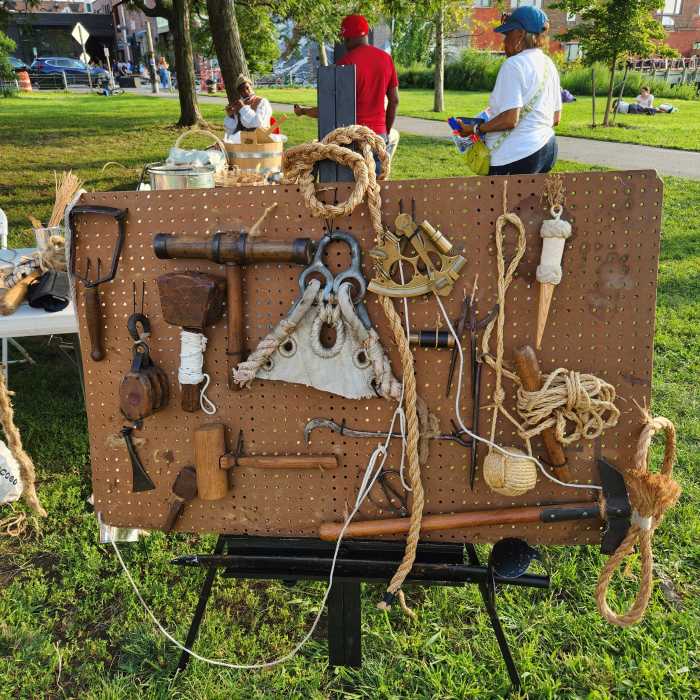 A display honoring the Marblehead Regiment highlights the multiracial unit’s role in helping Washington’s army escape Brooklyn during the American Revolution.Carolina Salguero/PortSide NewYork
One person got wind of something afoot and sent an enslaved servant to report it. The servant’s family spoke Dutch and broken English. By the time they were able to translate it, Salguero said, the evacuation had occurred.
The regiment carried the entire army, including soldiers, horses, artillery and supplies, across the East River to Manhattan.
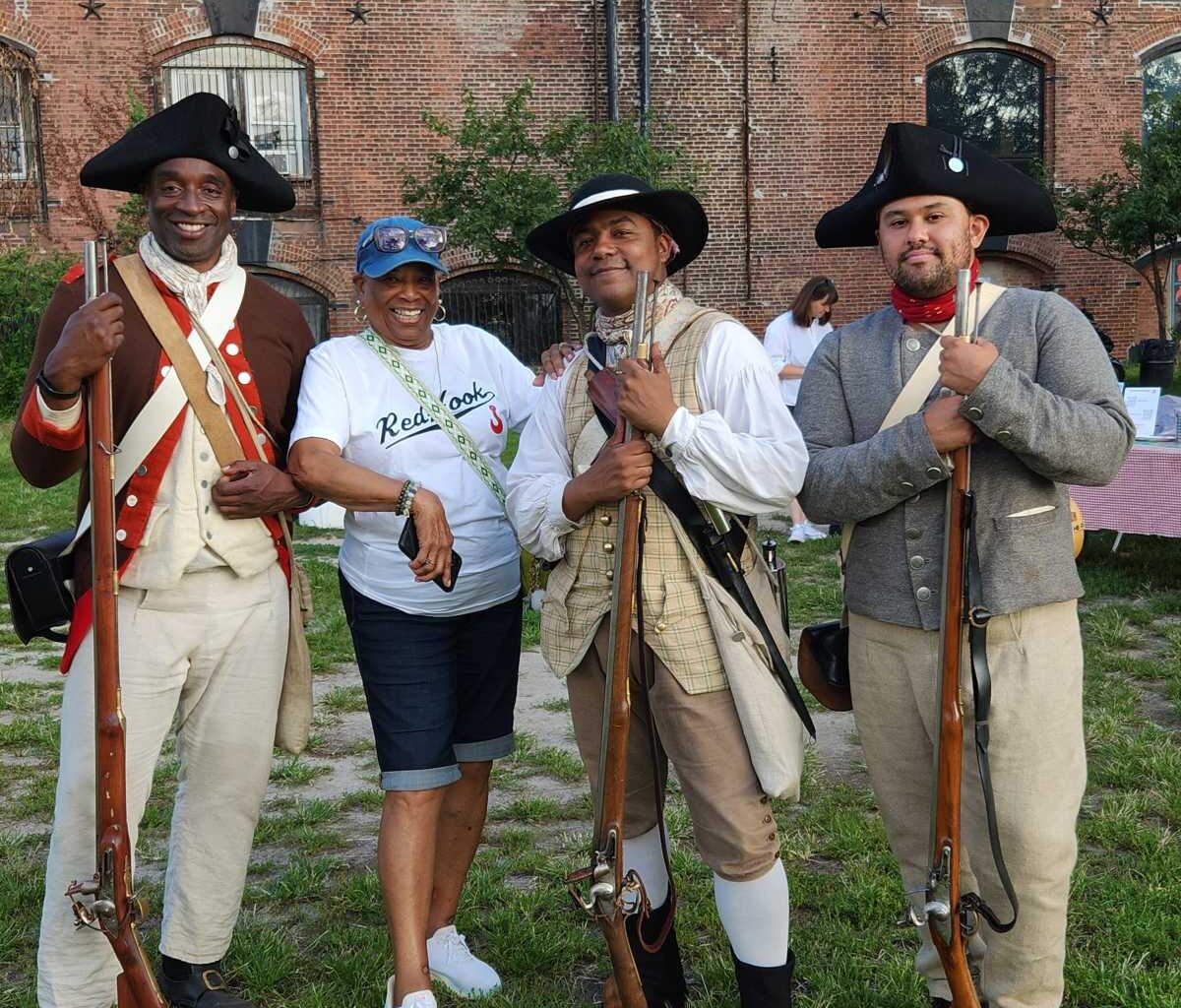
Kevin Chapman, who helps lead Living History Co., a Black-owned and operated historic event staffing and casting company, helped bring the Marbleheaders back to life.
“We focus on portraying the military history of people of African descent in the Americas,” he said.
Fort Defiance shelled the HMS Roebuck, preventing it from sailing up the East River. “If it was able to do that, it would have discovered the evacuation,” Salguero said.
They showed an episode of Burns’ documentary about the American Revolution, which noted that 20,000 of 25,000 New Yorkers left New York City.
“That’s an enormous evacuation,” Salguero said of loyalists who left. “That’s people fleeing. That’s disruptive.”
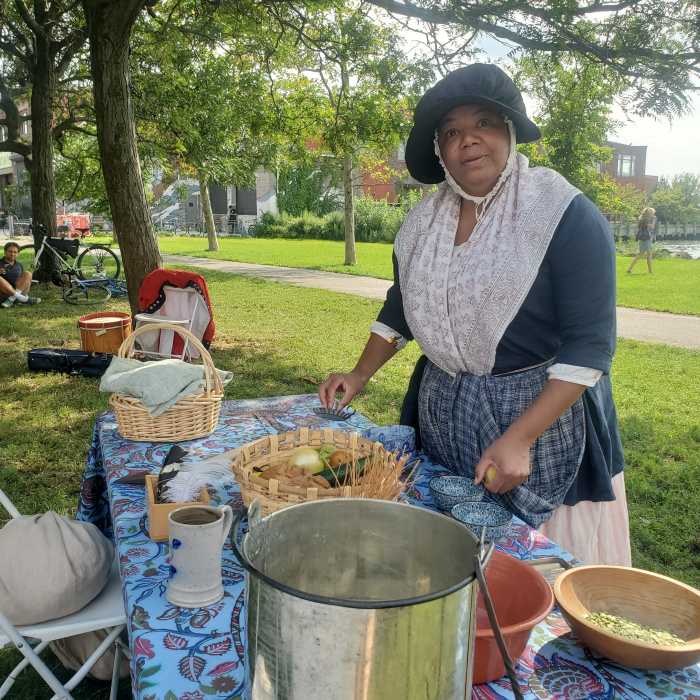 Living History Co. reenactors portray members of the Marblehead Regiment during an Aug. 22 event in Valentino Park highlighting Red Hook’s role in the American Revolution.Carolina Salguero/PortSide NewYork
 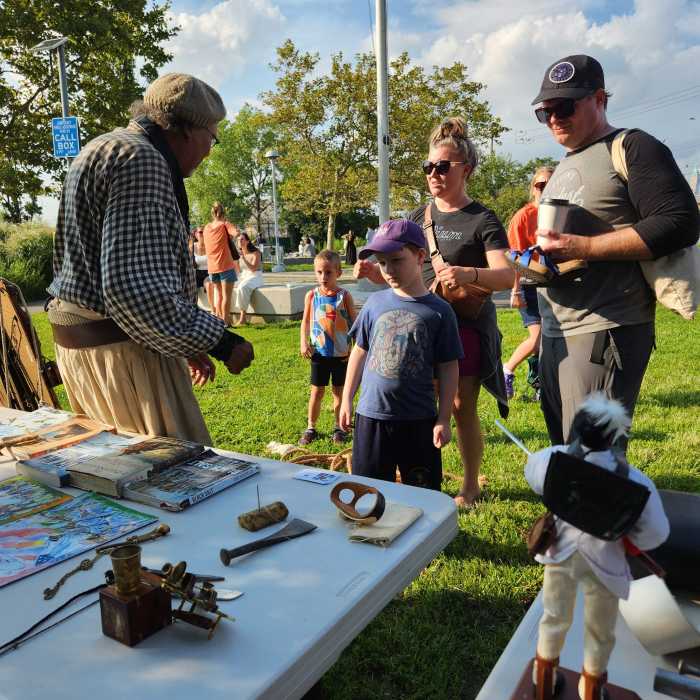 Families take part in Revolutionary War-themed activities during an Aug. 22 event in Valentino Park highlighting Red Hook’s role in the Battle of Brooklyn.Carolina Salguero/PortSide NewYork
Leslie Bramlett explained “camp followers,” or women who, Salguero said, traveled with the Continental army, cooking, doing laundry, serving as field nurses, repairing things and shooting cannons when their husbands were injured.
“Not all camp followers were wives of the men,” Salguero said. “Children also travelled with the Continental army.”
PortSide staged a water pistol fight and built a model of the HMS Roebuck, the British frigate that Fort Defiance repelled by shelling.
“We had a mock battle with water guns that forced the ship away down the pier with kids and adults participating,” Salguero said, noting they sought to entertain as well as educate.