
 13 min read
EVERY EVENING IN the summer of 1978, after the office workers left Citicorp Center, the carpenters arrived. They entered the 59-story tower on Lexington Avenue at 53rd Street in midtown Manhattan and began hiding the evidence of a structural emergency.
They went to the floors where the building’s diagonal steel braces were accessible inside the offices, stripped away the fireproofing material encasing each joint, and built a plywood enclosure around it, just large enough for one man to work inside.
By 8 p.m., the carpenters were gone and the offices were empty. That’s when the welders came in.
They worked until 4 a.m. inside those plywood boxes, welding two-inch-thick steel plates over the bolted joints in the braces. Before dawn, cleanup crews tore down the enclosures, replaced the Sheetrock, relaid the carpet, and swept everything away. By the time the first commuters pushed through the lobby doors, any signs of the night’s work had vanished.
The employees who rode the elevators up to their offices, ate lunch in the concourse below, and walked beneath the tower had no idea that crews were secretly reinforcing the structural joints that kept the building standing.
Only a few people knew why the work had to happen at night. One of them was William LeMessurier, the structural engineer who’d designed the tower. Less than a year after Citicorp Center opened with considerable fanfare, LeMessurier had concluded that one of the tallest skyscrapers in the world might not survive the wrong storm.
He estimated that if the building’s tuned mass damper—a 400-ton device mounted near the top of the tower to reduce wind-driven sway—lost power during a major storm, the structure could fail in a so-called 16-year storm, meaning winds with roughly a one-in-16 chance of hitting the city in any given year. As he later put it, he had the power to influence extraordinary events. He understood the numbers and could choose to act on them—or not.
LeMessurier was also the reason the numbers were what they were.
“No one could possibly know there was anything wrong with the building. It was complete and occupied. The problem was hidden within.”
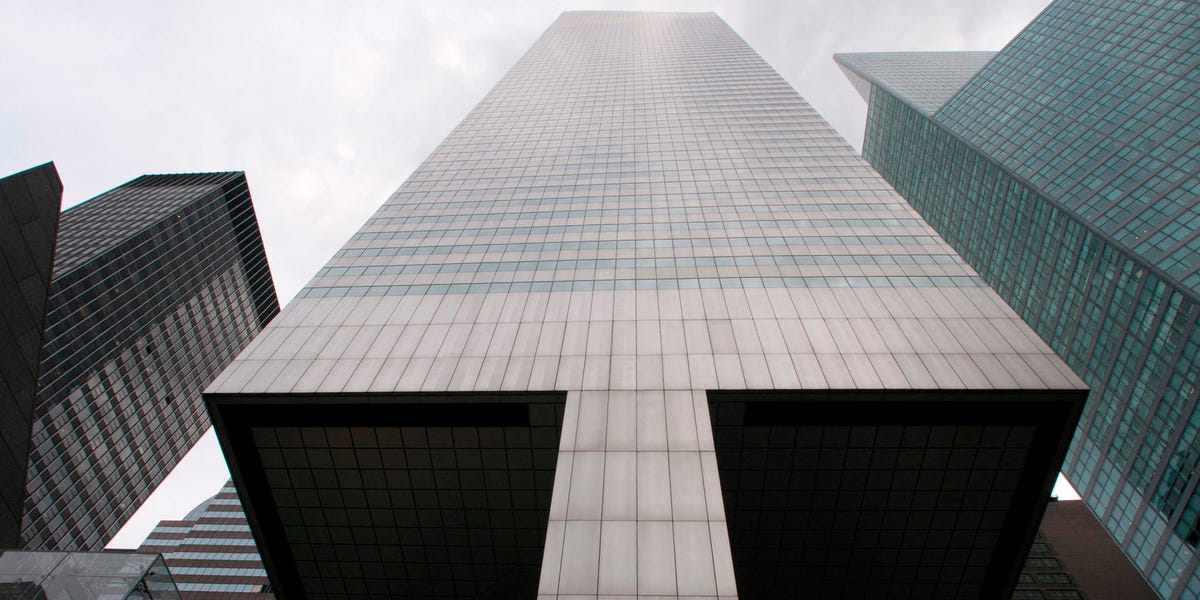
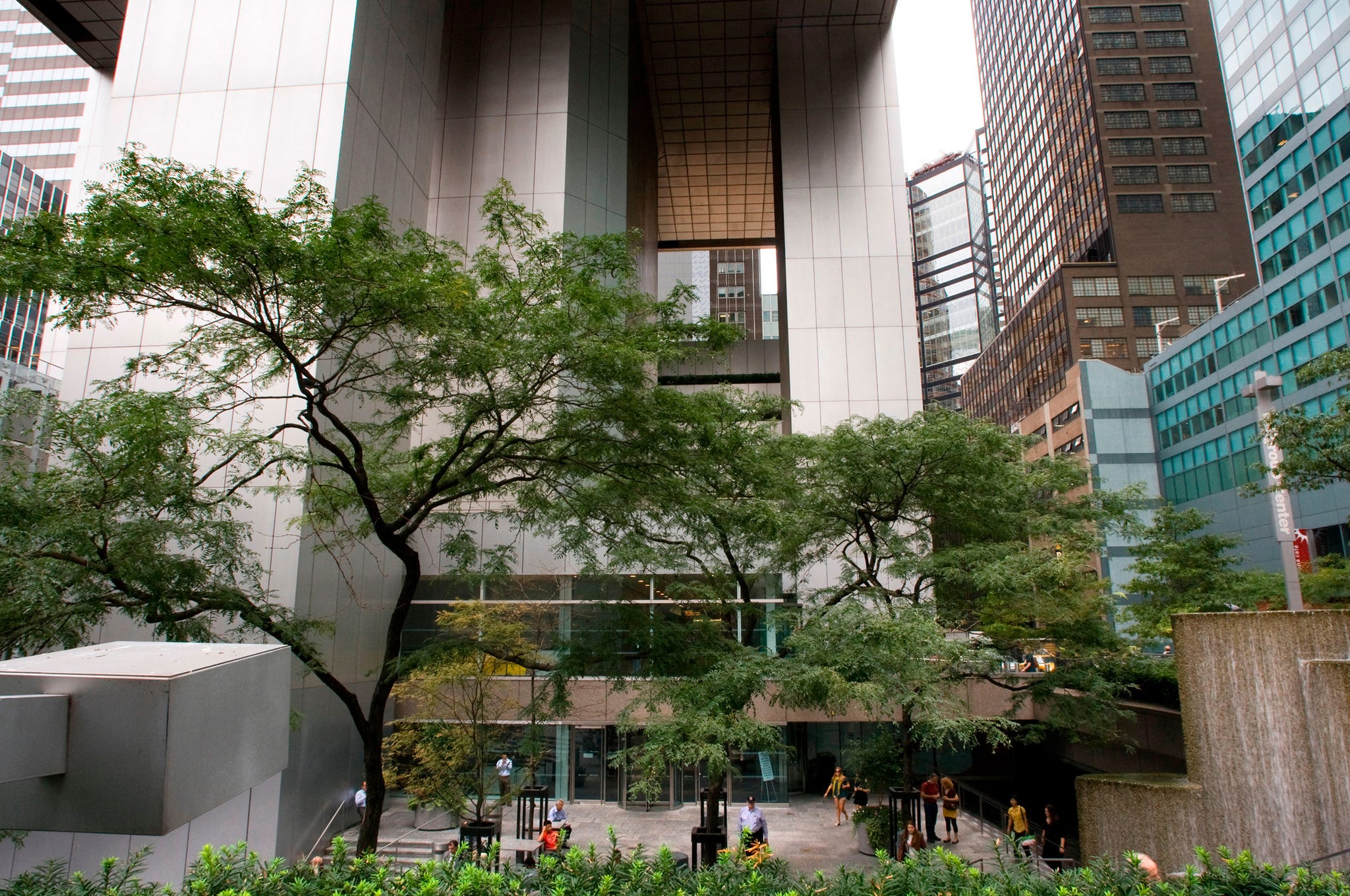
THE DANGER BEGAN with a design compromise forced by the site itself. A conventional skyscraper normally carries much of its weight through columns at or near its corners. But Citicorp Center couldn’t. While St. Peter’s Lutheran Church, which occupied the northwest corner of the development site at 54th and Lexington, would allow the tower to rise above it, the congregation refused to sell the land. So Hugh Stubbins, the architect based in Cambridge, Massachusetts, who’d been hired to design the tower, conceived its unusual form. And LeMessurier engineered the solution: Instead of placing the tower’s four main support columns at the corners, he moved them to the midpoint of each side, allowing the tower to cantilever over the church. The columns rose nine stories from street level like massive stilts. From the sidewalk, the building appeared to float.
This arrangement made the building unusually light for its height, which meant it could sway perceptibly in a strong wind. LeMessurier’s answer was the tuned mass damper, mounted on pressurized oil bearings and calibrated to counter the building’s natural oscillation.
You’ll Love These Stories
LeMessurier also designed a system of V-shaped chevron braces, stacked in eight-story tiers on each face of the building, to carry wind loads down to the stilts below. In his design, the joints where those chevrons met were welded connections. That mattered because the braces carried wind loads and vertical gravity loads, making their joints especially sensitive to any reduction in strength.
During construction, Bethlehem Steel successfully made the case that welded joints were overkill and that bolted joints would be just as safe. The change reportedly saved Citicorp about $250,000. LeMessurier’s New York office approved it. LeMessurier, working from Cambridge, didn’t know about the switch. The larger problem is that nobody went back and fully recalculated how those bolted joints would behave under quartering winds—the diagonal winds that strike a building at its corners rather than straight against its faces.
The mid-side columns rewrote the tower’s relationship with wind. In a conventional tower, corner columns help resist diagonal winds. This building had no corner columns. Its strength was shifted to the middle of each side, which meant wind striking the structure at an angle could create stresses that the original analysis had not treated as the governing case—that is, the scenario that produces the most critical structural demand. LeMessurier had analyzed quartering winds and concluded they weren’t the critical threat.
The flaw sat invisible inside the tower through the fall of 1977 and into the spring of 1978, while Citicorp employees settled into their offices and the concourse below filled with shops, commuters, and foot traffic.
 Alamy
Alamy
Citicorp Center doesn’t meet the ground the way most skyscrapers do. Its corners hang above Midtown Manhattan, while four massive columns carry the tower from the middle of each side. That daring design helped create the hidden weakness engineers raced to fix in the summer of 1978.
THE FIRST PEOPLE to tug at the loose thread were not senior engineers, bank executives, or city inspectors. They were students.
In the spring of 1978, Lee DeCarolis was a freshman architecture student at the New Jersey Institute of Technology in Newark. His structural engineering professor, John Zoldos, assigned students to write a report about a building of unusual design. DeCarolis had been reading about Citicorp Center in an architecture magazine and decided to visit it. Before he went, Zoldos had raised concerns about the building’s column placement.
“He thought it might have been overly ambitious in its attempt to create a cutting-edge design,” DeCarolis recalls. “He also reminded us that the first concern of building designers must be safety.”
DeCarolis decided to call LeMessurier’s office. He says he was put through directly and that they spoke twice, the second time for about 30 minutes. “I told him about my professor’s comments,” DeCarolis says, “and LeMessurier explained about the structural design. He was a bit annoyed that the design was questioned.”
LeMessurier told him the columns were placed exactly where they should be. He also explained the tuned mass damper, which DeCarolis found remarkable. Then the conversation ended and DeCarolis submitted his paper. Over the next two decades, he heard nothing about the building.
Around the same time, Diane Hartley, a senior engineering student at Princeton University, was writing her undergraduate thesis on Citicorp Center under the supervision of David Billington. Her focus included the building’s response to quartering winds, and her calculations suggested stresses higher than the values provided to her by LeMessurier’s firm.
Hartley raised the issue with a junior engineer in the firm’s New York office. He told her the building was safe and that its design was, in fact, more efficient. She was an undergrad, so she deferred to him and moved on.
Neither Hartley nor DeCarolis claims to have understood, at the time, that anything was seriously amiss. “No one could possibly know there was anything wrong with the building,” DeCarolis says. “It was complete and occupied. The problem was hidden within.”
It’s still not entirely clear whose question, if any, directly set LeMessurier on the path to his calculations. An account in The New Yorker describes a single phone call from an unnamed male student. Hartley identified herself publicly in 2011 as the probable student in the story. DeCarolis came forward more recently, writing that he was the young man LeMessurier remembered from New Jersey.
The two students were asking different questions in different contexts, and neither spoke directly with LeMessurier in a way that has been fully corroborated. What can be said with confidence is this: By early summer 1978, LeMessurier had returned to the one problem the building couldn’t afford to get wrong: quartering winds and chevron braces.
THE FINAL PROMPT came from somewhere else. A contractor on a separate Pittsburgh project had asked about the cost of welded joints, which led LeMessurier to inquire about Citicorp Center’s connections. That’s when he learned about the bolts. Then he sat down and did the math.
On July 24, 1978, he ran the numbers. For four of the eight tiers of chevrons, quartering winds would put 40 percent more force on the structure. At the bolted joints, the force would be 160 percent greater. The welded joints he had specified could survive those loads. The bolted joints could not.
The combination, as Michael M. Greenburg, author of The Great Miscalculation: The Race to Save New York City’s Citicorp Tower, explains it, was the crux: “A perfectly acceptable design change became dangerous because its implications weren’t fully traced through the system as a whole.”
“Instead of a straightforward story of heroism, what emerges is a more human and more ambiguous one—about responsibility, risk, and the difficult line between preventing panic and withholding critical information.”
ALMOST IMMEDIATELY, LeMessurier understood what this meant. He later said that he saw three choices: say nothing, take his own life, or tell the truth. He chose the third, beginning with lawyers and insurers before working his way to Citicorp’s senior executives.
Citicorp agreed that repairs had to begin as quickly as possible. Leslie Robertson, the lead structural engineer for the World Trade Center, was brought in as an independent expert adviser. Karl Koch Erecting, the firm that had constructed the Twin Towers, was hired for the welding. The fix was straightforward and difficult. Two-inch steel plates would be welded over each of more than 200 bolted joints, converting them to connections stronger than the original design had required.
The decision was made to keep the public in the dark. Internally, the repair operation was called Project Serene—an acronym for “Special Engineering Review of Events Nobody Envisioned.” The name sounded silly, but the stakes were anything but.
New York City Mayor Ed Koch was informed, as was the acting buildings commissioner and the head of the welders’ union. City officials and Citicorp planned a 10-block evacuation radius in case a major storm arrived before the repairs were done, with roughly 2,500 Red Cross volunteers on standby. Three separate weather services were hired to provide updates throughout every day. Emergency generators were installed to keep the tuned mass damper running if the power failed during a storm.
“We had to cook up a line of bull,” LeMessurier would later say, describing how the repairs were framed publicly as elective rather than urgent. When a New York Times reporter called with questions, LeMessurier mixed himself a martini and called back at 6 p.m., expecting a difficult conversation. What he heard instead was a recorded message: The Times had gone on strike.
Within days, all three of New York’s major papers had shut down. The story had no place to land. The strike was “the greatest thing that ever happened,” LeMessurier reportedly said.
The work continued each night under the same choreography: carpenters at 5, welders at 8, cleanup before dawn. The building’s occupants went about their days while the bracing above and around them was systematically reinforced.
LeMessurier tracked the progress joint by joint. “I was constantly calculating which joint to fix next,” he later said, “which level of the building was more critical, and I developed charts and graphs of all the consequences: If you fix this, then the rarity of the storm that will cause any trouble lengthens to that.”
Then the weather did exactly what everyone feared.
On August 30, 1978, Hurricane Ella formed south of Bermuda and then intensified rapidly as it tracked northwest. By the time it reached wind speeds of 125 miles per hour, it was being watched from the meteorological outpost that LeMessurier and Robertson had assembled. The repairs were roughly halfway done. The evacuation plan was no longer theoretical.
But then Ella slowed down, turned, and veered out to sea without making landfall. It took 12 more days before the evacuation watch was officially stood down.
The welding continued through October, and when it was done, the building that LeMessurier had calculated could be brought down by a 16-year storm could now, by his estimate, withstand a 700-year event.
The newspapers were still on strike when the repairs were completed. The secret Citicorp saga stayed buried for 17 years.
 Alamy
Alamy
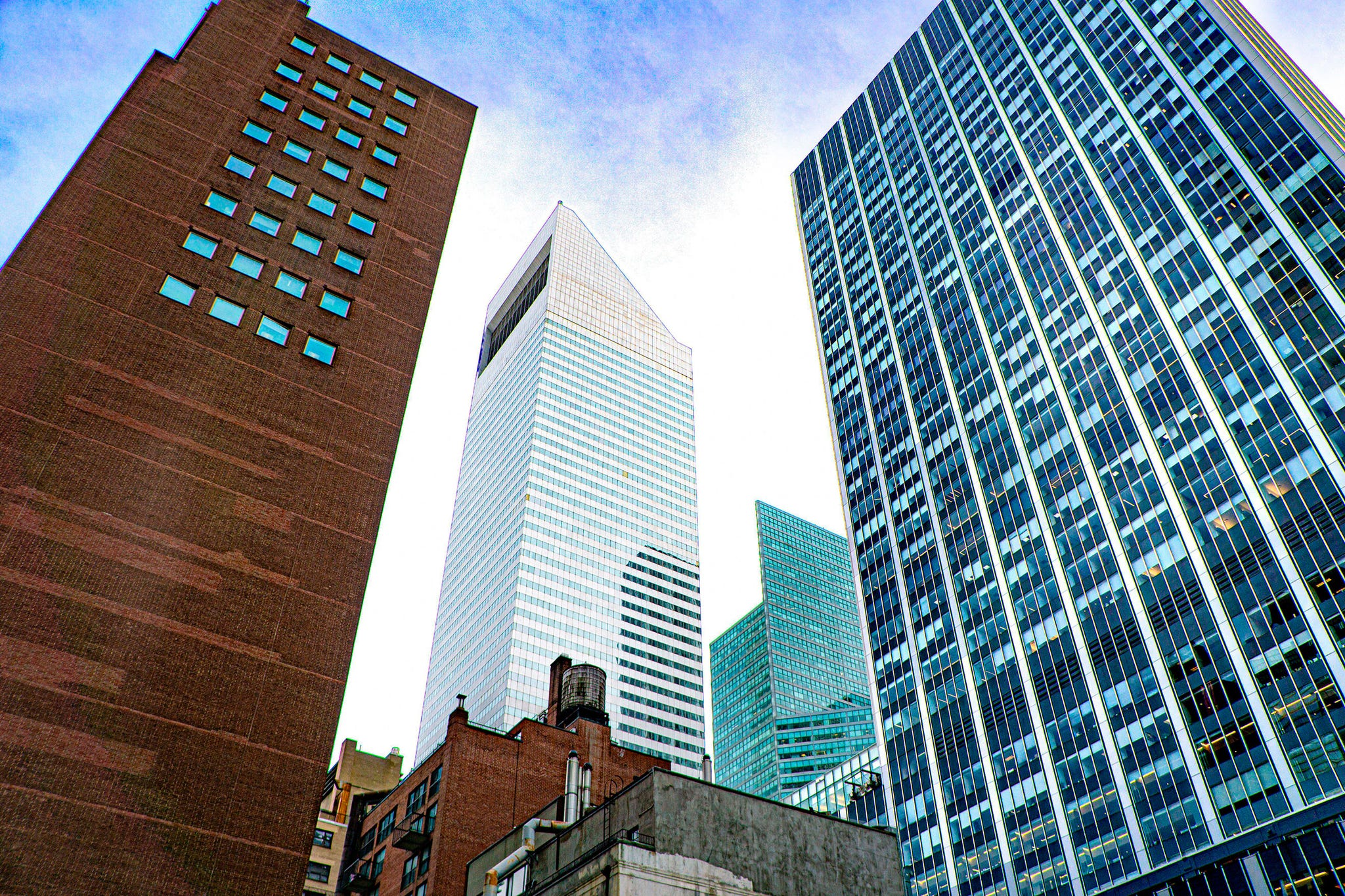
By day, Citicorp Center looked like a finished Manhattan skyscraper. By night, repair crews moved through its offices, welding steel plates over hidden joints in a race to strengthen the tower before the wrong storm arrived.
THE STORY BECAME famous only in 1995, when journalist Joseph Morgenstern broke it in The New Yorker. Morgenstern had first heard about the crisis at a dinner party, tracked LeMessurier down, and spent a long weekend at the engineer’s summer home in Maine getting the full account. The resulting piece, “The Fifty-Nine-Story Crisis,” was a sensation in the engineering world and beyond: a dangerous mistake discovered, a brave confession made, a city quietly spared.
In that version, there were heroes but no villains; LeMessurier’s reputation emerged not damaged but burnished. The engineering community largely agreed. Here was a man who’d discovered a potentially catastrophic flaw in his own work, walked into the offices of one of the most powerful banks in the world, and told them he was going to fix it. The story was taught in ethics courses and held up as a model of how a professional should behave when the stakes are at their highest.
The problem, according to Greenburg, a real estate attorney and historian who dug into LeMessurier’s private files and Morgenstern’s notes to write The Great Miscalculation, is that the legend was curated. “Instead of a straightforward story of heroism,” Greenburg says, “what emerges is a more human and more ambiguous one—about responsibility, risk, and the difficult line between preventing panic and withholding critical information.”
None of this erases what LeMessurier did right. He disclosed the problem rather than burying it. He organized a solution. These are not trivial things, and the engineers and executives around him responded quickly and competently.
But Greenburg argues that the way the story was subsequently shaped, first through the 1995 New Yorker piece and then through its adoption as a textbook ethics case, smoothed over some of its most uncomfortable ambiguities. Because the public explanation for the repairs was that they were elective improvements rather than an urgent structural intervention, almost no one in that community knew what had happened. The engineering community learned nothing from the case for nearly two decades.
“There was also a disinclination to fully disclose the details of the problem to the engineering community after the fact,” Greenburg says. “That decision was partly about protecting reputations, including LeMessurier’s own, when lessons learned from the crisis could no doubt have been of great benefit to the design profession.”
And then there’s the technical dimension, which cuts deeper than most tellings of the story have acknowledged. In 2018 and 2019, Dat Duthinh at the National Institute of Standards and Technology published analyses using the Database-Assisted Design method, a modern approach that uses hundreds of simultaneous pressure sensors and high-speed computing to analyze wind loads on a building at every moment and in every direction.
The conclusion threatened to invert the premise of the crisis. Face winds, not quartering winds, place greater structural demand on Citicorp Center. In their analysis in the 1970s, engineers had factored in two perpendicular aspects of quartering winds, as if those forces acted independently when they did not, which made the corner wind problem seem more severe than it actually was. The calculation driving the entire emergency may have been wrong in this specific and consequential way.
Greenburg doesn’t dismiss the finding. “The picture may not have been quite so clear-cut,” he says. “Under certain assumptions, face winds could produce comparable or even greater stresses in parts of the structural system than previously appreciated.”
He argues that LeMessurier’s decision to act was still prudent given what was known in 1978, and that defense has merit. Engineers can only work with the tools and models available to them. But it also changes the story. The building may have been repaired not because the original construction change was correctly identified as dangerous, but because an error in the wind load calculations exposed a separate mistake in the analysis of that change. LeMessurier’s alarm was genuine; whether the danger matched it remains unclear.
“The paramount duty of an engineer is to protect public health and safety. Not every engineering decision rises to this level of potential risk.”
KODI VERHALEN, a partner at the law firm Taft and a former president of the National Society of Professional Engineers (NSPE), has spent years watching the case get taught, argued over, and simplified. What she finds most durable in it is not the midnight welding or the hurricane, but something that happened months earlier. DeCarolis and Hartley, the engineering students, had both raised concerns and were dismissed.
“Consistent in both accounts is skepticism of their findings,” she says. “In both accounts, the students were initially not taken seriously, even though they were correct. I think there’s a lesson to be learned by all about keeping an open mind when receiving feedback, and carefully and diligently investigating the impact of that feedback.”
The NSPE Code requires engineers to “hold paramount the safety, health, and welfare of the public” while also recognizing duties of client confidentiality. The tension between those obligations is what makes the Citicorp saga tricky. The NSPE Board of Ethical Review, which issues opinions on hypothetical scenarios rather than specific historical disputes, later considered a case involving an engineer who believed a client’s structure posed a potential danger to public safety. In that hypothetical, the Board concluded that an engineer’s obligation to protect the public could require disclosure to appropriate authorities if the client failed to act.
“The paramount duty of an engineer is to protect public health and safety,” Verhalen says. “Not every engineering decision rises to this level of potential risk.” LeMessurier’s duty to his client mattered, but so did the consequences for the people inside and around the tower.
What the code can’t resolve is what happens after the immediate danger. LeMessurier disclosed the problem to Citicorp and helped oversee the repairs. But once the building was strengthened, the harder questions shifted: how much to disclose, to whom, and how to balance public understanding against client confidentiality, liability, reputation, and fear.
DeCarolis, who became an accidental footnote in engineering history, draws a narrower conclusion. “LeMessurier did the right thing to fix the problem once he discovered it,” he says. “There is also much to be gleaned about the construction approval process, since the steel shop drawings were approved with the bolted design.”
The bolted joints were reviewed and accepted by someone in a position to catch the problem. And yet they weren’t caught. The story of Citicorp Center is not primarily about one dramatic moment of disclosure. It’s about all the moments before that, when the building’s vulnerability was visible to anyone who looked at the right set of drawings with the right questions in mind—and yet nobody did.
Somewhere above the lobby where commuters pushed through every morning that summer, welders were working, a storm was being tracked, and LeMessurier was calculating which joint to fix next.
The building still stands at 601 Lexington Avenue. From the sidewalk, it still appears to float. Most people walking past it have never heard of Project Serene, or Hurricane Ella, or the bolted joints that became welded joints in the dark.
That’s partly a function of secrecy, and partly a function of the way we prefer our engineering stories: one hero, one discovery, one close call, and a clean resolution at the end. The actual story has all of those elements. It also has a lot of things the textbook version quietly removed.


Eric Spitznagel is a frequent contributor to magazines like Playboy, Esquire, and the New York Times, and was employed for over two decades by the Second City comedy theater, where Stephen Colbert was his Secret Santa _twice.