
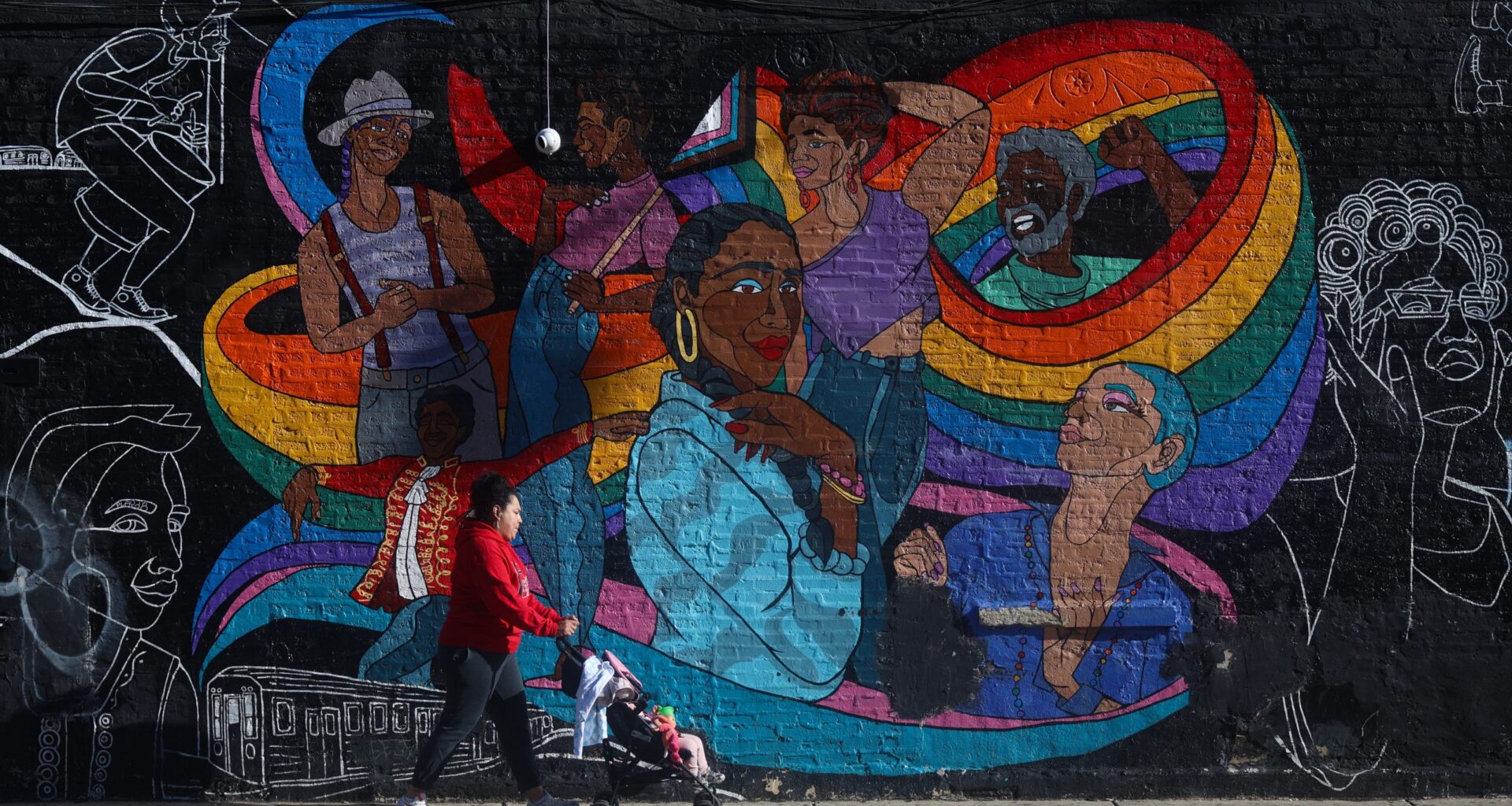
PILSEN — A travel guide aimed at finding the coolest neighborhood in every major city dubbed Pilsen the “Brooklyn of Chicago.” But longtime Pilsen residents aren’t so sure about the comparison.
Brooklyn Of, created about six months ago by Per Stenius of Stockholm, Sweden, aims to provide a guide to the creative neighborhoods of more than 150 cities worldwide for travelers who like to skip tourist hubs and visit places where locals spend their time. A “Brooklyn” is a metaphor, the site states, for a cool, up-and-coming neighborhood, based on a travel shorthand used for two decades everywhere from Stockholm to Oakland.
“It’s the cool neighborhood. That’s the short version,” Stenius said. “The one where people actually live and eat, where the good places came from somebody’s obsession instead of a business plan, and where the guidebooks are a few years behind.”
Stenius said his own neighborhood, Söder in Stockholm, known as the Swedish city’s creative, bohemian heart, was the first “Brooklyn” on the site. He created Brooklyn Of because he’d search “what is the Brooklyn of x” before every trip, looking for a “boutique hotel with a point of view, good coffee in the morning, dinner at a place that opened last month, a cocktail bar hidden behind a mirror in a pub” all in one area.
Stenius acknowledges that measuring someone else’s city against a New York City borough is “a little provocative.” If the verdict makes locals want to argue with him, the site is working, it states.
“Arguing about it is the fun part. Everyone agrees with the premise, and nobody agrees with the pick for their own city,” Stenius said. “If Block Club readers want to make the case for Avondale or Bridgeport, that’s a better story than anything I can write from Stockholm.”
Stenius said he hasn’t spent time in Pilsen. He last visited Chicago about 10 years ago, staying in Wicker Park when its cafes, record shops and bars along Milwaukee Avenue made it the “Brooklyn” of Chicago at the time. He said he picked Pilsen after a lot of online research and conversations with friends living in Chicago who confirmed his choice.
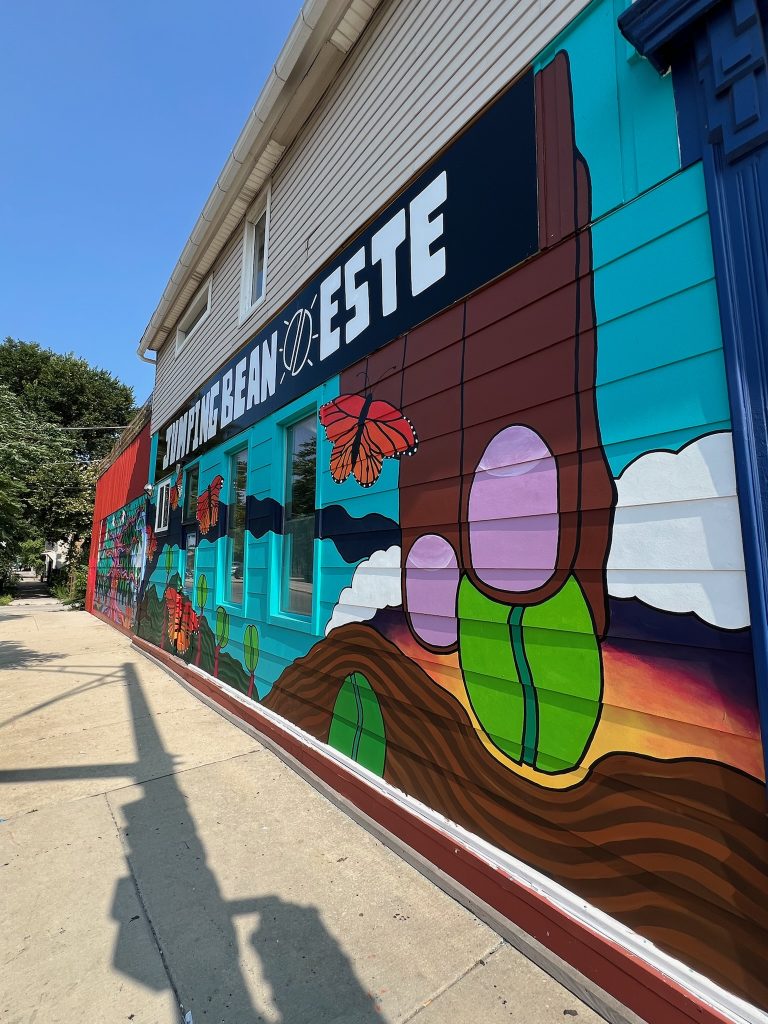 The mural outside the new Cafe Jumping Bean, 2025 S. Halsted St., in Pilsen, was painted by owner Eleazar Delgado’s brother, Guillermo Delgado. Credit: Provided/Eleazar Delgado
Stenius said he chose Pilsen primarily because it’s home to one of the largest Mexican communities in the United States, and the neighborhood is built around that community, instead of tourists or visitors. The guide points to West 18th Street as the main drag, and highlights the street’s taquerias like Carnitas Uruapan and 5 Rabanitos Restaurante & Taqueria, coffee shops like Cafe Jumping Bean and Urban Treez Chicago, and bars like The Alderman and Punch House.
Art in Pilsen is a major factor, too, Stenius said. He points to the free-to-enter National Museum of Mexican Art being the largest Latino cultural institution in the country, and Thalia Hall’s live music offerings.
Stenius also attributed the over 200 murals in Pilsen that date back more than 60 years, including a stretch along West 16th Street that continues for miles. Chicano muralists and Ukrainian mosaicists turned public spaces into massive works of art during the 1960s and 1970s as a form of political activism at a time when their cultural groups faced suppression. The tradition continues today.
“That’s the difference between a neighborhood with an art scene and a neighborhood where art is part of how it talks about itself,” Stenius said.
 Oscar Romero repaints his Aztec calendar mural in the 1300 block of West 16th Street in Pilsen on Dec. 8, 2021. Credit: Colin Boyle/Block Club Chicago
Stenius’s full guide to Pilsen can be found here.
Stenius said the obvious part of the comparison is that Brooklyn became expensive and gentrified as wealthier individuals and artists flocked to the New York borough. Pilsen has undergone rapid gentrification for years, driving up the cost of rent and forcing out longtime families.
“Naming a neighborhood isn’t the same as cheering for what comes next,” Stenius said.
Logan Square was also a contender and is listed as the runner-up on Chicago’s page of Brooklyn Of, Stenius said, but the neighborhood is “further along” in its transformation.
“The punk houses are cocktail bars now,” Stenius said of Logan Square. “Pilsen has kept more of itself.”
Stenius said he understands lists and labels, including travel sites, have always been part of how neighborhoods get hyped, adding that Pilsen isn’t interesting because of these lists, but because of 60 years of murals and the community that painted them.
He said every recommendation on the guide is independent and rooted in the neighborhood, and hopes that if someone spends money in Pilsen because of Brooklyn Of, it lands in businesses its residents built, not chains. If longtime residents think he got something wrong, he said he wants to hear it and that the site changes as locals prove it wrong.
“It’s the same tension everywhere in travel: some people hate the attention, some see the good it can bring, and it differs from person to person,” Stenius said. “We mean no harm with the site. We built it to celebrate unique places, not to put a target on them.”
Developers Flood Neighborhood
For Pilsen locals, gentrification is a big part of the story. But they worry that designations like being named the “Brooklyn of Chicago” are contributing.
Cesario Moreno, the visual arts director of the National Museum of Mexican Art, 1852 W. 19th St., said he’s reminded of when Forbes named Pilsen one of the 12 “Coolest Neighborhoods Around the World” in 2018. The neighborhood had already been undergoing gentrification for decades prior, he said, but the Forbes article sparked a noticeable and immediate transformation of Pilsen.
He said developers flooded into the neighborhood, building massive apartment buildings catered toward couples instead of families. He said families were displaced because they could no longer afford the climbing rent prices or because their landlords were selling properties to the big developers, who’d flip them. More restaurants that didn’t serve Mexican food began opening, he added.
“People have been talking about the neighborhood becoming gentrified, and it has been growing every year for the past decades,” Moreno said. “But after that Forbes article went out, my goodness, it really went crazy. It was like a steroid shot for the developers to come into this neighborhood, and that’s why we saw a lot of changes happening from one year to the next.”
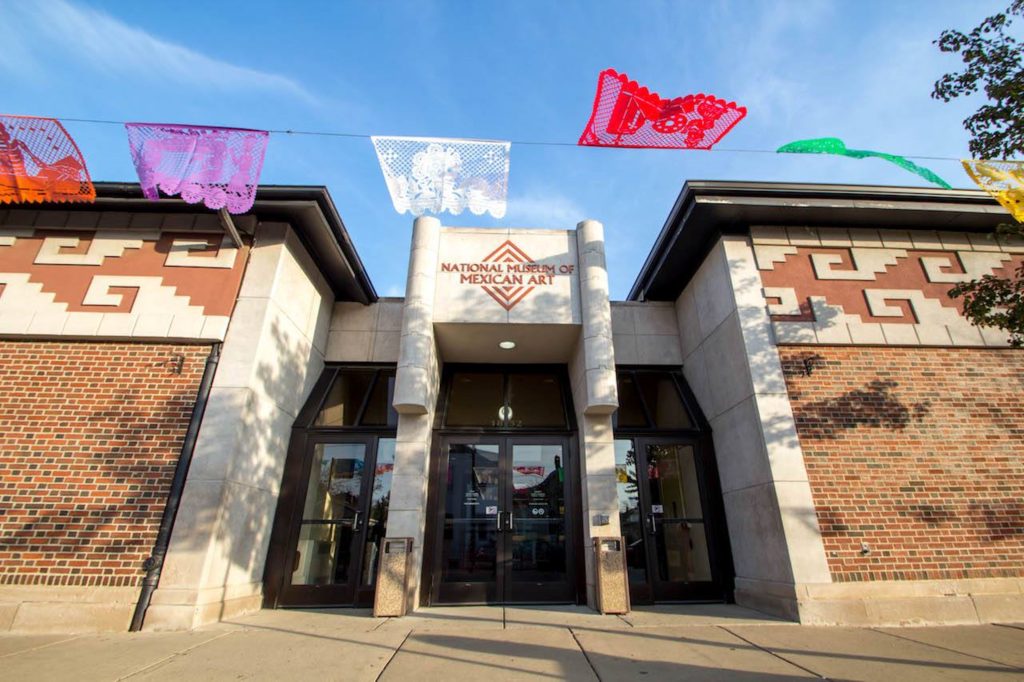 The National Museum of Mexican Art in Pilsen. Credit: Provided
Similarly, he said, city leaders began to capitalize on street art as a way to bring more tourism to Pilsen instead of allowing it to naturally color the neighborhood to express ideas or promote social justice. He remembers a push from local officials to beautify the neighborhood by commissioning more murals on the walls along the train tracks in the years after the Forbes article.
He said he appreciated the opportunities it gave to local artists, but that art funded by the city or those living outside the neighborhood can undermine the purpose of public or street art.
“We wound up with a couple of streets that are really covered with murals and graffiti and beautiful-looking expressions,” Moreno said. “But I’m not sure that they have the heart that they used to have when artists were expressing what the community was feeling.”
Moreno said Pilsen wouldn’t have the cafes, art galleries, festivals and other amenities that tourists and others living outside the neighborhood appreciate about it if it weren’t for the strong sense of community that’s inhabited the area for generations.
“That’s what I wish people would come away with as a memory. So when they’re thinking of Pilsen, they’re also thinking about that person who’s walking the streets selling the paletas or the women in the corners selling the tamales or the amount of kids that live in this neighborhood who are using the parks and the schools,” Moreno said. “It’s the community, it’s the people that live here and celebrate here and have raised their families here.”
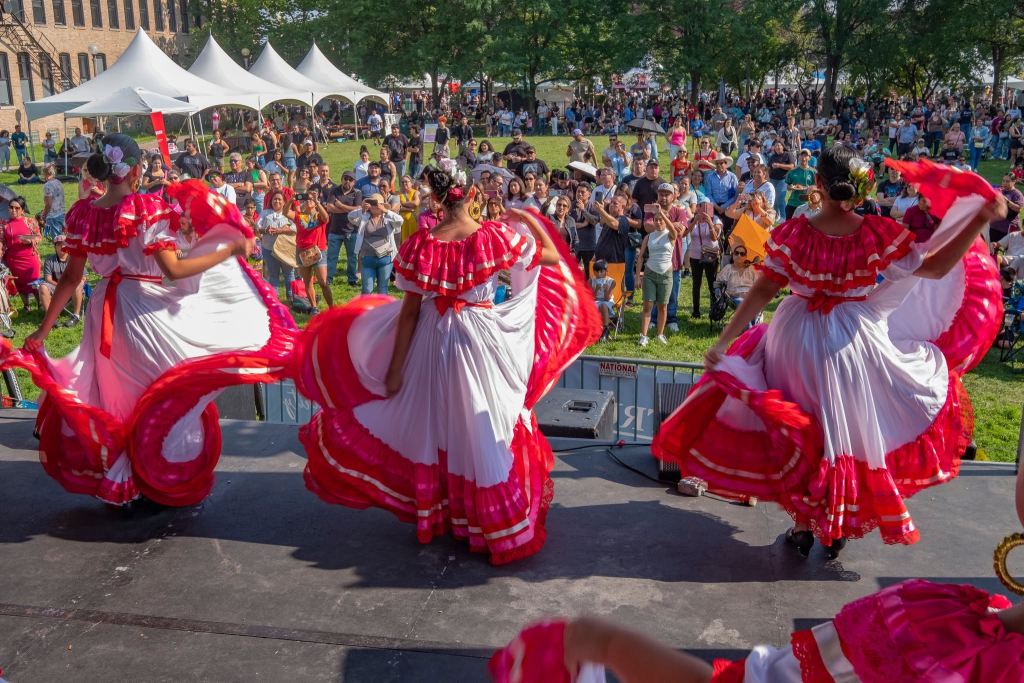 A previous performance at last year’s Festival Del Sol in Pilsen. Credit: Facebook
Comparison Is ‘Scary,’ Some Say
Maya Fernández, a co-founder and co-director of the nonprofit 18th St. Casa de Cultura, said hearing Pilsen be compared to Brooklyn is “scary.”
Fernández’s community organization is dedicated to honoring and preserving the artistic and cultural legacy of Chicago’s Mexican-Latino community. Because Brooklyn famously transformed from a lower-income community into a trendy, high-cost commercial and residential area, she said she worries the designation signals that the neighborhood she was raised in is heading in the same direction, which locals don’t want.
“What that fear, that sentiment is about is your neighborhood turning into something that’s not what you or your neighbors want or intended or are trying to make happen, but then feeling like there’s very little say or very little power to those forces,” Fernández said.
Fernández said high costs and displacement are concerns with gentrification, but she’s most worried about erasure. When Pilsen is presented as an up-and-coming neighborhood that people are just discovering, it ignores the decades-long effort by the neighborhood’s long-time residents to create a strong sense of community that includes art and thriving local businesses, she said.
For example, she said, when the neighborhood is described as having an arts scene, it ignores that the history of art in Pilsen comes from muralismo, the community-based political movement that grew in Pilsen in the 1950s and 1960s.
“It wasn’t just artists who decided to collectively like settle in a neighborhood and do art, but it’s coming from these movements that come from people and these histories that come from people,” Fernández said. “I think the historical context is really what people don’t have right when they visit places, and it doesn’t seem like there’s a lot of curiosity from people.”
She said tourists coming to Pilsen should put critical thought into how they’re engaging with the neighborhood, and seek to understand its history by speaking to longtime residents and legacy business owners.
Carlos Aguilar, a lifelong Pilsen resident, and Alyssa Herlocher, who’s lived in the neighborhood for about 20 years, co-own TRASH vintage clothing store, 948 W. 18 St., and said Brooklyn Of’s recommendation list misses some of the neighborhood’s fixtures like Yvolina’s Tamales, 814 W. 18th St., and Carnitas Dom Pedro, 1113 W. 18th St.
Herlocher said she appreciated some of the local spots Brooklyn Of’s list highlights, including the National Museum of Mexican Art, Carnitas Urupan and Cafe Jumping Bean, but said many of its recommendations are places Pilsen’s residents don’t often engage with, like Thalia Hall and Mana Contemporary.
“It seems like the audience is very narrow, and that’s like not really the majority of people that live here,” Herlocher said.
Aguilar and Herlocher said Pilsen doesn’t compare to Brooklyn and isn’t an up-and-coming neighborhood. While Brooklyn feels like a place for wealthy transplants to New York City, they said Pilsen has a close community, and has for generations.
“Pilsen’s always been Pilsen,” Aguilar said. “It’s always been a community. It’s always had restaurants.”
“Pilsen is its own unique thing,” Herlocher added.