
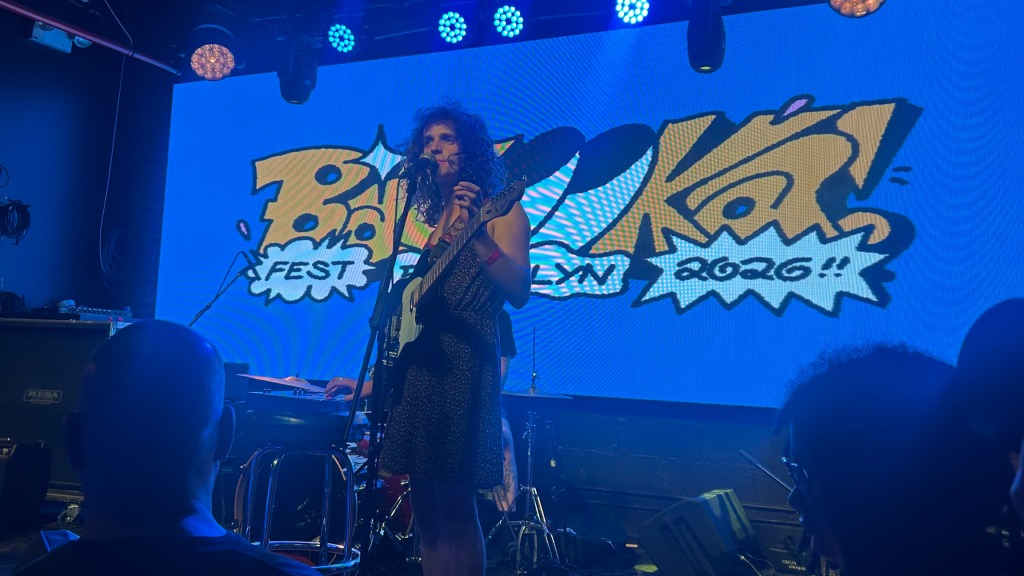
Shows run together when they’re making up so many of your nights. You’re bound to ascribe even the most unforgettable moments to the wrong dates or venues. When each bill is made up of bands sharing half their members and you’re running into the same friends at every show—who became your friends in the first place because they were the people you kept seeing at shows—it all starts to blur. It’s not necessarily a bad thing, just a side effect of being—and I say this with scare quotes as heavy with sarcasm as they are with gratitude for the wealth of great, cheap live music constantly happening around me—“in the scene.” When the lineup for the second annual Bazooka! Fest was announced, I knew what I was getting into: all my weekends, aggregated. Bands I loved, bands I’d seen, favorite bands’ favorite bands, bands I’d kinda sorta heard of, bands whose members I’d seen play in other bands, bands I’d be happy to see again or for the first time.
I’d seen Asher White earlier that week when she played a solo set at a coffee shop in Ridgewood ahead of her forthcoming album, Love Aggregates. Between that show and Bazooka! Fest, she’d had a brief stint playing cowbell with The Rapture but was now reunited with her backing band for a Sunday set. White, who’s been on an album-per-year release schedule for about a decade (Love Aggregates is her second LP of 2026), kept characteristically busy, singing while playing guitar and synth and looking deliriously happy to be onstage, especially during the “beers with my name on them” breakdown. “I love Coachella,” she joked, adding a shoutout to Sunshine Convention frontman and Bazooka! Fest curator Jake Whitener for organizing a truly independent festival “for artists, by artists,” without corporate sponsors. “Except like, Exxon, Nike, and Costco, right?” White riffed. “Shoutout Costco.” This wasn’t the only lie White told during her set: for a few moments she convinced the crowd it was her birthday, only to call bullshit on herself and elaborate, “But I have a record coming out this Friday, so that’s kind of like my birthday.”
A friend of mine who happened to be visiting from Chicago during Bazooka! Fest joked that the festival was split between “the Elder Millennial Stage” and “the Hallogallo stage.” TV Buddha were standout representatives for the latter, playing an afternoon set of spry psych-pop. The Chicago band didn’t mess much with their tried-and-true, crowd pleasing formula: bright guitar tones, songs spun tightly around the simple hooks at the center, everything delivered with an easy yet energetic affect.
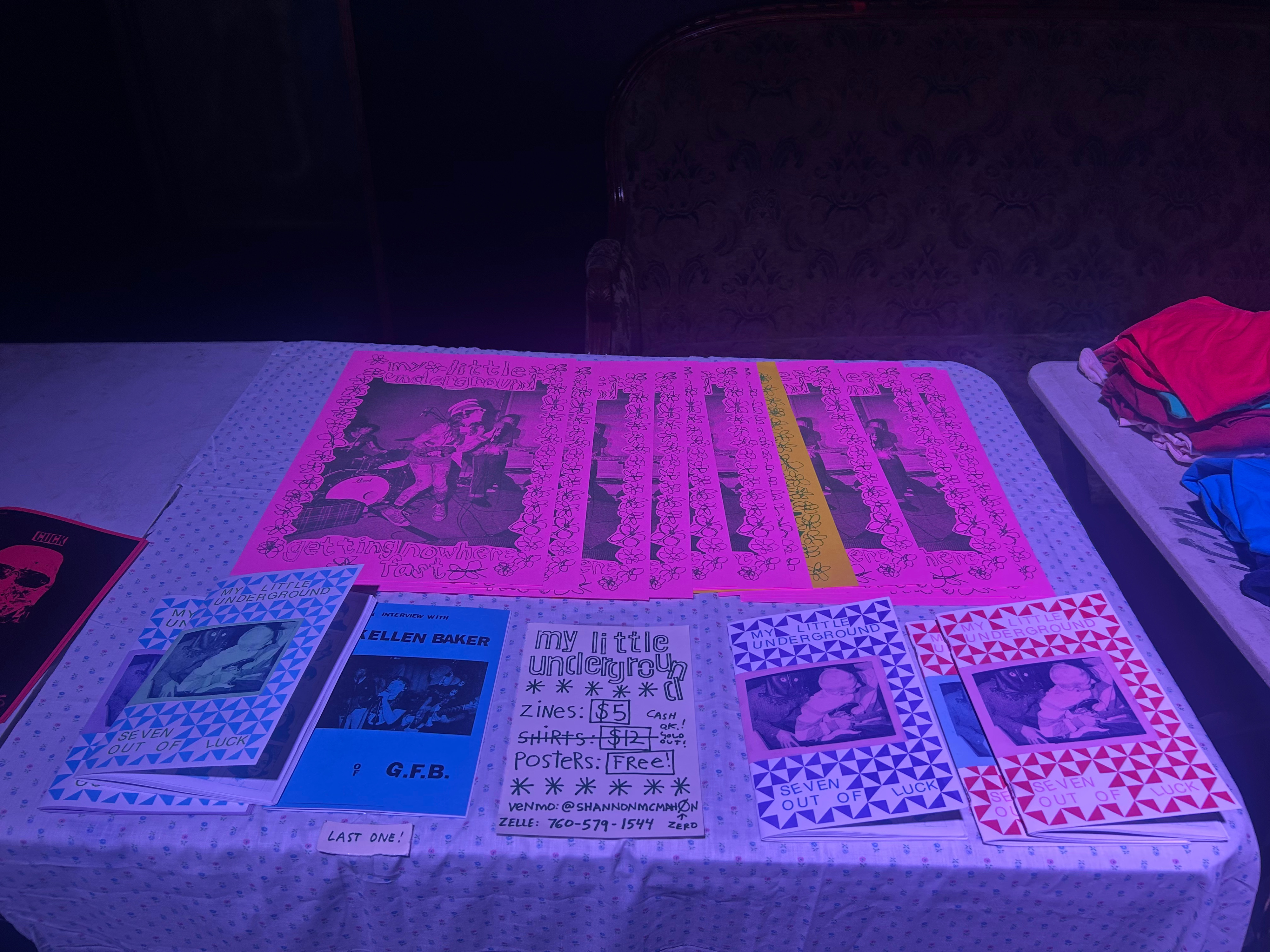
If Hallogallo had a New York equivalent, at least in the sense of a particular publication that’s become synonymous with the city’s DIY scene, it would be GUNK, a print and online zine publishing reviews, interviews, essays, scene reports, and a monthly calendar of New York shows. I arrive early on Day 2 to catch a set from one of the best GUNK-core bands, The Alaskas. Their latest album, Unalaska, came out just two days earlier, and its minimalistic 8track recordings take on a grander, campier life of their own onstage, to the point that the band sometimes feels like if one of the fake dive bars off Myrtle Avenue had an animatronic band—fitting for a band with titles things like “M Train” and “Weekend at Birdy’s” and songs sung from the perspectives of pumpkins plucked from the dirt and goldfish who yearn for the sea. When he’s not singing, lead singer Gavin Caine uses the band’s nervy jangle punk instrumentals as backing music to hop around the stage like he’s got springs attached to the soles of shoes. I run into Lex Walton during The Alaskas’ set. “Aren’t they great?” she shouts. She’s barely audible over their set, but I nod enthusiastically in agreement.
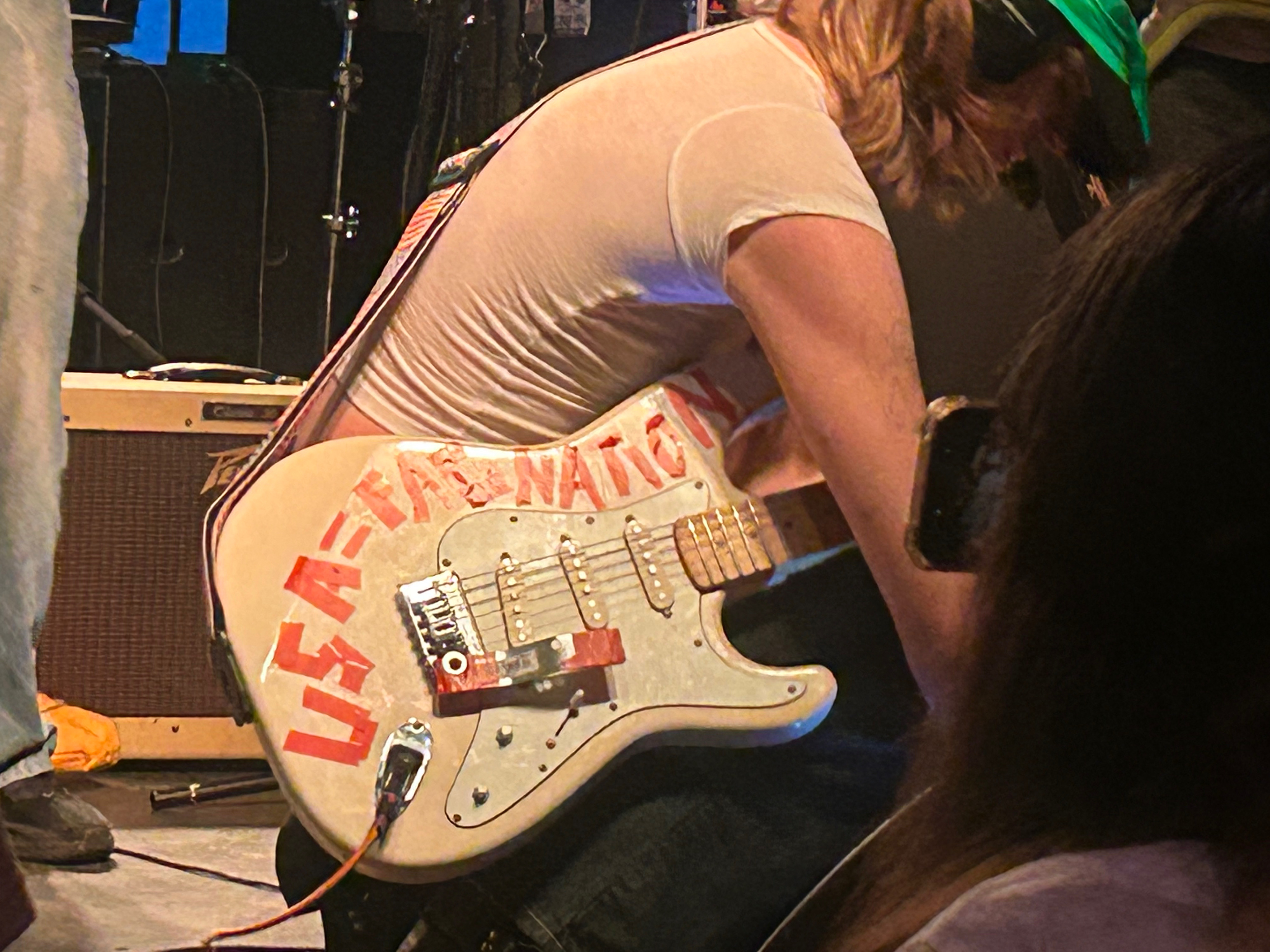
Walton closed the previous night with a set backed by a veritable supergroup that included Malcolm on the tambourine, Carmen Esperanza (Pop Music Fever Dream) on bass, Matthew Danger Lippman (a touring member of Of Montreal) on guitar, Emerson Borakove (Prairie Princess) on keys, Harmony Cuddle on the drums, and Ivy Wolk singing backup. Informally billed as Lex Walton’s Instant Gratification, the band played mostly unreleased songs—“For Thee I Sing,” the anxious and excoriating opener off her Sub Pop debut, was particularly roof-tearing live, as was “HIPSTER RUNOFF,” a track on which Walton sings about “hypnagogic Republicans” and “shitgaze landlords.” The tongue-in-cheek attitude of Walton’s protest songs doesn’t undercut her propensity for chasing discomfort for the sake of making affecting, abrasive art. Along with her now-signature headset microphone, Walton also sported an electric guitar bearing a Westboro Baptist Church slogan that’s also the name of one of her new songs. Earlier this summer, Walton and Borakove got booed in Denver while opening for Geese as a satirical band called Airy Foist, in perhaps the greatest post-Ween act of audience-trolling (and possibly Geese’s way of proverbially firing a gun in the air to keep the rent low).
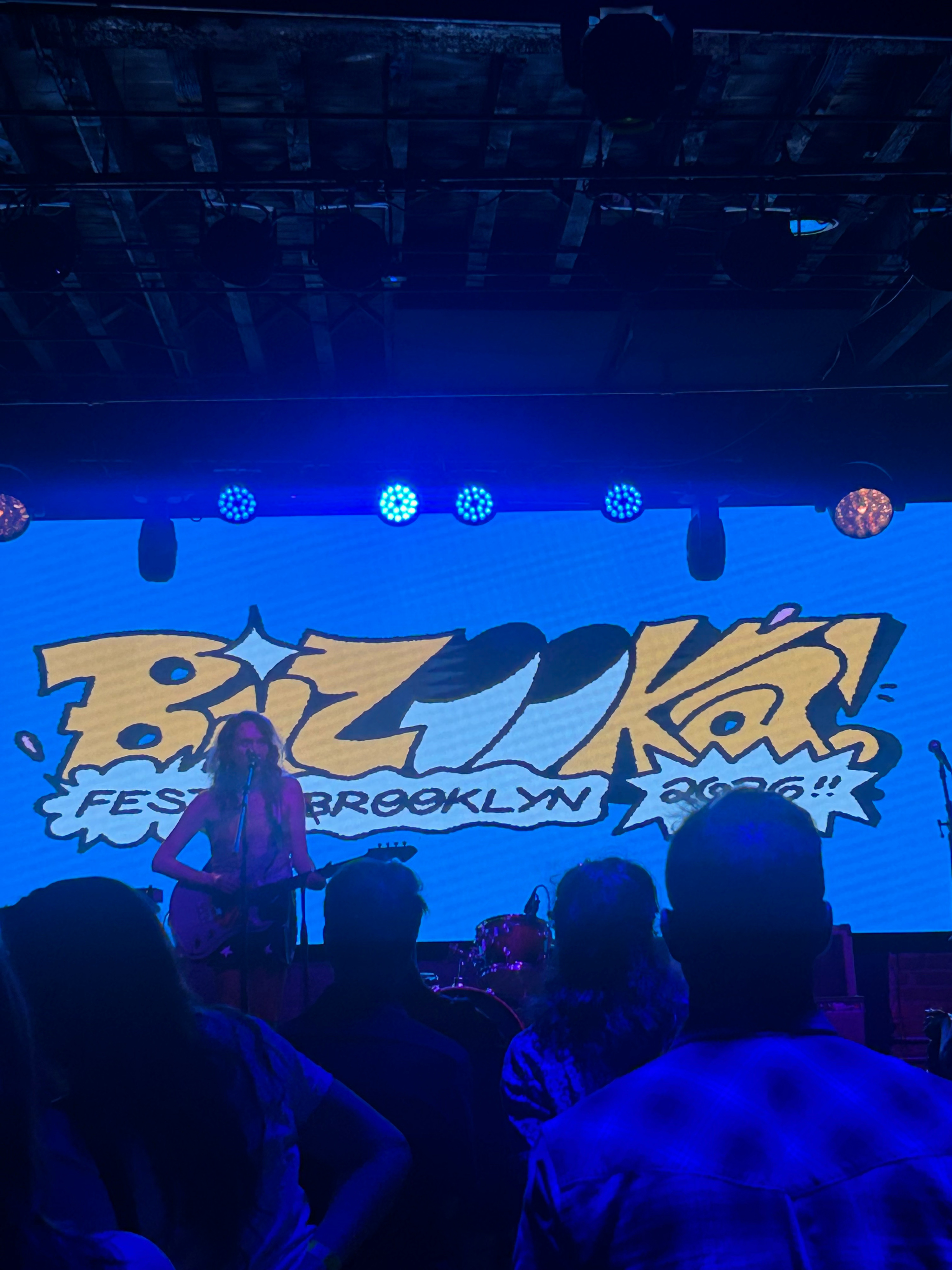
Walton and co were playing the Wood Shop stage, which was two doors down from the main stage at the Meadows. The Bazooka! Fest setup was a bit odd; to get from one stage to the other you had to exit one venue and enter the other one through both of their front doors. To the organizers’ credit, most sets were staggered enough (especially the ones that came later in the day) that there was little overlap. The bands performing at the Wood Shop admittedly got the short end of the stick, what with the Wood Shop’s narrow, L-shaped layout and echoey sound. I spent most of the weekend at the Meadows but some of my favorite sets were Wood Shop ones. Local and confusingly stylized band Love, Burns played some wildly fun surf-rock songs. I was shocked to find out that they were a New York band (I later learned that lead singer Phil Sutton is from London, but mid-set, I texted a friend that I was watching a band that was “either Australian or British. Do Australian people talk about going to ‘the pubs’ a lot? That feels like a British thing”). I was early to Sunshine Convention’s set at the Wood Shop—I knew I wanted to see the band making the entire festival happen. The crowd was sparse at first but by their second or third song, the room was full of people dancing along to their sunny, grunge-inflected power pop—perfect accompaniment for a dog days of summer afternoon.
Back at the Meadows, I caught DIY popstar Sadie Dupuis’ set as Sad13 (I’d seen her perform with Speedy Ortiz before, but live cuts from her new Sad13 record 1313 really let her voice shine in a light that I hadn’t seen it in before), followed by Colleen Green, whose set of snappy power pop was accompanied by a loop of 80s jazzercise videos projected onto the backdrop behind her. The energy onstage was fantastic and more people should’ve been dancing. One guy nearby was loudly talking about a zit on his forehead and another came up to me to hand-deliver a burned CD of songs from his shitgaze band. After the set when we went to the patio, someone else handed me another copy of the same CD. They’re both still in my purse. If anybody has a CD player I can use to listen to one of them and/or wants to take my extra copy, let me know.
When we came back inside, Cloud Nothings were kicking off their set with no introduction beyond a car alarm guitar riff and some drawn out yelps into the mic—no other intro needed, honestly. I lost my shit upon hearing “Wasted Days” live, a song that always reminds me of the overwhelming guilt and melancholy that comes at the back half of August, where you’re scrambling to do something with what remains of your summer. And if “Wasted Days” encapsulates that mood in a song, that’s basically Times New Viking’s entire discography. This is the time of year where I tend to listen to them the most. I was shocked by the clarity of this recently reunited band who, on their records, always sound like they’re clawing against cling-wrapped layers of feedback and lo-fi fuzz. At the Meadows on Saturday night, they sounded like they could cut glass.
Day 1 at the Meadows saved the loudest for last, but the following night it was the opposite. Joanna Sternberg drew a hushed, rapt crowd with a set of folk and jazz songs as charming and conversational as their stage banter about awkward interactions with their neighbors. The room was packed by the time Stephin Merritt and his keyboardist/duet partner took the stage. He opened with two crowd-pleasers: the newly viral “Andrew In Drag” and “The Book of Love,” which had everyone singing along, incidentally harmonizing above Merritt’s bassy dull roar. It was a tender set, lots of hugging, crying, slow-dancing, and the like, interspersed with the tracks like “A Chicken With Its Head Cut Off” and “The Day The Politicians Died” interspersed for some levity—that’s The Magnetic Fields Special.
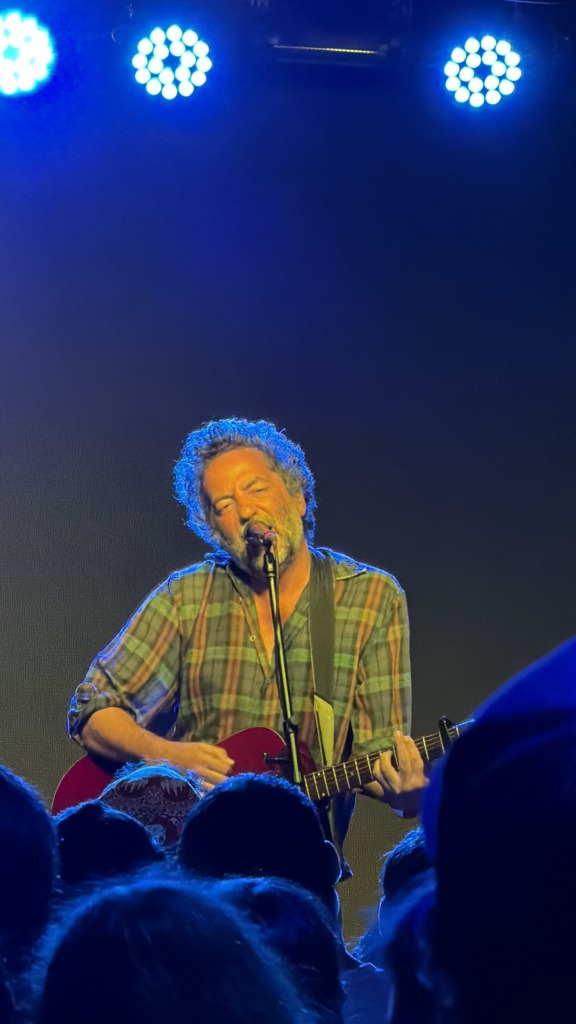
The night wound down with an acoustic solo set from Destroyer’s Dan Bejar. I was curious to see how his normally elaborate arrangements would adapt to such minimalistic proportions, but Bejar’s voice, infinitely adept at twisting itself into whatever shape the song calls for and filling in all its cracks, was up for the job. His stripped-back rendition of Have We Met opener “Crimson Tide” was particularly stunning. “Who could care less on a night like this?” Bejar mused drolly. As far as nights like these go, they were pretty damn good ones.
Grace Robins-Somerville is a writer from Brooklyn. Her work has appeared in Pitchfork, Stereogum, The Alternative, ANTICS, Marvin, Swim Into The Sound, and her “mostly about music” newsletter, Our Band Could Be Your Wife.