
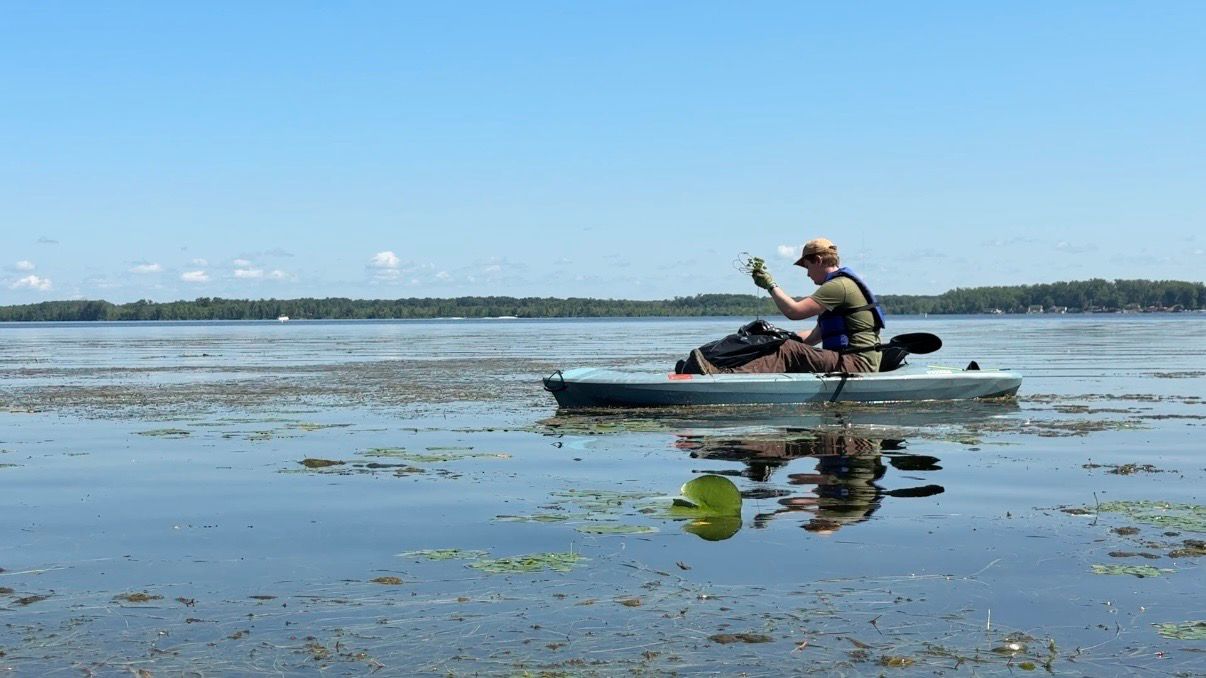
A federally funded effort aimed at combatting one of New York’s most stubborn invasive species, the water chestnut, is now underway. Volunteers have been putting in hours of manual labor to remove the pesky plants.
Water chestnuts are an invasive aquatic plant found throughout New York state that grow up to 15 feet, cuts off sunlight to native plants and restricts recreational opportunities. They’re known for their sharp nutlets that can pierce through skin, shoes and even boat tires.
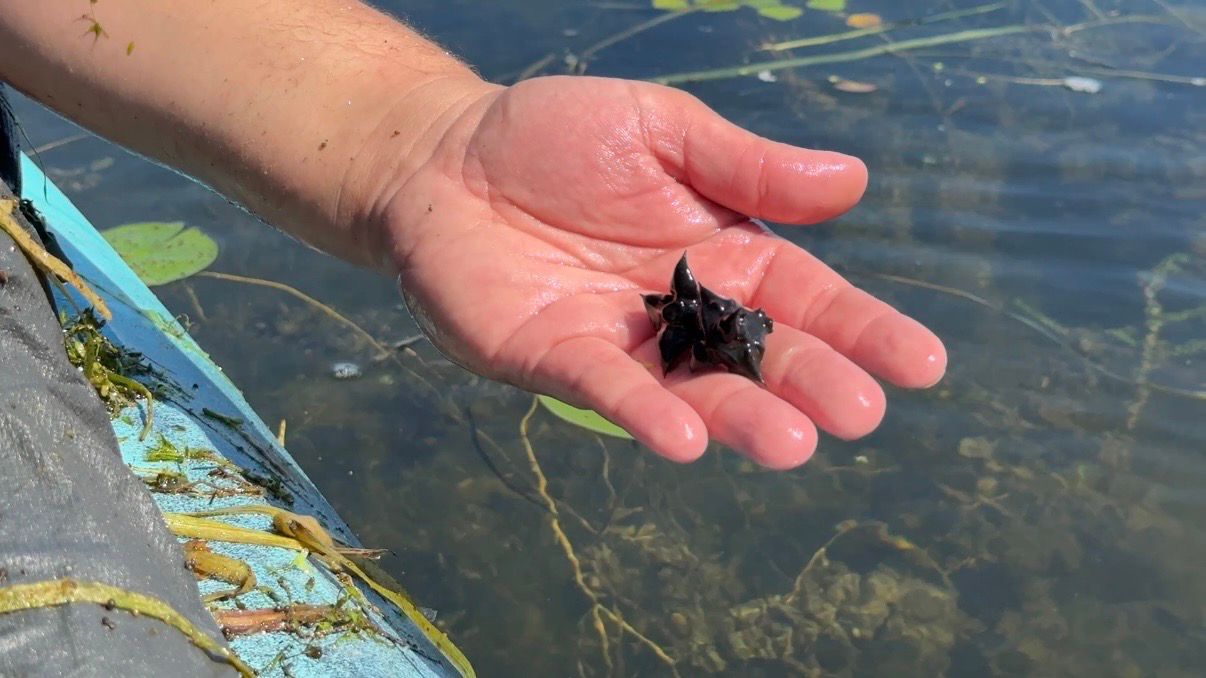
The water chestnut’s iconic, sharp nutlet. (Spectrum News 1/Natalie Mooney)
“They look like they say, ‘don’t touch me,’ ” said David Carnie, an intern with the Oneida County Soil and Water District.
But Carnie and other volunteers aren’t heeding that warning. Instead, they’re going all in on hands-on removal and participating in a water chestnut control program on Oneida Lake — the largest lake within state boundaries.
The Environmental Protection Agency is providing a $921,000 grant to support the project.
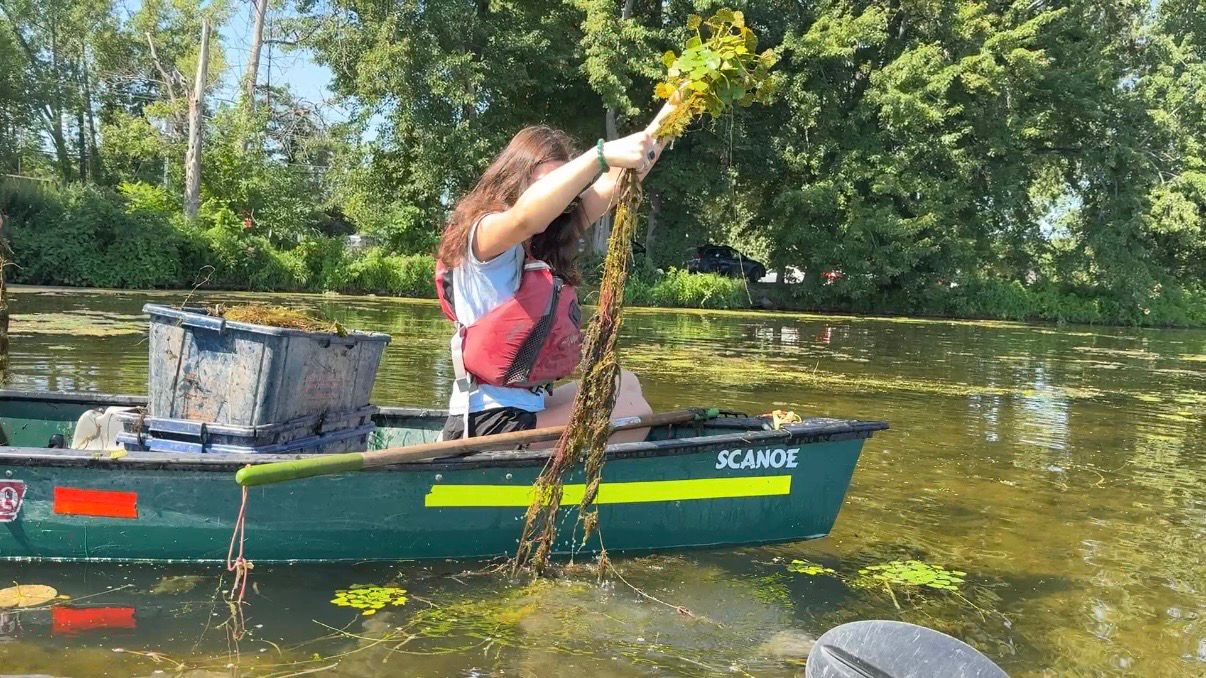
Volunteers are hand-pulling the plants from Oneida Lake. (Spectrum News 1/Natalie Mooney)
Carnie says removing the plants by hand is the most effective method, especially compared to herbicide control or mechanical harvesting.
“Hand-pulling is the most environmentally friendly method,” Carnie said, “because you’re not ripping anything else out, you’re not adding pesticide to the whole area, to the whole fish. The only thing we are touching is the plant.”
A combination of control methods have been used for years across the state, but the plants keep coming back.
Mark Burger with the Onondaga County Soil and Water Conservation District says it’s because of its seed yield.
“One seed can produce 300 new plants the following year,” Burger explained. “So they propagate faster than rabbits.”
He says each seed can remain viable for up to 12 years, meaning they can eventually germinate and restart infestations at any point in that time.
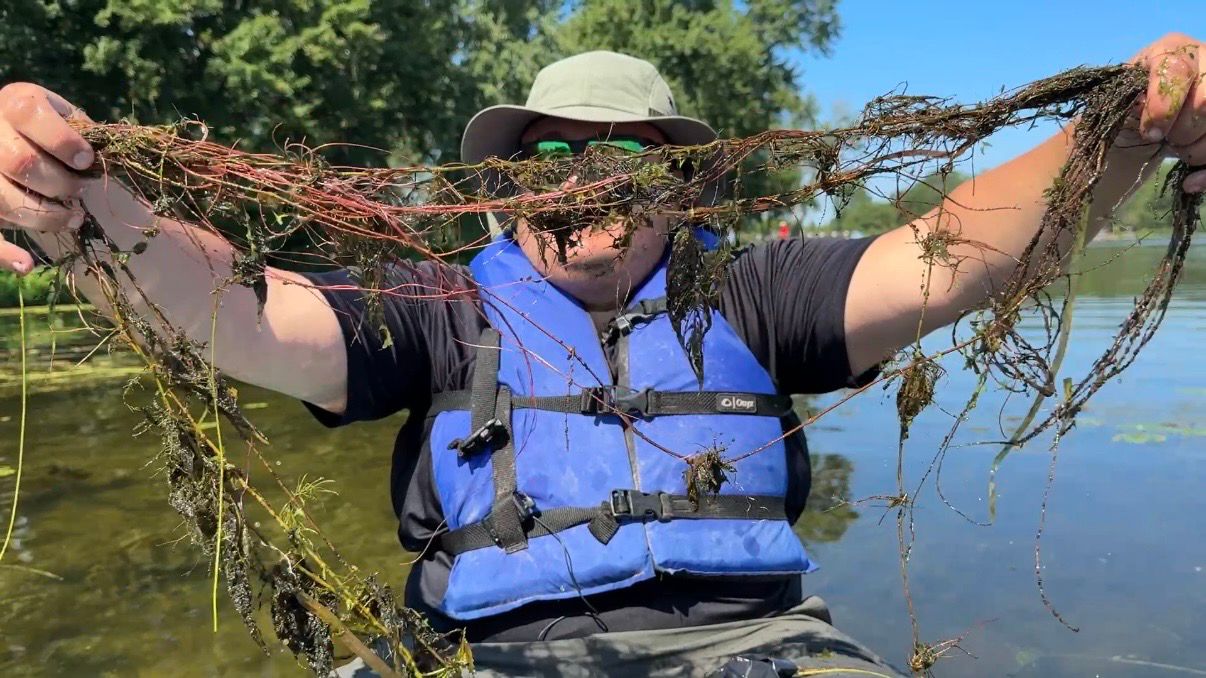
Volunteer David Carnie shows off the plant’s long, feathery roots. (Spectrum News 1/Natalie Mooney)
“Just when you think we might have it in this area, you can’t walk away,” Burger said. “You’ve got to go back and reassess next year, and then you’ve got to be able to be ready to take action.”
That’s why Carnie and other volunteers are prioritizing early detection and regular removal efforts.
“If we can get it early and stop the plant from developing to maturity, that’s really the best solution,” Carnie said.
It’s tedious, time-consuming work, but Carnie says it’s worth it.
“It’s laborious work for sure, to pull them, but also rewarding work, as you can see the work you’ve done,” Carnie said.
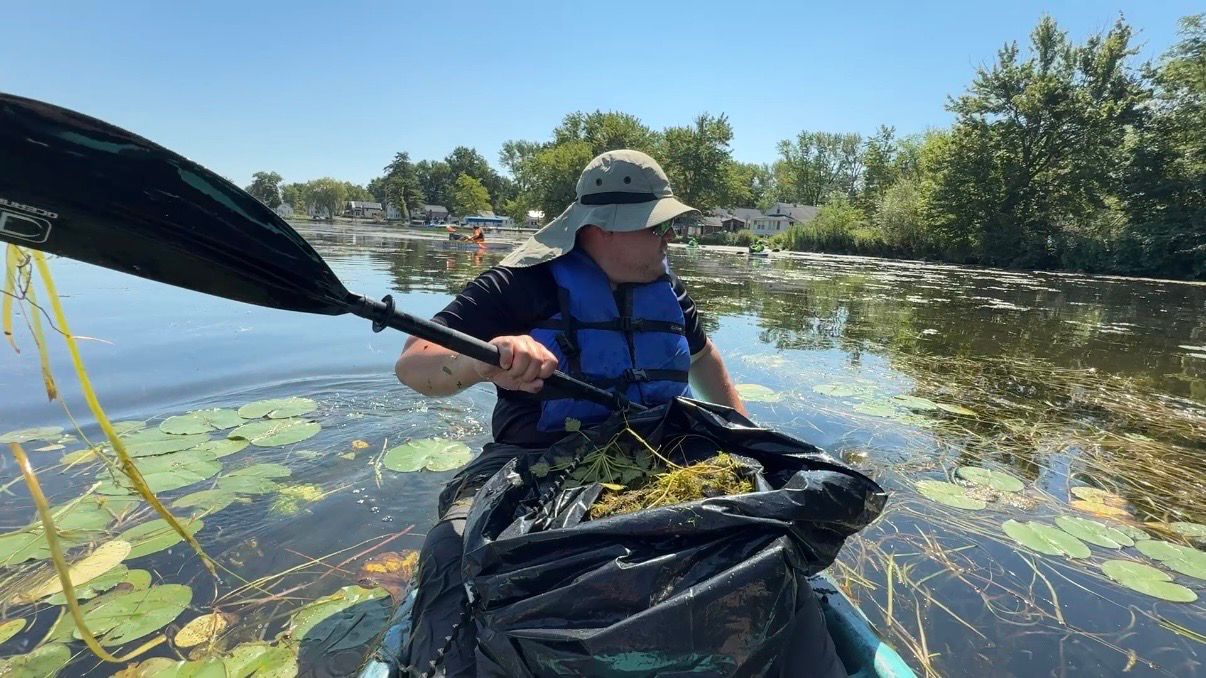
Volunteer David Carnie brings a bag filled with freshly pulled water chestnuts back to shore. (Spectrum News 1/Natalie Mooney)
District officials says more than 3,000 pounds of water chestnut have already been removed from Oneida Lake since the program began.
Program officials say the EPA’s grant will support hand-pulling efforts on the Oneida Lake Watershed for the next three to four years and will help spread resources to combat a number of invasive species, not just the water chestnut.