
BUFFALO, N.Y. — For many, buying a new car is about more than just what can get you from point A to point B. There’s brand loyalty too.
Some buyers looking for a specific model, however, are finding themselves out of luck.
Stricter emissions standards, lawsuits and potentially massive changes to standing laws are causing confusion and impacting consumer choice.
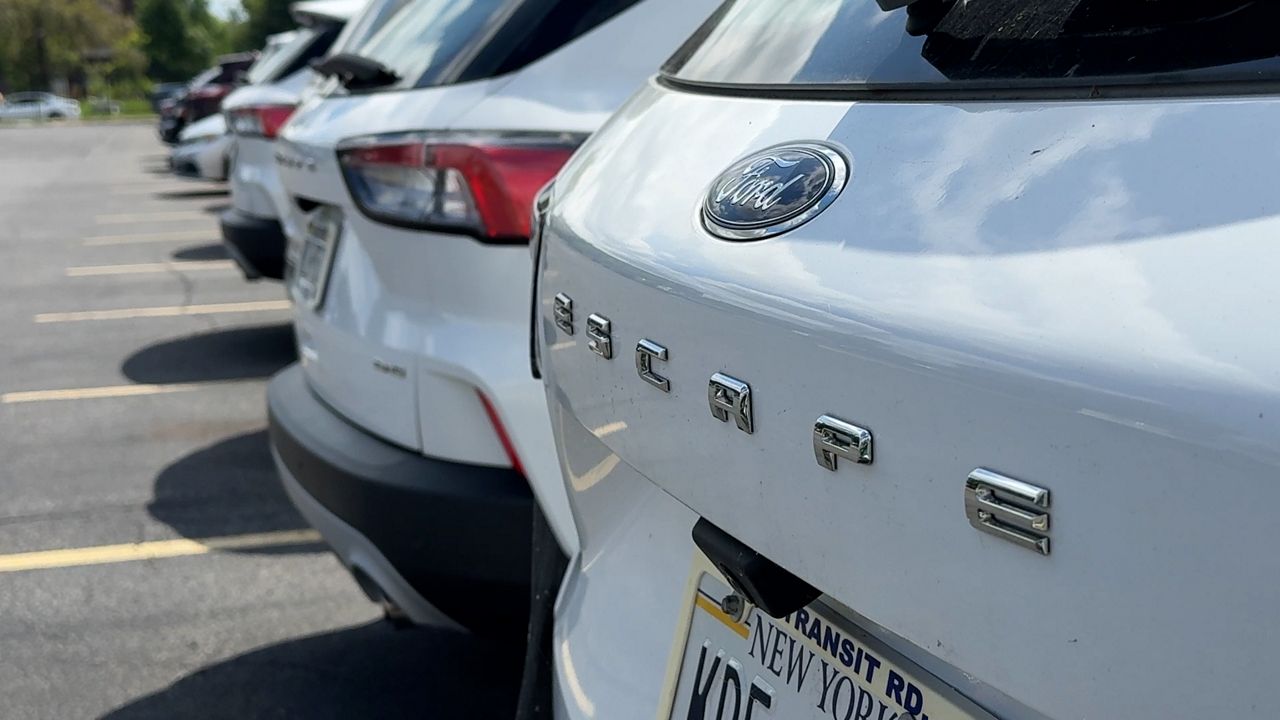
The Ford Escape is one of a handful of cars you can no longer buy in New York because it’s not up to emissions standards, despite the fact that enforcement on those standards is currently on hold. That didn’t stop manufacturers from pulling back.
“Our business has been transitional for over 100 years, so there’s always been peaks and valleys and changes in technology,” said Paul Stasiak, president of Niagara Frontier Auto Dealers. “This is just the next wave.”
Stasiak says the writing was on the wall when it came to clean car demand not meeting standards set by the state in Advanced Clean Cars, or ACC, regulations issued in 2022.
The goal in New York is 100% of new sales being zero-emission by 2035, 35% by this year.
“Everybody wants a clean air initiative. Our industry, our manufacturers, our dealers, our consumers,” said Stasiak. “But you can’t force a narrative that the public doesn’t want yet.”
Some of those major manufacturers — Ford, Nissan, Mazda, Honda and Hyundai — wrote letters to the state explaining their investments in zero-emissions vehicles. One noted that “the current market conditions [make] ACC II ZEV mandates unachievable.”
“The good news is the manufacturers are working on a fix, but this isn’t like just turning a faucet on,” Stasiak explained. “There’s raw materials, there’s production capacity, there’s union issues on the line. There’s supply chain issues to rebuild the car to the specs we need.”
What does that look like in practice? Buying one of those models, like the 2026 Escape, can’t be done in New York. If you try to buy it in another state that does have it available, when you try to register it in New York, you won’t be able to. It will fail the emissions inspection.
“It affects our dealers that are on the border a lot, in the Southern Tier,” said Stasiak. “Because some of the other states, such as Pennsylvania and Ohio, may have the capacity to sell something that’s a little bit more consumer-friendly.”
A car dealer Spectrum News 1 Buffalo spoke to, who didn’t want to go on camera, said that not being able to sell the Escape “certainly hurt,” with an estimated loss of 100 sales at one dealership.
The alternatives they can offer, the dealer said, don’t appeal to everyone, at least not yet.
“People bought Ford Thunderbird forever. Loved it,” said Stasiak. “Ford eliminated the Thunderbird line. It devastated some people that were really into that car. Guess what happened? They bought a Taurus SHL, they went to another model.”
Ford has since discontinued the Escape, but what dealers can and can’t sell going forward isn’t as easy a question as you might think.
“The federal law is what allows the states to have these different, stronger laws, and there is some debate about that,” explained Kim Diana Connolly, a professor of law and the director of the environmental law program at the University at Buffalo.
New York was only able to adopt its new regulations because of an exception given to California under the federal Clean Air Act.
“California sets the standards that most manufacturers choose to meet so that they don’t have to have two different sets of cars to sell,” she said.
Connolly says a federal challenge to the Clean Air Act, as well as subsequent lawsuits filed by states like New York, could fundamentally change regulations in the Empire State, but the future remains unclear.
“Everything is jumbled right now,” she said. “We’ve got this situation. We’ve got the state saying we should be able to keep it. We’ve got some people proposing bills in the local state legislature saying, ‘hey, get rid of that,’ but that didn’t even get out of committee. So that didn’t pass. So we’ve got a lot of politics going on, which is typical in environmental law. But we’ve got a lot of unexpected politics coming along because of this administration.”
The New York State Department of Environmental Conservation says that ACC II regulation enforcement was delayed for two years, through 2027, because of hardships to manufacturers. At this time, though, New York doesn’t have the authority to implement that anyway because of pending litigation.
It could be a battle that makes its way all the way to the Supreme Court.