
by Olivia Young
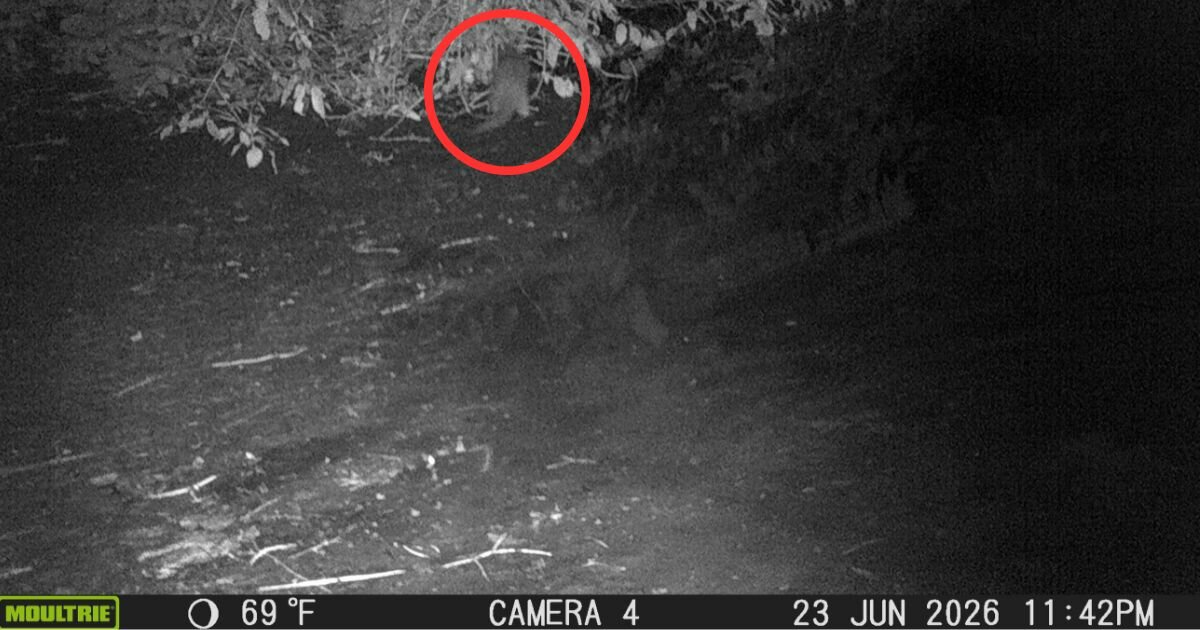
A North American river otter was spotted along the Bronx River for the first time in about 100 years, the Wildlife Conservation Society Bronx Zoo announced Aug. 19. The discovery is one the organization said provides evidence that decades of restoration efforts are working.
River otters prefer fresh water over salt water, making it unlikely — though not impossible — one would ever be spotted in the Harlem or Hudson rivers, according to Victoria Toro, outreach manager for environmental nonprofit Bronx River Alliance. Still, she said, wildlife follows resources.
“The healthier and more extensively habitat is restored across the entire borough the more likely it is we’ll see more wildlife in places that are unexpected,” Toro said.
She pointed to the city’s Tibbetts Brook Daylighting Project as an example of that kind of restoration. The initiative was sparked by activists three decades ago, and involves unearthing parts of the brook to reduce combined sewer overflows that pollute the Harlem River. Before reaching the Harlem River, the freshwater stream runs from Yonkers through Van Cortlandt Park, dipping underneath Tibbett Avenue. Construction is expected to break ground this fall and wrap up in 2030.
Rehabilitation efforts continue in the Harlem River. Efforts include cleanups that are expected to ramp up in the fall, according to Chauncy Young, longtime coordinator with the Harlem River Working Group, a coalition of community organizations and other partners that aim to improve the accessibility and environmental quality of the Harlem River.
There are signs of an improving river, Young said. In July, there was a horseshoe crab spotted near Randall’s Island. Horseshoe crabs are listed as “vulnerable” on the International Union for Conservation of Nature’s Red List of Threatened Species because of habitat loss due to coastal development and pollution, according to the city’s department of parks and recreation.
Both the horseshoe crab and otter sightings point to environmental improvements conservationists have been working toward.
River otters were common in New York a century ago, but were driven out by pollution, habitat degradation and unregulated trapping, the Wildlife Conservation Society said. While one sighting doesn’t mean a resident population, it does show the river is becoming more hospitable for native species. Otters indicate a healthy ecosystem as they are dependent on clean water and abundant fish, the conservation society said.
The otter was captured by a motion-activated camera set out by scientist RJ Hawkins, and overseen by the conservation society’s education department at the Bronx Zoo. Hawkins said in an Aug. 19 news release he could hardly believe what he was seeing at first, and the sighting underscored the importance of wildlife monitoring and environmental restoration efforts.
Leadership at the conservation society agreed the otter was symbolic of something larger. Craig Piper, director of the Bronx Zoo and the conservation society’s interim executive vice president of zoos and aquariums, said the moment served as a reminder of why conservation work matters.
“This isn’t simply the story of one animal,” Piper said in the release. “It’s the story of an urban river coming back to life.”
Some conservation efforts have included removing invasive species and planting native ones, maintaining green infrastructure for stormwater management, and spotting and reporting oil spills that would be a hazard to the public and natural habitats, according to the Bronx River Alliance’s website.
Pollution of the Bronx River started in the early 1800s, amid the borough’s industrial and settlement boom, according to the city’s department of parks and recreation. It became an open sewer and dumping ground, which continued into the 1970s and ‘80s.
“There were sections of the river that were piled so high with trash and industrial debris that people living in the community couldn’t even see that there was a river flowing right through their neighborhood,” Toro said.
Headway was made in 1974 when community members founded the Bronx River Restoration Project, the Bronx River Alliance’s predecessor group, according to the city’s department of parks and recreation. The original group created a master plan advocating for the revival of the river. Over the past few decades, community organizations and other partners have helped transform the river into a habitat for fish and wildlife, as well as a recreational space for residents, according to the department.
This isn’t the first major sign of progress for the Bronx River. In January 2023, a pair of dolphins were spotted outside of Starlight Park, according to the alliance. Before that, in 2007, beavers returned to the river for the first time in more than 200 years, the conservation society said.
Keywords
Bronx River,
river otter,
North American river otter,
Bronx Zoo,
Wildlife Conservation Society,
Bronx River Alliance,
Victoria Toro,
RJ Hawkins,
Bronx River restoration,
environmental restoration,
urban wildlife,
Harlem River,
Tibbetts Brook,
wildlife conservation,
Bronx ecology,
beavers,
horseshoe crab