
This column originally appeared in On The Way, a weekly newsletter covering everything you need to know about NYC-area transportation.
Sign up to get the full version, which includes answers to reader questions, trivia, service changes and more, in your inbox every Thursday.
Mayor Zohran Mamdani has a $4 billion plan to fix a section of the Brooklyn-Queens Expressway. But how is he going to pay for it?
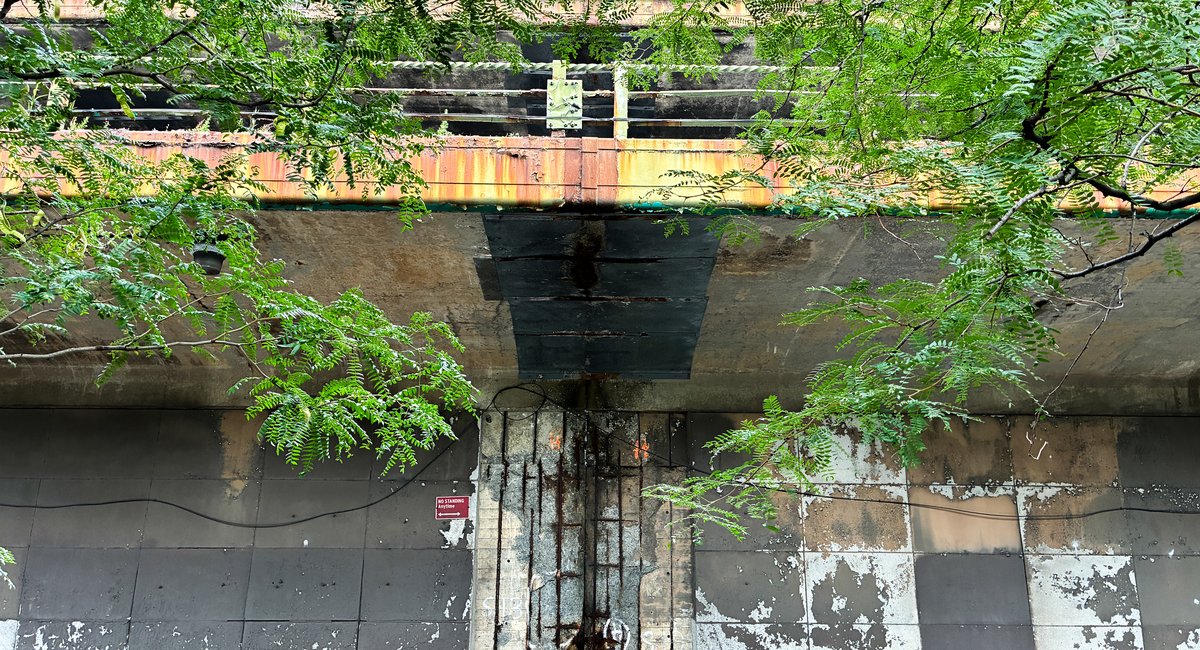
Here’s an idea that draws inspiration from Robert Moses, the renowned-but-infamous urban planner who built the crumbling triple-cantilever that’s now in dire need of repair: Make drivers cover the cost.
Sara Lind, executive director at the transportation advocacy group Open Plans, said she supported the idea of finding a way for drivers to pay for Mamdani’s highway construction plan.
“The city should explore tools like tolling to reduce congestion, manage demand and pay for car-based infrastructure,” Lind wrote in a statement. “We should be using dynamic tolling around the city, including on the BQE, along with tools like low-emission zones that can mitigate the negative impacts of driving and freight on communities.”
But the administration would face significant obstacles if it sought to institute a new toll to cover the cost of the BQE project.
City officials pointedly said they won’t ask for federal funding to pay for the plan to build a temporary highway along Brooklyn Bridge Park so crews can fix the triple-cantilever beneath the Brooklyn Heights Promenade. The city owns that portion of the highway — and the transportation department wants to avoid the federal bureaucracy that could delay the plan.
Absent federal money, Mamdani’s push to rebuild the 1950s-era highway would presumably rely on subsidies from city and state taxpayers. The cost would be covered by far more New Yorkers than just the 130,000 drivers who use the triple-cantilever every day.
During his tenure as Triborough Bridge and Tunnel Authority chair, Moses managed to erect bridges and tunnels across the city without major federal subsidies. Instead, he’d take out loans from bondholders to cover construction, and pay off the debt with the money from tolls he charged to use the crossings.
Adding a toll to the BQE would require federal approval, experts said.
“I’m all for pricing motor vehicles but tolling this section, which is designated an interstate, may run afoul of the Interstate Commerce Commission,” said Sam Schwartz, a transportation analyst and former city traffic commissioner. “In the 1980s I tried to ban tandem tractor trailers from this segment of the BQE and was stopped by ICC rules.”
Eric Goldstein, a lawyer for the Natural Resources Defense Council who sued Gov. Kathy Hochul for delaying the start of congestion pricing, said that adding a toll to the BQE to pay for the work would undermine Mamdani’s calculated choice to skirt federal approval.
“One of the reasons why the city is doing it this way is so that at this point the federal government doesn’t have to be involved,” said Goldstein. “The Mamdani administration’s approach making this a city program is designed to cut through years and years of bureaucracy, red tape and challenges that might ensue, at least with the current administration in office in Washington, D.C. Down the line, if that changes, there might be ways of accelerating aid and financial assistance, and that ought to be looked at.”
Other experts were skeptical Mamdani’s plan would get done within his proposed timeline — and warned taxpayers could be on the hook for a lot more than $4 billion.
“I think $4 billion is not a realistic estimate,” said Kaan Ozbay, a professor at NYU’s Tandon School of Engineering. “Given the history of megaprojects in the US, it will be at least double that amount and will most likely take longer than 10 years.”
City officials and experts agree there isn’t much more time to delay. New York transportation planners have been trying to figure out what to do with the crumbling triple-cantilever for 20 years — and they’re running out of time before the structure becomes unstable.
“There is no federal money available and there is no time to wait for a friendlier administration in Washington,” said Schwartz. “It is crumbling, pieces have fallen and are now held up by netting, there have been punctures through the deck that present hazards to drivers and steel reinforcing bars are corroded, weakening the structure. It is just a matter of time before there is a structural failure with potentially catastrophic consequences.”
LIRR to run direct trains to Montauk year-round. The LIRR offers direct train rides from Penn Station to Montauk during the summer. But during the off-season, riders have to make at least one transfer to get out there. MTA officials said they’ll make a direct 5:13 p.m. train run a permanent part of the weekday schedule starting next month. The MTA said ridership on the Montauk Branch continues to grow, with 1.21 million passengers recorded so far this year, a 6.4% increase compared to the same period last year.
MTA to pilot virtual OMNY cards after a year of delays. The MTA plans to begin testing out a “virtual” reloadable OMNY card that New Yorkers can keep on their smartphones later this year, making life easier for transit riders who rely on physical cards to pay their fares.
Locals are riding the ferry — and the tourist wave — to Red Hook. The ferry has made a difference for the neighborhood’s business owners and arts community.
Safety work begins on one of Jersey City’s most dangerous roads. Construction on a stretch of JFK Boulevard near an area heavily used by pedestrians coming and going from the PATH train’s Journal Square station started this week and is expected to last 18 months.
NYPD crackdown on illegal e-bikes cranks up. New police data shows that the NYPD has drastically escalated its crackdown on e-bikes since Mayor Mamdani took office at the start of the year.
Curious Commuter
Have a question for us? Use this form to submit yours and we may answer it in a future newsletter!
Question from Adelia in Brooklyn
The MTA app supposedly tells us when the next bus will arrive. Is it just using a prearranged schedule that drivers are supposed to keep to or is it able to track buses’ actual location and speed? In other words, how does it work?
Answer
Each MTA bus has an onboard GPS tracker that allows the transit agency to see live locations of its bus fleet and relay that information to riders. The MTA has defined bus schedules for its drivers — but they don’t always reflect what’s happening on the streets. The new MTA app features location information that is updated every five seconds. The app is excellent and worth downloading.