
Fifteen years after Tropical Storm Irene tore through New York state, its impact is still remembered in communities across Schoharie and Greene counties.
One of the most visible reminders stands at the historic Blenheim Bridge. While it looks like a preserved landmark, much of the wooden structure is not original. The bridge, first built in 1855, was completely destroyed by Tropical Storm Irene in 2011 and later rebuilt.
About 15 miles away in Prattsville, Mary McGlynn still remembers what she saw when she returned to her home along Schoharie Creek after the floodwaters receded.
“We’ve gotten floods before, but it’s gone in the basement, never up here in the living space,” McGlynn recalled.
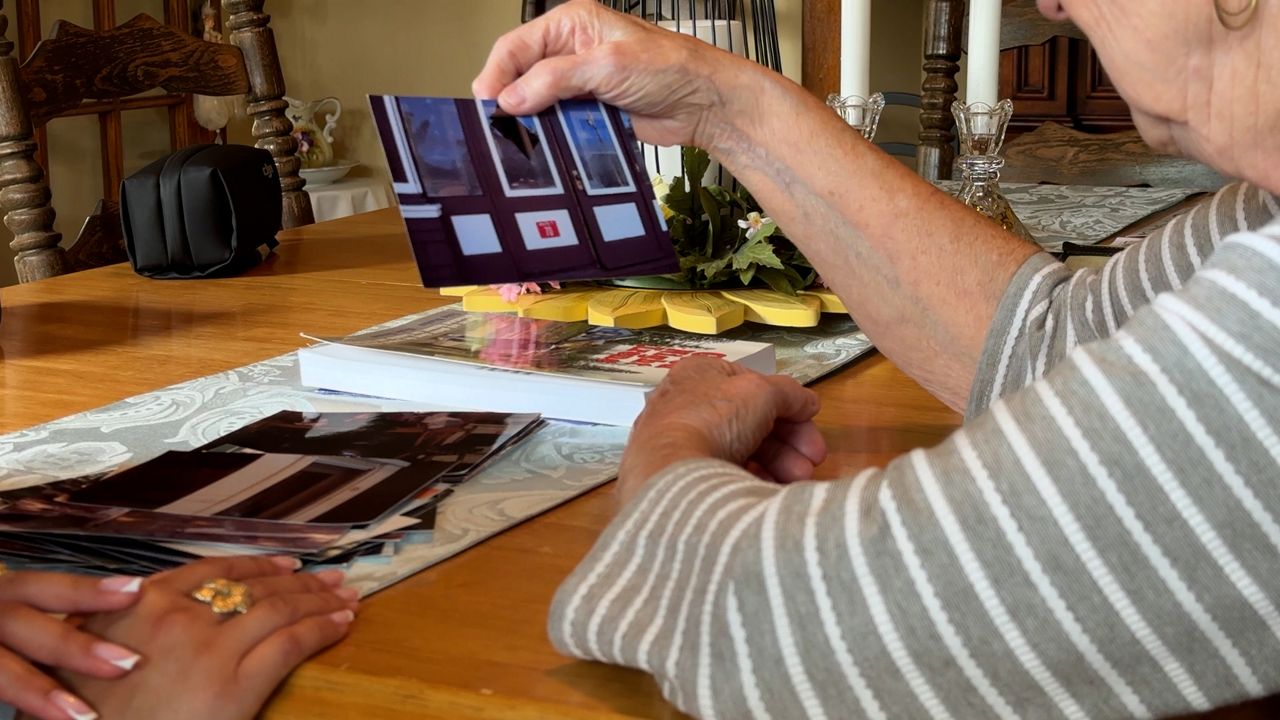
McGlynn has lived in the house since 1981, when she and her late husband Tommy moved in. On her dining room wall hangs a photo showing the damage left behind by the storm.
“My husband gave it to me for Christmas because at the top, it was like, the sun came out,” she said. “And I said, ‘that’s hope.’ Because up to that, I said, ‘I’m not coming back here.'”
The destruction inside their home was overwhelming.
“Everything was mud,” McGlynn said. “And when we came in here, we had to borrow a ladder from the next-door neighbor to get in our house because the steps were all gone.”
The damage extended beyond the house itself. When Tommy McGlynn began looking for a newly built picnic table, Mary McGlynn had a different concern.
“He said, ‘Where’s my picnic table?’ He just finished building a picnic… I said, ‘Tom, where’s the garage?'”
They later found the garage three houses down.
The couple had to leave the home for a full year while contractors and volunteers worked to rebuild it. Plaster walls were torn down, floors were ripped up and mud-filled areas had to be broken apart with a sledgehammer.
At the time, Jeffrey VanDeusen was the electric manager for National Grid in Cobleskill. He documented the widespread destruction as crews worked to restore service.
“Pictures tell a thousand words,” VanDeusen said. “I just documented through photographs all the way along what the damage was, locations as far as how we could get in to make restorations and repairs and so on.”
VanDusen said utility crews stayed focused on restoring damaged infrastructure as quickly as possible.
“Our function was to stay focused, to get the infrastructure cleaned up, rebuilt the best we could,” he said.
But he also saw another opportunity to help, using the photos he’d taken.
“During the middle of this whole thing, I got to think it was like, ‘you know, we really need to use these pictures to benefit everyone,'” he said. “And we came up with the idea, let’s put a book together to sell and raise money for organizations to help the people that have been devastated by the storm.”
The book sold about 6,000 copies and raised between $60,000 and $70,000.
According to the National Weather Service, damage estimates from the storm topped $15 billion.
Thanks to the work of volunteers, utility crews and FEMA, homes like the McGlynn’s were restored. Today, looking at her house, it is hard to imagine the destruction that happened there 15 years ago.
Still, for those who lived through Tropical Storm Irene, the memories remain — along with the reminder of what a community can do when it comes together after disaster.