 4 min read
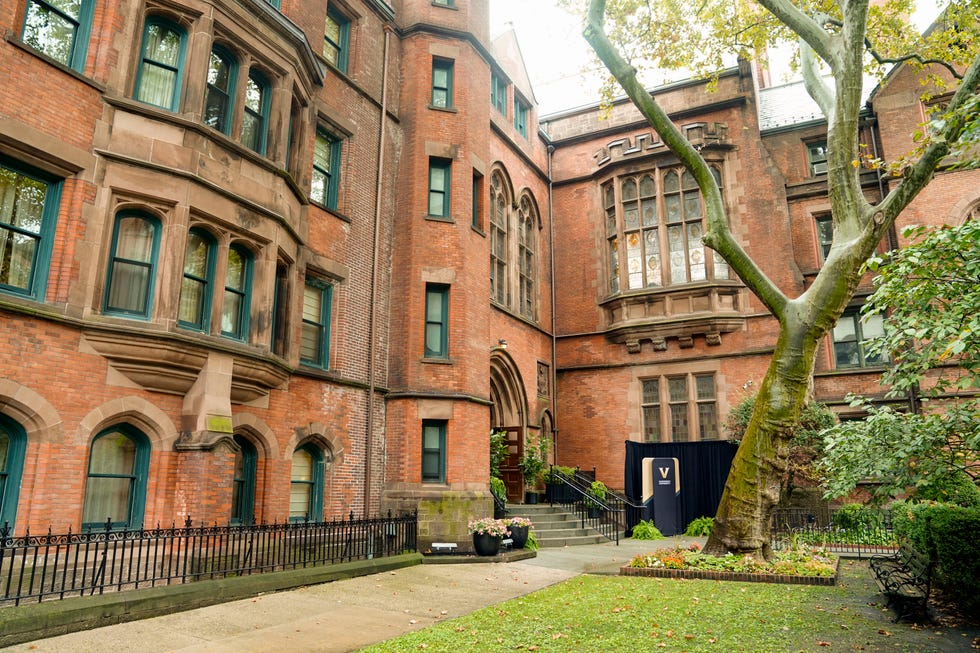
Last Tuesday morning, Vanderbilt University held an opening ceremony for its new satellite campus on West 21st Street in Manhattan’s Chelsea neighborhood. Fifteen minutes before the event started, James Kellerhouse, Vanderbilt’s assistant vice chancellor for strategic initiative, was standing underneath a scaffolding in the grassy quad, eager to show all the progress that had been made. Two years ago, Vanderbilt signed a 99-year lease with the General Theological Seminary and began a lightning-fast restoration of the 200-year-old Episcopal school’s campus. “We repointed the bricks,” he said, gesturing at more than a dozen Gothic-style buildings that surround the interior courtyard. “We did a full interior renovation on some classrooms and what we call a ‘light refresh’ on the residential halls. Now, we’re just making a last few finishing touches before our first day of classes tomorrow.”
It’s a classic New York City real estate arrangement. The seminary, which has long had trouble paying for upkeep, will retain ownership and part-time use of some of the facility. Vanderbilt, which is based in Nashville, gets an attractive northern outpost from which it can launch students into semester-long internships in New York’s major industries, including banking, media, and urban planning. “We have around 10,000 alumni in the New York Metro area and we began outreach as soon as we signed the lease.”
Trustees and students filled the courtyard and were joined by Mr. Commodore, Vanderbilt’s towering mascot, and Daniel Diermeier, the university’s chancellor. Vanderbilt has been on a winning streak over the past decade, attracting applicants from across the country and around the world, and in the process seeing its acceptance rate drop to around six percent. The New York campus is part of an initiative to create what Diermeier calls a “modern research university with spokes emanating from a central hub.” Other new spokes will include West Palm Beach and in San Francisco.
 Norman Vanamee
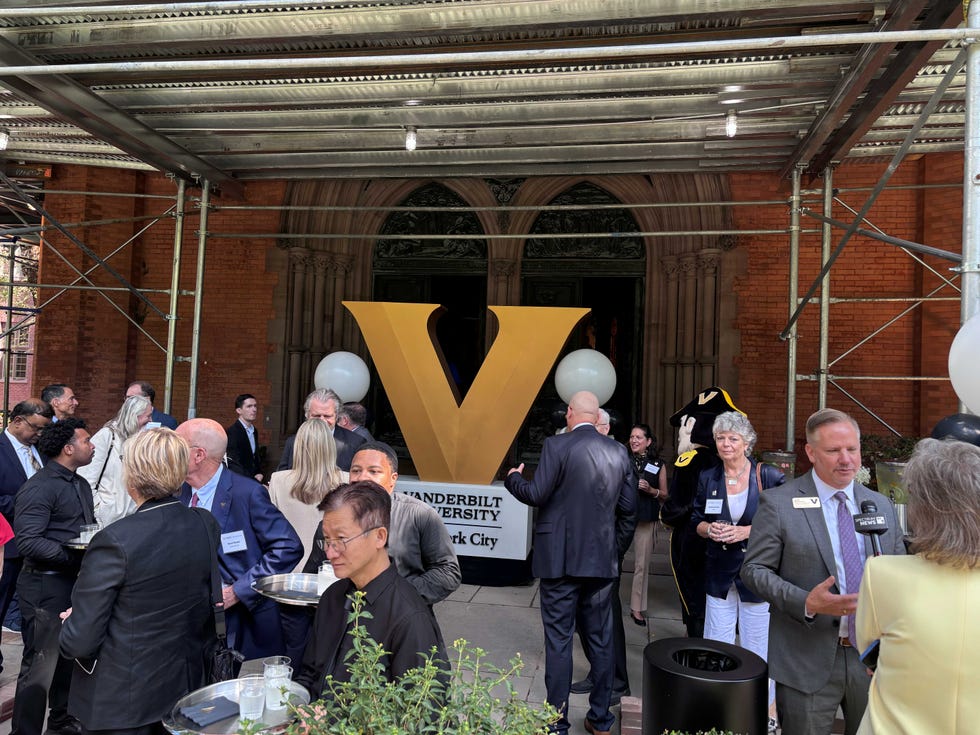
Trustees and alumni joined the opening-day ceremonies.
Opening satellites in Florida or California is one thing, but New York City already has more than 100 colleges and universities, including an Ivy, that compete for resources, including students and internship opportunities. “There’s actually a deep connection to the city,” Kellerhouse said. “Cornelius Vanderbilt, who donated the money to found Vanderbilt University after the Civil War, was a New Yorker. And his son and grandson actually served on the board of this seminary.”
Along with reaching out to alumni, Kellerhouse has been engaging with local institutions. “We’ve met or hosted meetings with the Chelsea Block Association, the Hudson Guild, the Whitney Museum, the Highline, Safe Horizon, Housing Works—all of these great civic organizations have really become part of who we are. Our students will not only be doing internships, they’ll be volunteering at many of these places, too, to help with their missions.”
Diermeier, who spoke to T&C via Zoom a few days before the opening ceremony, also emphasized connections. “Great universities of the future need to be deeply integrated with the local communities. We’ve started with a very intensive connection with the Chelsea neighborhood, and we want to grow from there.” The New York campus, he points out, is not a four-year version of Vanderbilt in another location. Instead it’s a place where undergraduate and graduate students will come for a limited amount of time to engage with something in the city. “New York has certain things to offer that we just couldn’t do at an equal level in Nashville.”
 Barry Williams
General Theological Seminary began construction on its campus in the early 1800s.
One of Diermeier’s achievements during his tenure at Vanderbilt has been to navigate political and cultural issues that have torn apart other big schools recently. Vanderbilt, like the University of Chicago (where Diermeier once worked as provost), is committed to institutional neutrality, something Diermeier thinks New Yorkers will appreciate. “We are recognized as national leaders in the area of civil discourse,” he said. “We may disagree, but we don’t ostracize each other and we don’t shun each other just because we have a different point of view. And we would very much hope that we can bring this to our New York campus.”
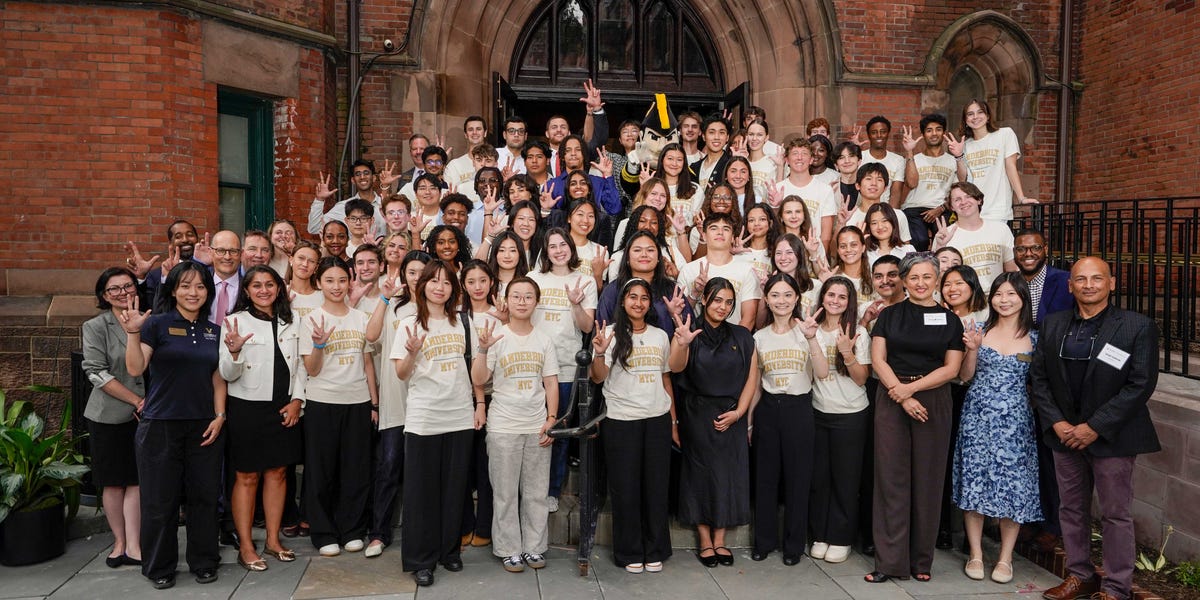
The students began to congregate in front of a large gold V to have their photo taken with Mr. Commodore. They’d already been in the city for a few days. “We divided them into groups and led them on tours of Chinatown, the East Village and Times Square,” said Kellerhouse. “It’s important that they get to know the city’s big landmarks.”
 Vanderbilt University
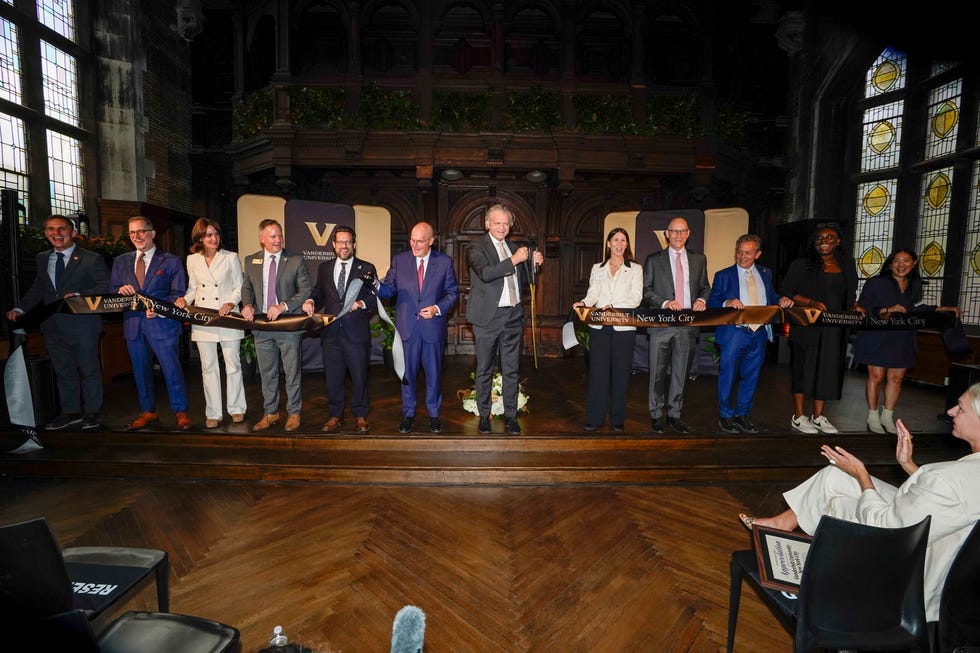
Vanderbilt chancellor Daniel Diermeier cuts a ribbon during the opening ceremony of the New York City campus.
Diermeier headed toward Hoffman Hall, where he would lead the opening ceremony. A few days earlier, T&C asked how he would prepare fresh-faced undergraduates for New Yorker’s famously strong opinions about everything from sports teams to whether to fold a slice of pizza in your hand. “We know how to live in polarities,” he said. “We always resist the temptation to say, ‘You have to go left or right.’ That’s what we’re particularly good at. So maybe Vanderbilt will have a positive impact on the Mets versus Yankees, or how to eat the pizza properly, debates.”