
 7 min read
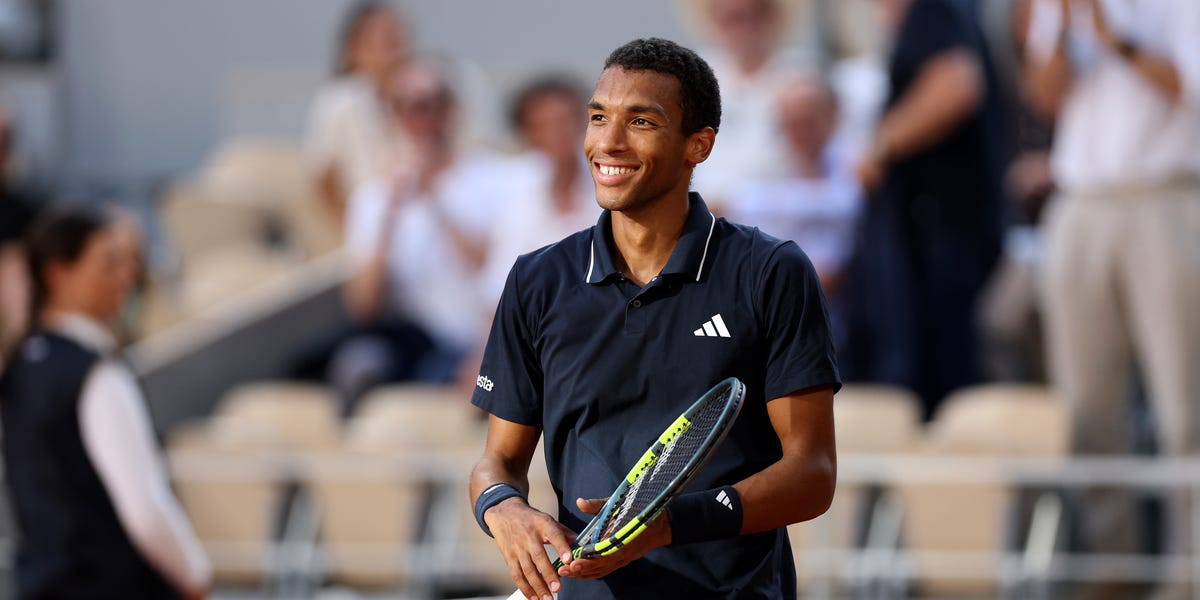
Growing up in Montréal as the son of an immigrant from Togo and a French Canadian schoolteacher, Félix Auger-Aliassime frequently traveled to New York City with his family. “Montreal is the little cousin of New York,” he says. “The diversity of the place, the people, the food scene.” But, the tennis player clarifies, “obviously just not as big.”
His first memories of the Big Apple were how crowded all the streets and shops were. But since turning pro in 2017, Auger-Aliassime, now 25, has found a new love for New York City. “When I think of New York now, my first thought goes to the U.S. Open, to the tennis,” he says. “My favorite thing is just the energy around the tournament.”
Auger-Aliassime adds, “New York is the city of sports. People love it. You get people stopping you in the street wishing you best of luck. There’s this cool vibe. As you progress through the tournament, people are [supporting] you and saying a good word on the street. So it’s different than other tournaments that we go to. Here, you feel like the whole city’s watching the event at the time. Some cities we go play, they have no idea there’s a tournament there.”
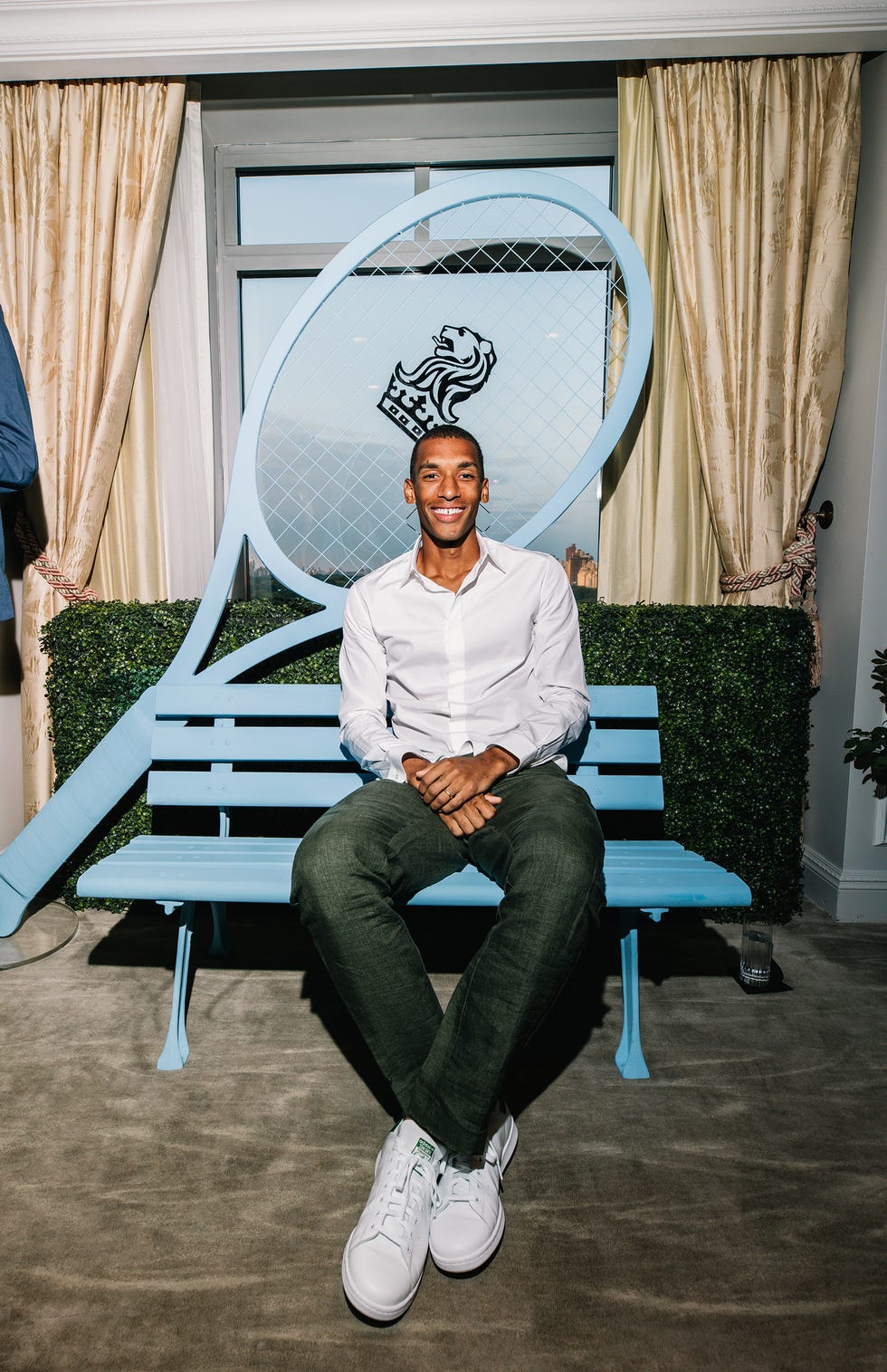 Courtesy of The Ritz-Carlton New York, Central Park
Félix Auger-Aliassime at the Ritz for their “Central Park Open” event last week. Over his years competing at the Open, Central Park has quickly become one of his favorite parts of the city, and this summer, the Canadian athlete is conveniently staying at the Ritz-Carlton New York, Central Park.
He’s fallen into a routine in New York. If he has time in the mornings before heading to the tournament, Auger-Aliassime and wife Nina love to walk their dog, a Pomeranian named Timmy, in Central Park. But even in the park, there’s no escaping the U.S. Open; he frequently gets stopped with words of encouragement. Still, he soaks it all in—and is treasuring the opportunity he gets to compete on the biggest stadium in the sport.
“When you think of the opportunity I’ve had over the years to play multiple times on Arthur Ashe stadium, it’s amazing,” he says. “After I retire, looking back, it’s going to be amazing to have those memories.” Here, the no. 3 seed at the U.S. Open chats with Town & Country about what he loves about the tournament, why he has to take off his (new!) wedding ring to play, and the pressure of representation.
Do you feel support from the New York crowds?
Not against, for sure, so that’s a good thing [laughing]. Sometimes fifty-fifty, which I like as well. I respect it. It’s nice to have the crowd cheering for both sides, encouraging their best, their favorite players. I’ve always been shown a lot of respect from the crowd, and I’ve tried to show respect to the crowd. The relationship with the New York crowd has been great, and it’s a very diverse crowd, which is nice to see. Good for the sport. You see people of all ages also come to the tennis and enjoy, from kids to older people that have probably come here for the last 30 years plus. It’s very nice to see that.
Last year you made it to the semifinals at the U.S. Open. What are you taking from that run going into this year’s tournament?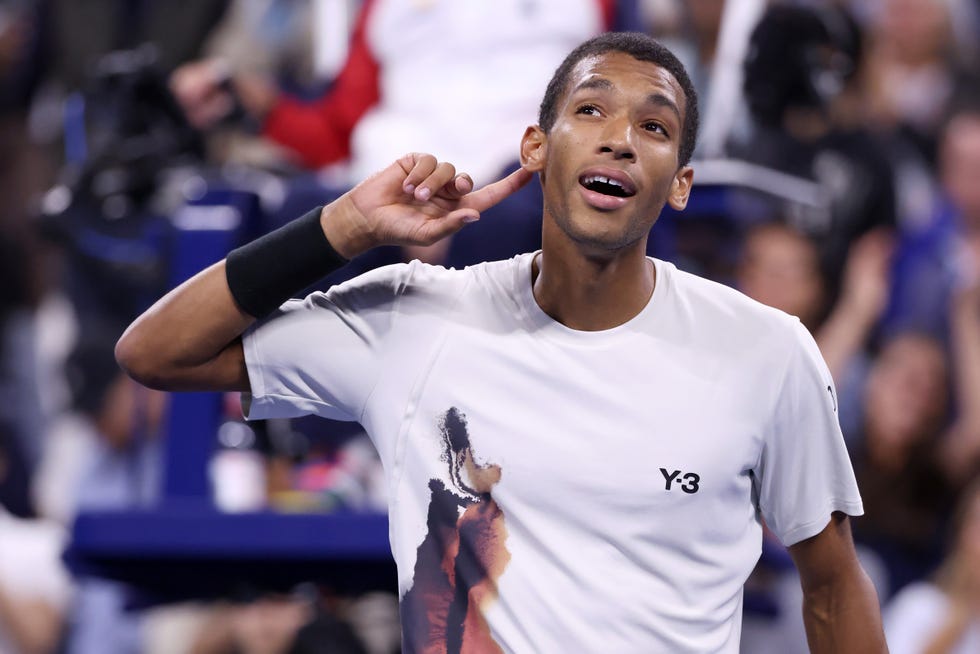 Mike Stobe//Getty Images
Auger-Aliassime at last year’s U.S. Open, after winning his third round match.
The third round [of the 2025 U.S. Open], it was an important match. I was playing the number three seed; it was early in the tournament, a really big match that I knew, if I’d win, it would maybe push me to a deeper run. Looking back, it was a crucial win. I was playing great. I felt like my game was in the right place. After that win, I really felt like I had the energy, the confidence, and that feeling that, “yeah, I can push all the way through.” Then it was stopped by the number one player in the world in the semifinals. But looking back, it was very positive. I hadn’t had a semifinal run in New York since 2021, so it’s nice to be back. Now the challenge for me is to repeat that, to go even further, to reach a first final here. But it’s very challenging. There’s a lot of competition.
How do you feel being the no. 3 seed this year?
It’s better. It’s a good position to be in. It doesn’t guarantee anything, but if I do what I can do, if I kind of produce the level that I can produce, it helps. It’s an advantage when you come to later stages of the tournament.
Since the last U.S. Open, you got married. What’s it like to have your now wife supporting you? Do you compete in your wedding ring? Jean Catuffe//Getty Images
The couple at the FIFA World Cup finals this summer.
It was a great moment in both of our lives. We’ve been together for a long time, so it felt very natural, but still it was an important step for our families and for ourselves, really. We got married in Morocco last year in September, just after the U.S. Open, actually. [After,] I tried to play with the ring. I tried in practice, and I told her, I said, “Look, it’s not going to work.” It [was] annoying me and hurting my finger too much on the backhand. I have a little special pocket that I put it in, in the [tennis] bag. So it’s just off for the matches and practicing.
When you’re playing on Ashe, do you ever look up at the jumbotrons to see the celebrities there?
I try not to look at the screen, funny enough. I don’t want to know who’s watching. Maybe it can distract my thoughts a little bit, and for the next five minutes I’m thinking about, like, “oh, I didn’t know this person is watching.” If in any way it was somebody I really admired or really looked up to, it would be maybe a bit distracting. I prefer to just keep my head down.
Fun fact, I actually keep my head down quite a bit on purpose during the match because, in a sense, you try to really be clear in your thoughts and not get distracted by other things. Between points, you often see me—I think other players, too—kind of look down and look away. Because if you cross eyes with people in the crowd, it can be a bit weird, right? You lock eyes with them, they might say something to you, encourage you, which you’re like, thank you, but at the same time I’m trying to focus. It’s like if you’re into a book that you’re really into, you just want to stay in it.
 Andy Cheung//Getty Images
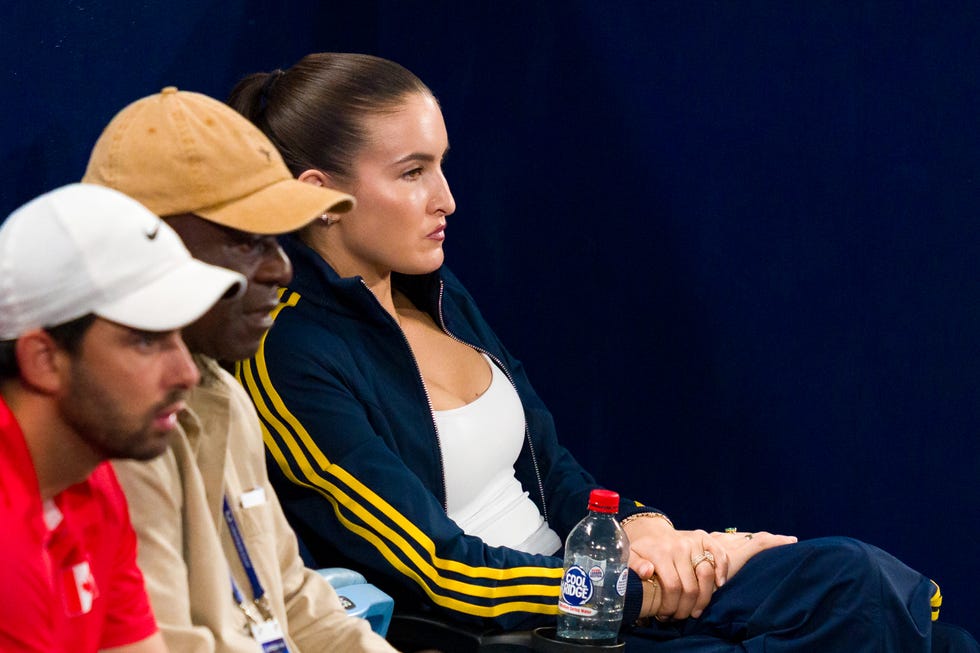
Auger-Aliassime’s wife Nina watches his match during the United Cup at the start of 2026.
When you’re looking at your player’s box, what are you looking for?
Information! I’m looking for advice. Tell me something. It’s not going well—tell me something. Usually that’s how it goes. When everything’s smooth and going well, you don’t look at them. I got it. And then when things are going south, you’re starting to get life.
Have you noticed a change in how matches go now that players can talk to their boxes?
Oh, definitely. Yes. I think the sport was seen before much more as—I mean, it is individual—but much more the “gentleman’s sport” where you don’t get coaching and you’re by yourself out there, you figure it out, and then it’s between the two [players]. Where now, there’s more of that team element. I think on TV they talk a lot about how the player’s box, they talk about their team, their family. You can see even clips of their preparation before the match. There’s a more 360 approach and footage and uncovered scenes and all that. I like it, personally, because these people that we work with that before were in the shadows, [but] they people that work all year with us. So to showcase them, it’s very nice as well.
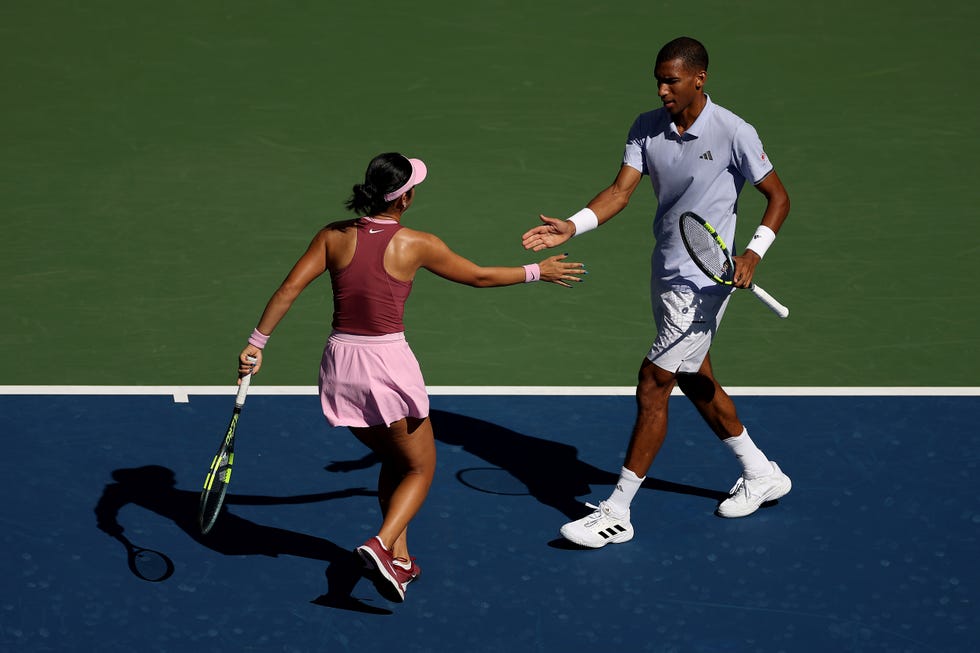 Sarah Stier//Getty ImagesAuger-Aliassime played mixed doubles with Alex Eala last week. “It’s exciting to do different things,” he says. “Her fan base is unbelievable.”Do you have any routines in New York that you keep to?
I like to have my routine—breakfast here at the hotel, maybe go for a coffee around the block. There’s two spots around here for coffee, and there’s also a spot called Mangia that’s a lunch place. If I play a late match, I might just skip breakfast and go straight to lunch there. I’m kind of a foodie as well, so I like New York in that sense where I know my spots now. I know the Italian I like to go to, the sushi I like to go to, the Thai restaurant nearby. So it’s good.
Do you get superstitious about dining? I know some players can get weird about, “Oh, I’ve got to eat here.”
No. The days before the match, [my] team, they want me to eat the right things. I’m careful myself about doing the right things in order to prepare for what’s most important. But on practice days or days where maybe it’s not as important, I like to enjoy different things, different restaurants. I’m not too [superstitious], like some players that go to the same one every day until the end. I like to change things up.
Going into the U.S. Open, there’s always the question of who’s going to be the next American man to win. But Canadian tennis is also in the spotlight, as this is the only Grand Slam in North America. Do you feel pressure from Canada to represent?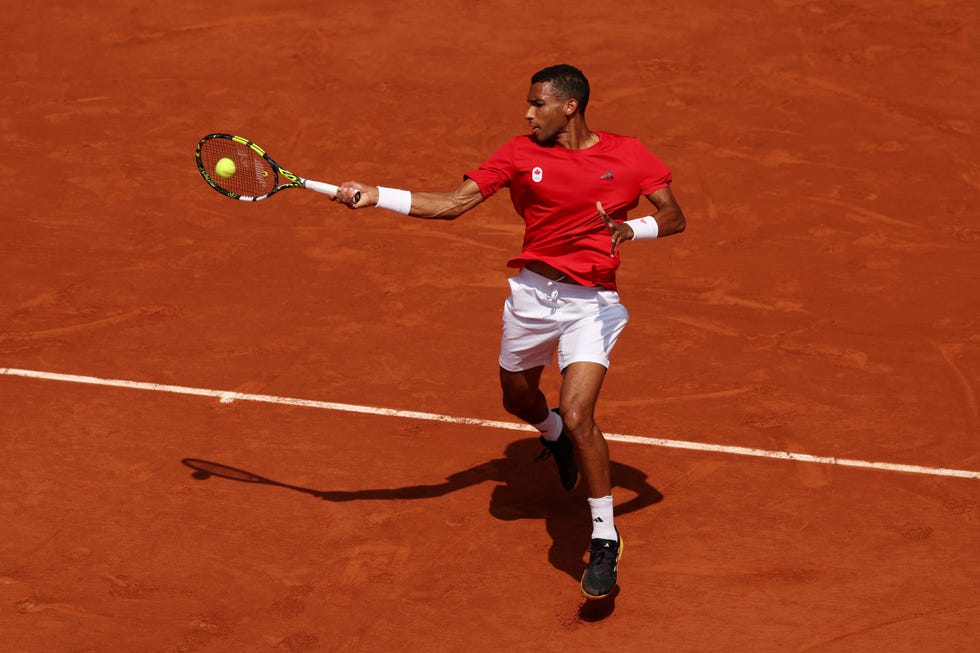 Clive Brunskill//Getty Images
Auger-Aliassime has represented Canada at two Olympics. In Paris, he won Bronze in mixed doubles with Gabriela Dabrowski.
I’ve dealt with this position for some years now; I’m happy to be in this position. I don’t shy away from it. It’s a privilege. Canada hasn’t produced so many high-level tennis players, Grand Slam champions. We had one, Bianca Andreescu, winning here a couple years back, but on the men’s side we’ve never done it. That’s what I’m chasing. If I can do it, it would be a great pride, obviously to do it for myself, but also to represent a country that’s trying to do the right things and push the sport forward, in tennis and different sports as well. It’s always a privilege, honestly, to be in that position. North American tennis, American tennis—everybody’s young. A lot of young players playing well—I’m including myself! I’m not [old] yet. Hopefully I’ve got a lot more years in front of me.


Emily Burack (she/her) is the Deputy Digital Editor for Town & Country, where she covers entertainment, celebrities, the royals, and a wide range of other topics. Before joining T&C, she was the deputy managing editor at Hey Alma, a Jewish culture site. Follow her @emburack on Instagram, Twitter, and other social media platforms.