
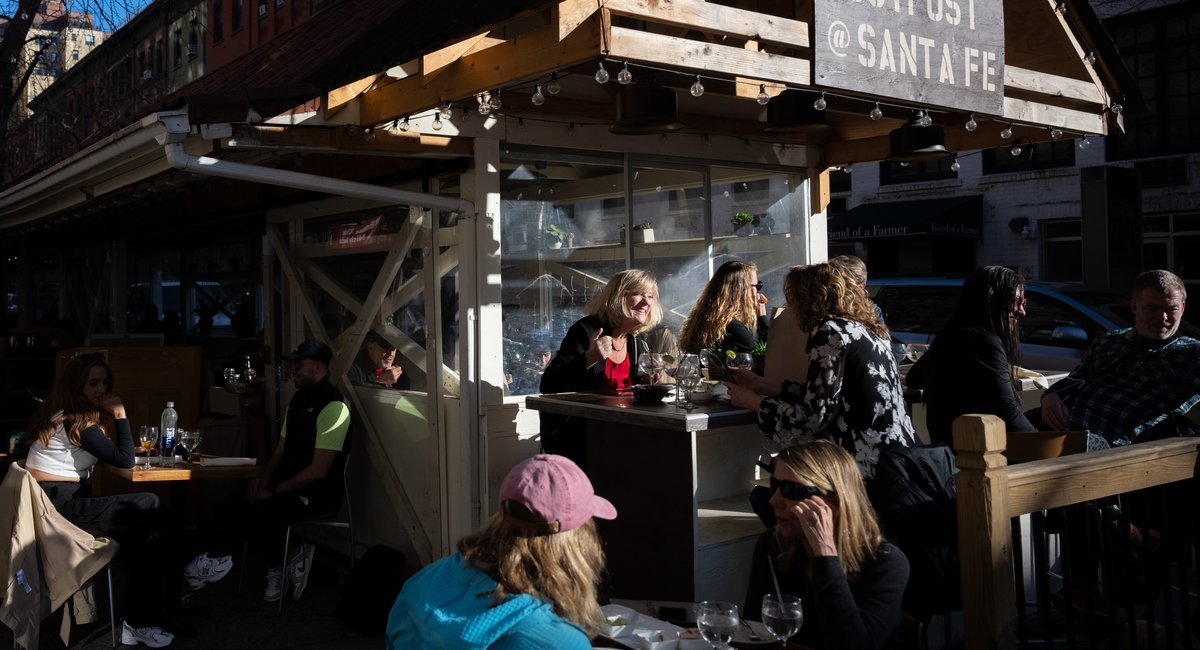
Year-round outdoor dining is officially back in New York City as part of a suite of new regulations officials hope will bring back the roadside sheds and sidewalk cafes that peppered city streets during and after the COVID-19 pandemic.
“Outdoor dining transformed our city once before,” Mayor Zohran Mamdani said at a bill signing ceremony outside City Hall Monday. “I’m so excited for it to do so once again.”
Thousands of restaurants built wooden sheds and makeshift patios through relaxed outdoor dining regulations from 2020 through 2022, when the pandemic sent the industry spiraling. For more than a year, businesses could install al fresco setups and self-certify their compliance with city regulations. At its peak, city data shows some 12,500 restaurants offered outdoor dining.
That number dropped to about 1,600 after former Mayor Eric Adams and the City Council passed a set of regulations in 2023 that created new permitting requirements and limited the season from April to December. Many businesses didn’t have the storage space or money to take down their setups every winter only to reinstall them in the spring.
“ Adams-era regulations of outdoor dining nearly broke this program,” Councilmember Lincoln Restler from Brooklyn said Monday. “ It is stupidly expensive to have to construct, take down, and store outdoor dining structures every single season.”
Adams and other city officials at the time said many of the outdoor dining sheds had become unsanitary or abandoned.
Restler sponsored the bill reintroducing year-round outdoor dining, which the City Council approved earlier this month. It’s one in a package of Council bills that would allow restaurants to enclose their sidewalk cafes during the winter, let operators pay permitting fees in quarterly installments, and create new penalties for restaurants that don’t keep their outdoor spaces free of trash, graffiti, rodents, and vermin.
While the proposals amount to something of a course correction in the Adams administration’s approach to outdoor dining, certain sanitation regulations will remain. Restaurants will still have to remove the floorboards of their outdoor sheds every week to clean underneath, and all furniture must be removable and lightweight.
Mamdani said he would allow the other three proposals to become law without his signature.
His administration is separately pursuing a charter amendment that would cut the roughly eight-month outdoor dining permit application process to two months. The proposal will go before New York City voters on the Nov. 3 ballot.
Advocates were optimistic that the new rules would revive the outdoor dining program..
“ We think that the seasonality of the program really hurt a lot of small businesses that wanted to invest in these types of setups,” said Maulin Mehta, New York director of the Regional Plan Association. “ We’re hoping that we see much more uptake in the program going forward.”
Mehta said the new rules could also lead to outdoor dining in more diverse areas of the city. A recent analysis by the nonprofit Open Plans found that 94% of curbside dining setups are located in Manhattan and Brooklyn.
While city officials did not provide a specific estimate, Mamdani said he expected thousands of restaurants to use their outdoor spaces again.
“ Families will be able to dine al fresco,” he said. “New Yorkers will go on first dates beneath the stars, and friends will finally be able to ask one another, ‘What’s your Venmo?’ under the light of the moon.”