
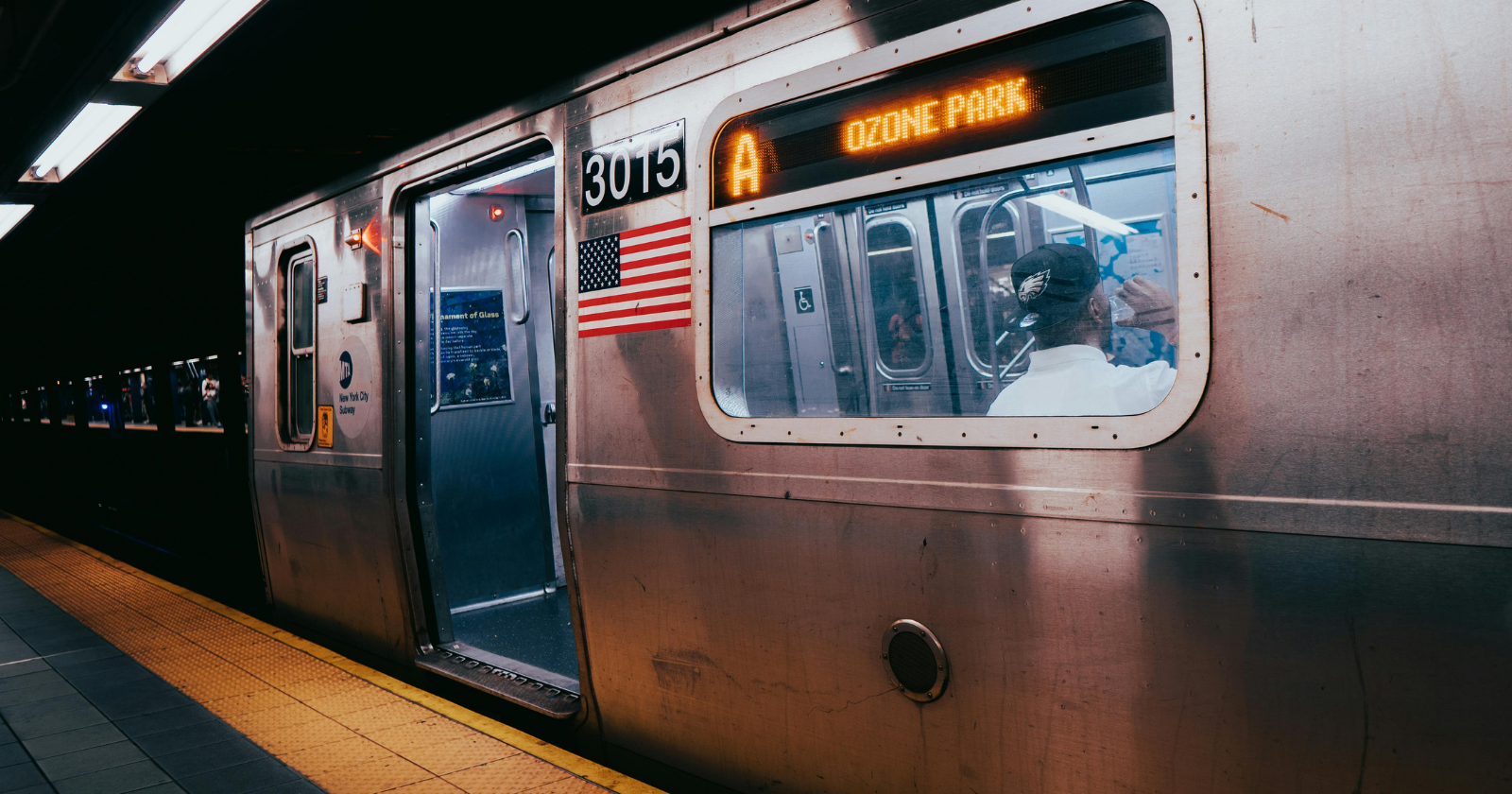
Somewhere off the coast of Delaware, a black sea bass is living inside a 7 train.
Not metaphorically. An actual New York City subway car sits on the seabed 16 miles offshore, one of hundreds resting in 80 feet of water, so thickly encrusted with mussels that you can no longer tell where the advertising used to be. Divers call it the underwater train wreck. On the charts it is Reef Site 11, and everyone else calls it the Redbird Reef, after the red-painted cars that built it. Atlas Obscura puts the tally at 714 subway cars, alongside 86 tanks, eight tugboats and barges and roughly 3,000 tons of truck tyres, scattered across 1.3 square nautical miles of sand.
Sand is the entire reason any of it worked.
Why the seabed off Delaware is a bad neighbourhood
Jeff Tinsman ran Delaware’s artificial reef program for years, and he didn’t dress up the local geology. Describing it to CBC’s Day 6, he said the mid-Atlantic “kind of got the short end of the habitat stick.” Almost the whole shelf here is flat, featureless sand, scoured by current, with next to no rock.
That sounds cosmetic. It matters enormously because of how a food chain gets built from the bottom up.
At the base of any reef economy sit animals that filter food out of the water while staying put: blue mussels, barnacles, sponges. Every one of them needs something hard to cement itself to. A mussel larva that settles on a grain of sand has anchored itself to nothing and dies. So the water above Delaware carries plenty of larvae, and the bottom below offers them nowhere to land.
A subway car solves that in the crudest way imaginable. It is a big steel box full of holes.
What the 400 times figure actually measures
Mussels took the cars almost immediately. Speaking to CNN, Tinsman said the carbon steel cars were holding up well, offering thousands of square feet of hard surface to invertebrates that could not survive on the sand beside them. That produced the number everyone repeats. Comparing the encrusted steel with the natural bottom next to it, Delaware’s monitoring found roughly 400 times as much food per square foot for fish.
That figure describes density on a surface, not a claim that the state suddenly has hundreds of times more fish swimming around. Around the mussels lives another 30 or 40 invertebrate species, shrimp, crabs and worms among them, exactly what a black sea bass or a hungry tautog wants for dinner. Doors and windows help too, since the openings let small fish slip through while larger predators bounce off the outside.
New Jersey wanted no part of it
New York offered the steel for free, with one catch: asbestos in the flooring of the forty-year-old cars. Scientific American covered the fight in 2001, when Clean Ocean Action’s Cindy Zipf pressed the case that nobody had properly assessed what asbestos-bearing material would do sitting in seawater with animals growing all over it. New Jersey pulled out, with acting governor Donald DiFrancesco saying the state had to err on the side of safety and the environment. Maryland volunteered to take the rejected cars, then declined as well.
Delaware said yes to 400 of them and started sinking them that August.
Then came the stainless steel
Not every car turned out to be reef material. From 2008 the transit authority began offering Brightliners, the R32s with the corrugated stainless steel skin, which everybody assumed would outlast the painted carbon steel Redbirds by decades. They lasted months. Writing in Fast Company, Elissaveta Brandon reported the diagnosis from environmental consultant Daniel Sheehy: spot welding created a thin layer between metals that invited corrosion, and the corrugated panels gave undercurrents something to grip and peel.
New Jersey’s Division of Fish and Wildlife documented the damage in a 2009 reef newsletter, reporting that four of five cars surveyed on one dive at the Atlantic City Reef showed significant structural damage, with a second dive at a different cluster finding the same. Deployments were suspended. Other states checked their own sites and found matching wreckage, plus torn sheets of stainless drifting into commercial trawl nets.
The Redbirds, built from humbler carbon steel, stayed exactly where they were dropped.
The argument the reef hasn’t settled
Marine biologists have spent decades on a question called attraction versus production: does a structure like this generate new fish, or does it simply gather up fish that were already spread thinly across the neighbourhood? A concentrated population is easier to catch, good news for anglers and potentially bad news for the stock. A simulation study published in Ecology and Evolution by Matthew Smith and colleagues argued that attraction doesn’t have to be harmful, and can sometimes spread fishing pressure out instead of piling it up. That is a single simulation, though, and nowhere near a settled verdict.
Delaware kept adding regardless. DNREC now describes Reef Site 11 as holding 997 retired subway cars, plus a cruise ship, army tanks, tugboats, a trawler and two barges. Call it a municipal landfill with excellent PR and a genuinely good outcome.
Every remaining Brightliner went by rail to a scrapyard in Ohio, chopped up for the value of the alloy that failed them underwater. The Redbirds got the better retirement: four decades hauling commuters to Flushing, then a second career as beachfront property for mussels.