
By Ryan Schwach
Officials are pouring more than $8 million dollars into three projects to help prevent water from pouring into Queens’ streets.
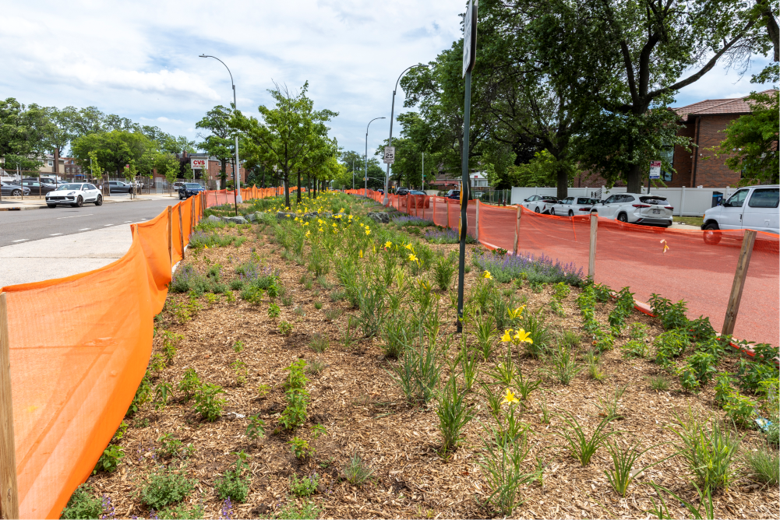
Governor Kathy Hochul and Mayor Zohran Mamdani announced funding last week that will pay for three projects to transform road medians into infrastructure built for flood protection in Whitestone, Forest Hills and Queens Village.
The announcement of the projects, two of which are already underway, comes after Queens faced two serious episodes of flooding this month alone, inundating homes with water and shutting down major roadways. After the water subsided, local pols called for the mayor to do more to prevent flooding in the borough he used to live in.
The trio of projects – which cost $8.4 million – will turn concrete medians in the three neighborhoods into “sponges” meant to absorb flood water and prevent extreme flooding. Officials say they could capture around five million gallons of stormwater a year.
“Climate change is bringing more intense and unpredictable bursts of rain, and without action, those storms will continue to overwhelm New York City’s sewer system,” Mamdani said. “This $8.4 million green median project meets that challenge with infrastructure that works for our environment and our neighborhoods.”
Work will remove the old medians and will install specially engineered soils and underground storage systems designed to absorb water.
In Whitestone, the nearly completed work will upgrade the medians along Francis Lewis Boulevard between 20th Avenue and 21st Road. The Forest Hills work will be done this fall and will replace concrete medians on Union Turnpike between Metropolitan Avenue and 71st Road. Finally, the work in Queens Village, which flooded twice this month, will begin later this year on medians on Springfield Boulevard between Lucas Street and Merrick Boulevard.
“By planting native species and wildflowers above an underground stormwater storage network, we will capture five million gallons of stormwater each year, easing pressure on our sewer system and keeping New Yorkers safe,” said Mamdani.
The projects are funded in part by $5 million worth of grants from the Green Innovation Grant Program administered by the Environmental Facilities Corp. and the Water Quality Improvement Project overseen by the New York State Department of Environmental Conservation.
“With flash floods becoming more the norm due to extreme weather tied to our changing climate, it’s imperative we do all we can to protect our communities,” said Hochul. “Here in New York, we are implementing innovative solutions to strengthen our infrastructure and better protect our communities. Working with Mayor Mamdani and the City of New York, these critical green infrastructure projects will help make Whitestone, Forest Hills and Queens Village more resilient and safe.”
The funding announcement comes hot off of three serious flooding events across Queens in July and August.
After the flooding, Queens officials asked the Mamdani administration to start rerouting city money to immediately address the issue.
“New York City needs a long-term investment in sewer capacity on a scale we have never seen before,” wrote Queens Councilmember Phil Wong in a letter to Mamdani. “The storms we are experiencing today are not the storms this sewer system was designed to handle. We know that. The administration knows that. Continuing to respond to each flood as though it were an unexpected emergency is no longer acceptable.”
Wong asked the administration to use money from city residents’ water payments to pay for fixes to Queens’ outdated sewer infrastructure. Currently, the funds go directly to the citywide general fund.
Queens Councilmember Jim Gennaro told the Eagle that the Department of Environmental Protection “is literally being robbed of money that it needs to get us out of this flooding crisis,” as long as they aren’t using water payments for flood mitigation.
While the administration didn’t comment directly on the letter, Mamdani said in an unrelated press conference that addressing flooding is “one of the foremost priorities for our administration.”