
BY MAX WHITE for The Chief
Members of the New York State Nurses Association at NewYork-Presbyterian Brooklyn Methodist Hospital voted overwhelmingly to ratify a new contract agreement on Aug. 28 that improves safe staffing standards, institutes more workplace violence protections, ensures wage increases and more.
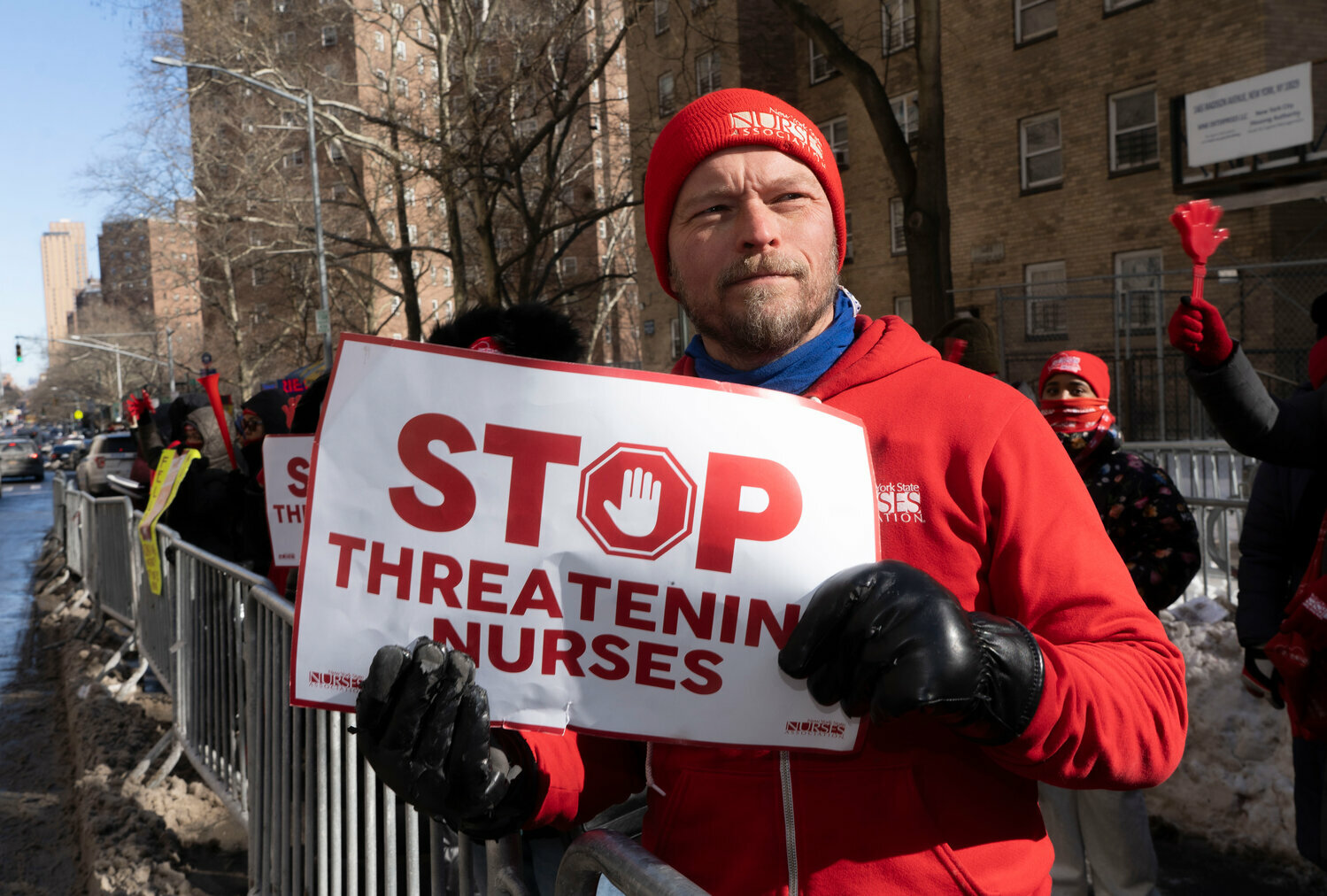
The new three-year agreement came after a months-long fight for a new deal – NYSNA’s previous contract with the hospital expired April 30 – and after the city’s largest-ever nursing strike in January.
“We are proud that our nurses overwhelmingly voted to ratify this contract, a powerful reflection of the solidarity and commitment shown by our members throughout the negotiation process,” Aldrich Crispino, local NYSNA president at NYP-Brooklyn Methodist, said in a statement to The Chief.
NYSNA president Nancy Hagans said members “came together, listed their demands, and stood strong for the tools and protections they need to keep themselves and their patients safe while delivering excellent care.”
“We refuse to allow facilities to cut corners and balance their budgets on the backs of our members,” Hagans said.
The new contract includes safe staffing standards language intended to speed up the grievance process, improvements to weapons detection systems for increased safety, safeguards against artificial intelligence, additional paid time off for nurses who are victims of workplace violence and annual four percent wage increases across the life of the agreement.
A spokesperson for NewYork-Presbyterian told The Chief in a statement that it is “pleased to have reached a fair and responsible contract agreement that reflects our tremendous respect for our nurses and the critical role they play as part of our outstanding care teams.”

Safety protections were also a focus of the NYSNA strike in January at three major hospital systems across the city, involving around 15,000 nurses. The strike ended after 41 days, with improvements to workplace violence protections among the contracts’ highlights.
Ed Reed/Mayoral Photography Office.
The protections for nurses were also a focus of the NYSNA strike in January at three major hospital systems across the city, involving around 15,000 nurses. Nurses at Mount Sinai Hospital, Mount Sinai Morningside and West, Montefiore Medical Center and NewYork-Presbyterian began picketing on Jan. 12.
The strike ended in late February after 41 days when NYSNA nurses at NewYork-Presbyterian voted to ratify new three-year agreements, with improvements to workplace violence protections among the contracts’ highlights.
An active shooter threatened to shoot up Mount Sinai Hospital in November, which led to the hospital disciplining three nurses who spoke to news media and their colleagues after the attempted shooting. The hospital wrote up two of the nurses and suspended the third. NYSNA slammed the disciplinary action as illegal retaliation.
Workplace violence protections were a special focus in the contract fight as nurses experience it at some of the highest rates. NYSNA members at NYP-Brooklyn Methodist have reported experiencing harassment, assault and groping while working.
In January, police officers shot and killed a former FDNY lieutenant inside of NYP-Brooklyn Methodist hospital who had cut himself with a blade and threatened to cut and kill others while barricading himself in a blood-spattered room with another patient and a hospital security worker. Police Commissioner Jessica Tisch later said Michael Lynch, who also formerly worked as an MTA bus driver and NYPD police officer, was an “emotionally disturbed man.”
His family and former friends from the FDNY gathered outside the NYP-Brooklyn Methodist days after Lynch was shot to mourn the former firefighter, call for an investigation and honor him.
Nurses at the hospital see the increased safety protections as big wins for healthcare workers.
“Nursing has always had its safety challenges, but recent incidents, including January’s lock-down because of an active shooter have shown us that we must prioritize the safety standards needed to keep our patients and ourselves safe,” Crispino said. “We’ve been determined to make sure management hears us loud and clear.”