
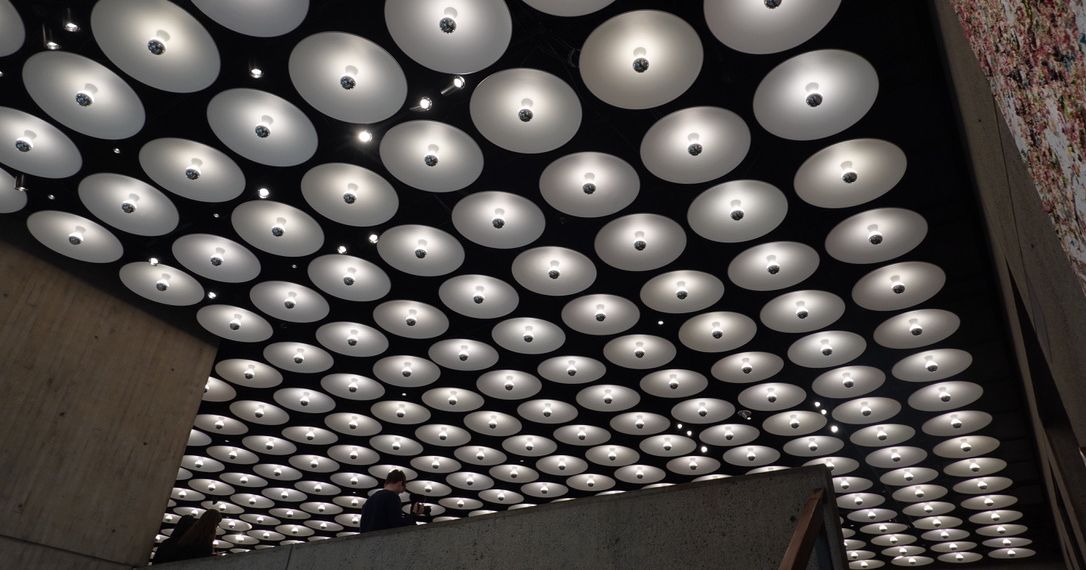
Welcome to the LED age.
Photo: Adriane Quinlan
When the Breuer Building on 75th and Madison reopens on Saturday in its new life as an auction house for Sotheby’s, return visitors will notice that the lobby is much as they left it. The room is a rare interior landmark, a designation that encompasses even the furniture: slabs of seating and tables that are actually cemented in. But Sotheby’s still managed to make some tweaks. The ticket counter is now a welcome desk, and the benches by the entrance and the old coat check hold glass vitrines of pricey artwork and jewelry, not waiting grandmothers. As for the coat check itself, it’s now the fanciest boutique on Madison, with a countertop that has drippy diamond and emerald necklaces and cuffs and earrings from Cartier and David Webb.
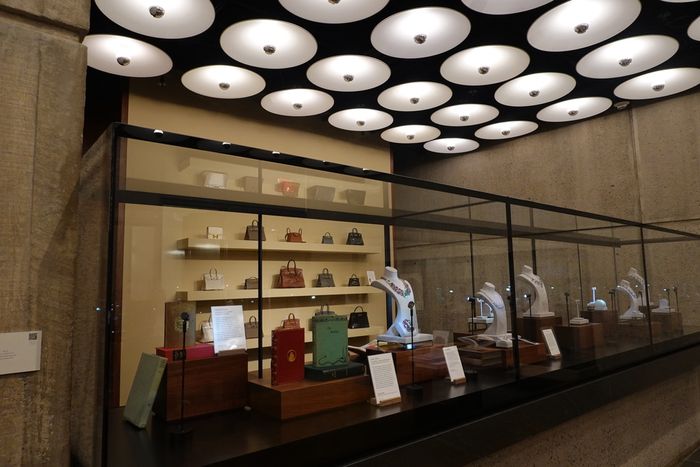
Where you once dropped heavy bags, you can now admire Birkin and Kelly bags.
Photo: Adriane Quinlan
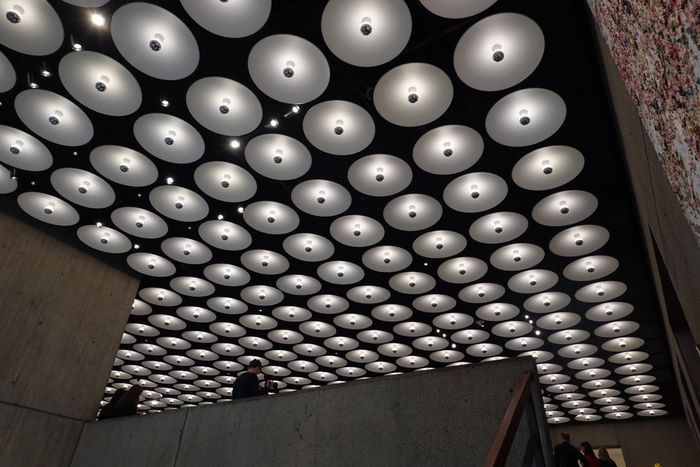
But some of the adjustments are harder to pin down — a certain brightness that isn’t just the steam-cleaned concrete walls or squeegeed bluestone floors. It’s the ceiling, where the distinctive grid of bare bulbs dangling from shallow white shades looks as if it has been bleached. And in a way, it has. When the architects that Sotheby’s brought onboard — Herzog & de Meuron with local partner PBDW — toured the building last year, they found bulbs that gave off different pallors, perhaps depending on when they were last changed out. Then there were the shades. Some looked peach, others gray and beige. “I think you had 10 if not 20 different colors, because they’d been gently cleaned over time,” says Wim Walschap, a Herzog & de Meuron partner. “We refreshed it completely.”
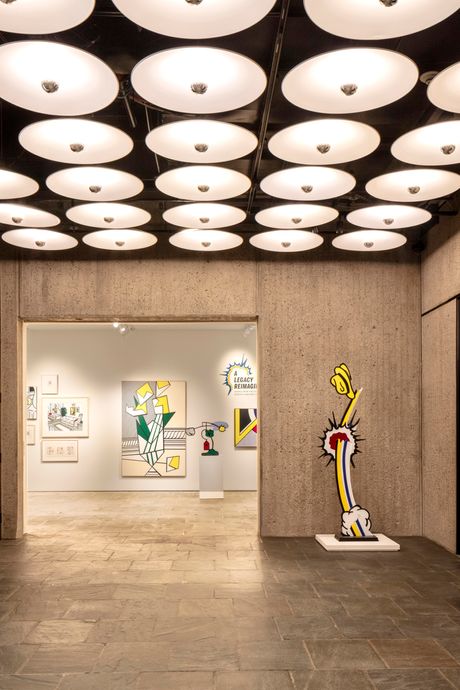
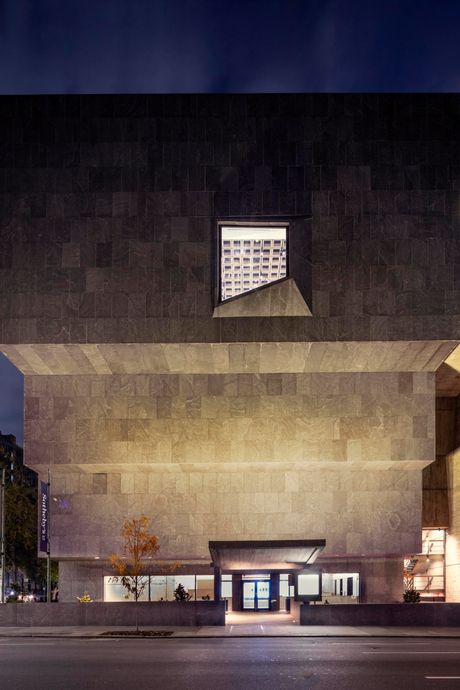
Refreshed lighting inside and out. From left: Photo: Stefan Ruiz/Courtesy of Sotheby’sPhoto: Stefan Ruiz/Courtesy of Sotheby’s
Refreshed lighting inside and out. From top: Photo: Stefan Ruiz/Courtesy of Sotheby’sPhoto: Stefan Ruiz/Courtesy of Sotheby’s
The bulbs, which are now LEDs, were designed off notes that Marcel Breuer made on the original specs for his lights, which included a numerical code. Brigitte Cook, the project lead with PBDW, said the code turned up in a General Electric catalogue. Referring to the catalogue description, the team worked with a lightning fabricator to create LEDs that don’t feel like LEDs. Another touch: The base of each bulb had always been covered in a reflective coating to send most of the light up into the shade (this makes them an awful lot easier to stare up at). While replacing the bulbs with customs, they also added a bit more of the reflective coating so they send all of the light into the shades above. And custom sockets helped the architects line the bulbs up perfectly. Altogether, the room now has a harder, sci-fi edge, as if Stanley Kubrick had been called in to consult.
When I asked Cook how many lights there were, she remembered it was a number close to the number of days in a year. Then she checked: “364,” she said. And if one goes out? “We’ve got a lot. There’s a reserve.”
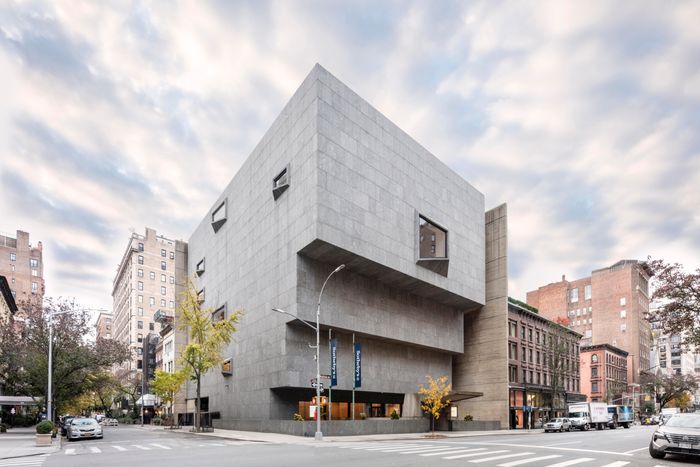
Changes outside include new flags announcing Sotheby’s and deepening space in a downstairs sculpture garden to reflect how Breuer initially arranged the planters.
Photo: Stefan Ruiz/Courtesy of Sotheby’s
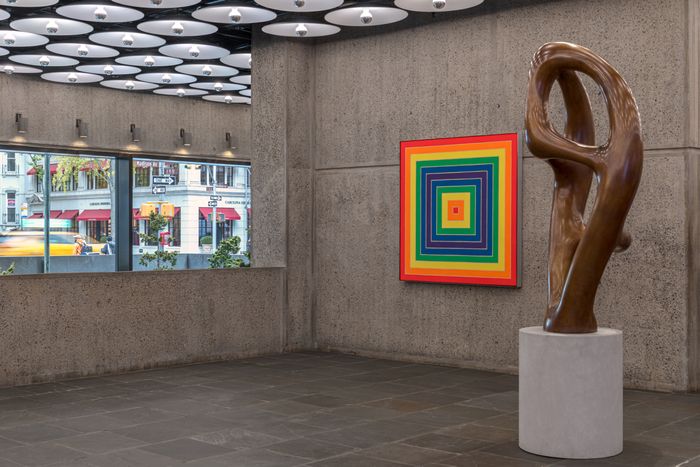
The art displayed here is now for sale, which might shock a few visitors.
Photo: Stefan Ruiz/Courtesy of Sotheby’s
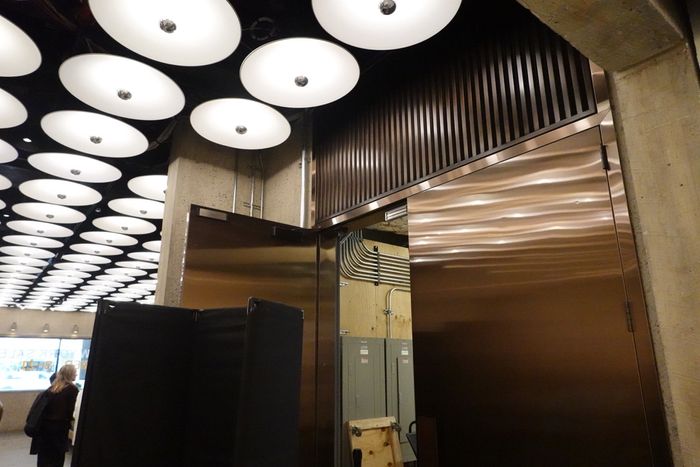
One of the biggest changes to the building overall is the addition of a freight elevator in the central core — key for an auction house that changes work out quickly. Previously, museums used the largest elevator for both visitors and the pieces they came to see.
Photo: Adriane Quinlan
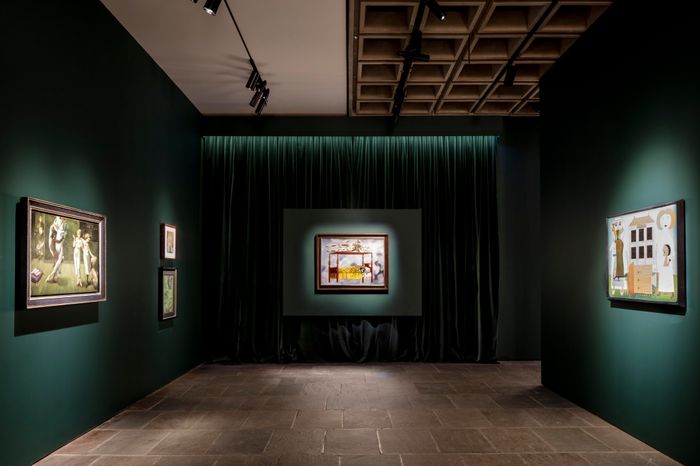
Upstairs, Breuer’s grid of concrete ceiling is untouched, though the walls have gotten spiffier, with velvet backing a Frida Kahlo painting estimated to fetch between $40 million and $60 million.
Photo: Stefan Ruiz/Courtesy of Sotheby’s
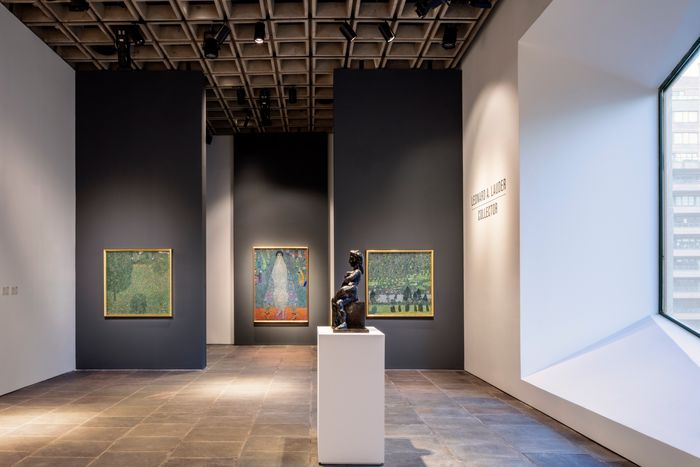
The star of opening weekend is a Klimt from the personal collection of Leonard Lauder, a collector who helped arrange the Whitney’s downtown move and leases to the Met and the Frick.
Photo: Stefan Ruiz/Courtesy of Sotheby’s
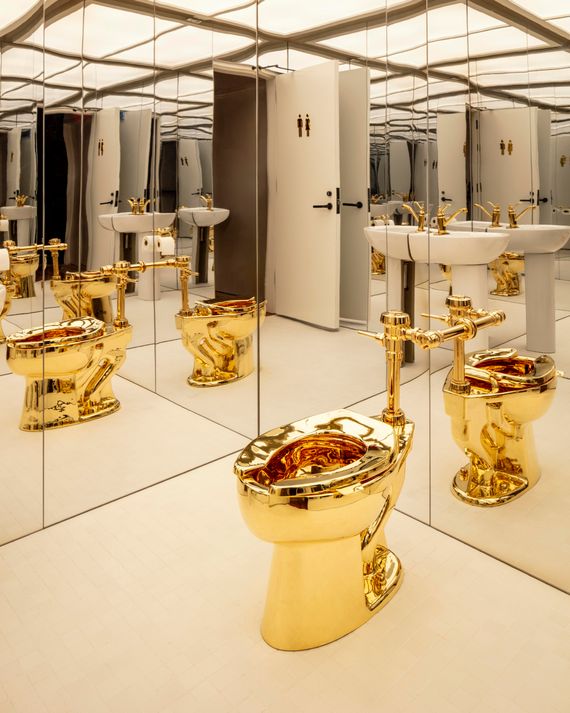
Though, on the fourth floor, there’s also America, a solid-gold toilet by Maurizio Cattelan that is displayed in a selfie-friendly space that looks designed to go viral.
Photo: Stefan Ruiz/Courtesy of Sotheby’s
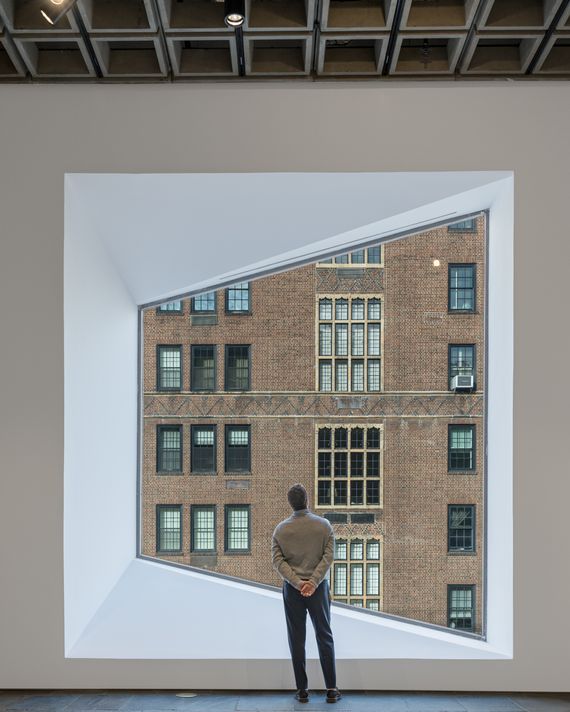
Breuer’s funky windows were untouched and became the centerpiece for how the architects reimagined the gallery floors.
Photo: Stefan Ruiz/Courtesy of Sotheby’s
Sign Up for the Curbed Newsletter
A daily mix of stories about cities, city life, and our always evolving neighborhoods and skylines.
Vox Media, LLC Terms and Privacy Notice
Related