
Betty Parsons: An Expanded World
CCS Bard Galleries
June 27–October 18, 2026
Annandale-on-Hudson, NY
The exhibition Betty Parsons: An Expanded World at the Center for Curatorial Studies at Bard College’s Hessel Museum of Art showcases Parsons’s achievements as an artist, framed within her inescapable status as a legendary American gallerist. Parsons used the term “expanding world” to mark her breakthrough from realism to abstraction during the late 1940s, as well as to express her own sense of manifest destiny: “I was always looking for the expanding world, in a way, which is a very American world. The European world; everything is surrounded by walls. In America everything is wide opened.” In this spirit, the exhibition’s co-curators, curator Kelly Taxter and artist Amy Sillman, have assembled an expansive survey of Parsons’s art practice, complimented by two well-paced ten-minute films by G. Anthony Svatek and Kaija Siirala that detail her personal and professional trajectories. Taken as a whole, An Expanded World offers a timely and detailed view into the world of Betty Parsons and her artmaking.
The exhibition smartly opens with a moving-image encapsulation of Parsons’s storied work as an art dealer. From its outset, the Betty Parsons Gallery encouraged collaboration with artists like Barnett Newman, steadfastly maintaining an artist-engaged orientation. As a gallerist, Parsons relied on her well-trained eye, patrician decorum, and new world practicality to shape the careers of groundbreaking artists from Ad Reinhardt to Robert Rauschenberg to Agnes Martin. Today her fame is inextricably tied to the pivotal years of Abstract Expressionism, especially as embodied by her so-called “giants”: Mark Rothko, Jackson Pollock, Clyfford Still, and Newman. Yet critical interest increasingly acknowledges the diversity that energized Parsons’s enterprise. As a gallerist, she represented many artists other than the straight men she is most commonly associated with, including women like Lee Krasner, Ethel Schwabacher, and Perle Fine, as well as LGBTQ+ artists like Bradley Walker Tomlin, Theodoros Stamos, and Sonja Sekula. Parsons herself was queer (her early partner and artistic mentor was Anglo-Irish painter Adge Baker), and An Expanded World works hard to marry Parsons the person with the unique success of her gallery.
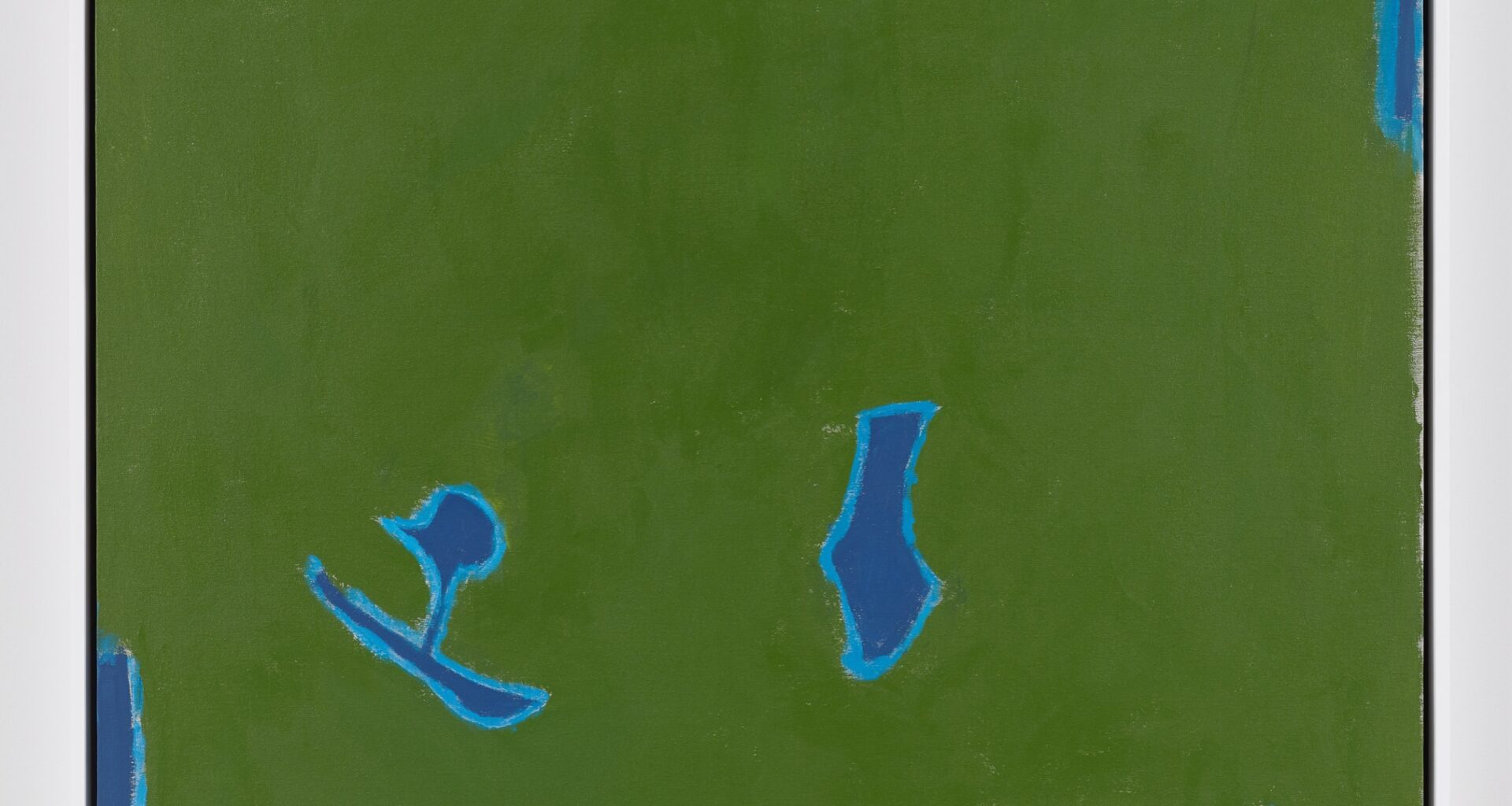
The main stage of An Expanded World concentrates on Parsons the artist, commencing with realist works on paper from the 1920s and ending with late abstract paintings and wooden constructions of the ’80s. Parsons practiced art from the time she visited the famed Armory Show in 1913, and during the 1930s she worked in a vein consistent with American Scene painting. Her breakthrough to abstraction occurred when attempting to capture the dynamism of a rodeo in the American West, but her day-to-day intimacy with formidable modernist canvases by Still, Leon Polk Smith, Jack Youngerman, and others helped to refine her work, most notably in terms of compositional structure. Parsons ultimately distilled and refashioned these influences to successfully arrive at a place of her own. In Bird in a Boat (1971), for example, would-be hard-edge abstraction becomes soft and lyrical; here, a flattened landscape is energized by keen color combinations and balanced organic shapes.