
The long-anticipated Racial Equity Plan released by the Mamdani administration commits the New York City government to reduce the social outcomes and disparities in employment, housing, healthcare, education and a wide range of endeavors across the five boroughs. But Afua Atta-Mensah, the city’s chief equity officer, said the more than 400-page plan marks just the start of an effort that will play out over years and extend well beyond City Hall.
“ The release of the final plan is the beginning of implementation, not the end of planning,” said Atta-Mensah, who is commissioner of the Mayor’s Office of Equity and Racial Justice. “Agencies now have to take these commitments and put them into practice.”
The administration on Tuesday released the final equity plan, a blueprint ordered by city voters that outlines eight, wide-ranging goals across 45 city agencies to reduce racial disparities across the five boroughs. It outlines specific policy prescriptions ranging from how to reduce high maternal mortality rates for Black and Latino residents, to how to reduce disproportionately high jobless rates for people of color, and for closing the racial achievement gap in schools.
All told, it sets forth 200 agency-specific goals and outcomes, 800 strategies and 600 indicators for measuring progress over the next several years. The inquiry – and related goals and strategies – were ordered by city voters who overwhelmingly approved it through related ballot measures in 2022.
“New Yorkers told us what mattered to them, and this plan is built around those demands,” Mayor Zohran Mamdani said in a statement accompanying the plan’s release. “For too long, the government has been willing to acknowledge inequality without setting goals for ending it. This plan changes that.”
He added, “These commitments are specific, measurable and public, and New Yorkers should hold us accountable for delivering on them. Whether it means narrowing disparities in unemployment, reducing Black maternal mortality or making sure every child has access to a great public education, this is what it looks like to govern with equity in mind.”
The Mayor’s Office of Equity and Racial Justice will report back in two years with a progress report on each of the eight citywide goals outlined in the plan. In the meantime, city agencies will be responsible for putting recommendations into practice.
“The release of the plan is an important achievement, but ultimately its success will be measured by implementation and whether New Yorkers can see and feel meaningful change in their neighborhoods and their lives,” said Nantasha Williams, deputy speaker of the New York City Council.
The plan has already drawn skeptics. Ron Kuby, a prominent civil rights and criminal defense lawyer, said that the criminal justice goals in the plan are “heavy on the goal and light on the plan.”
“ The report is just filled with, you know, modern common progressive buzzwords like buy-in, and stakeholders, and collaborative, and focused and all of that,” Kuby said. “But when you cut through it, as to the criminal justice component, it’s remarkably light on how this is going to happen.”
That goal provides that by 2034, the city should reduce its jail population, which is disproportionately filled with people of color, in addition to transitioning to smaller borough-based jail facilities.
Some highlights of the plan, across subject areas:
Internet access:
Goal: By 2034, increasing home broadband adoption in the most under-connected neighborhoods. Related strategy includes: Publishing a citywide Internet Access and Adoption Plan, connect 90% of NYCHA households to free home internet by 2028, and allocate $2.4 million in Public Computer Centers offering digital skills and online safety training.
Unemployment:
Goal: By 2034, reducing unemployment rates for Black, Latino and Asian American populations relative to current-year rates, which include 8.5% for Black New Yorkers, 6.8% for Latinos and 4.9% for Asians – nearly double the rate for whites. Related strategy includes: Connect people from economically-disadvantaged communities with high quality workforce training, with a goal of registering 5,000 jobseekers to a specific program by 2028; expanding access to career pipelines that lead to long-term economic mobility for underserved communities, including in Sunset Park and Hunts Point; and reviewing approximately 150 civil service titles by 2028 to reform minimum-qualification requirements that screen out qualified candidates.
Housing:
Goal: By 2034, addressing racial disparities in rent burden and homelessness by “dramatically” increasing the production of new affordable housing. Related strategy includes: Advancing fair housing growth by implementing charter amendments permitting the creation of more affordable housing in communities that historically excluded New Yorkers “who have experienced economic or racial marginalization”; and implementing “City of Yes” policies that promote the creation of more affordable housing, “particularly in neighborhoods that have not produced significant new housing in recent decades”; and by setting housing production targets for each community district in the city.
Early childhood education and K-12 education:
Goal: By 2034, reducing achievement gaps and racial disparities in literacy, numeracy and social-emotional development for students. Related strategy includes: Expanding and improving early childhood education and promoting job quality for childcare workers; successfully launch 2-K programming to serve 2,000 students in five selected school districts in 2027-28; implement evidence-based curriculum and culturally responsive assessment systems; strengthen community-based partnerships; and develop locally driven strategies in all 32 school districts.
Transportation:
Goal: By 2034, reducing racial disparities in transportation access, reliability and service in communities experiencing the greatest transportation burdens. Related strategies includes: Increase access to fast and reliable bus service in neighborhoods and communities facing the biggest challenges, including many communities of color; and measuring whether faster buses reduce racial and socioeconomic disparities in transportation access.
Justice system:
Goal: By 2034, reducing the jail population, which is disproportionately composed of New Yorkers of color, and operating smaller, borough-based jail facilities. Related strategy includes: Ensuring equitable access to city-funded programs, including diversion and alternatives to incarceration; center safety and well being for those in custody and staff through education, health and therapeutic programming.
Health:
Goal: By 2034, improving pregnancy-related health outcomes for Black New Yorkers, including reducing Black maternal mortality. Related strategy includes: Investing in place-based approaches that reduce health care segregation and improve access to care; work directly with communities most affected to improve quality of pregnancy and postpartum care; and work to increase the number of uninsured New Yorkers to affordable, high-quality primary, preventative and specialty care.
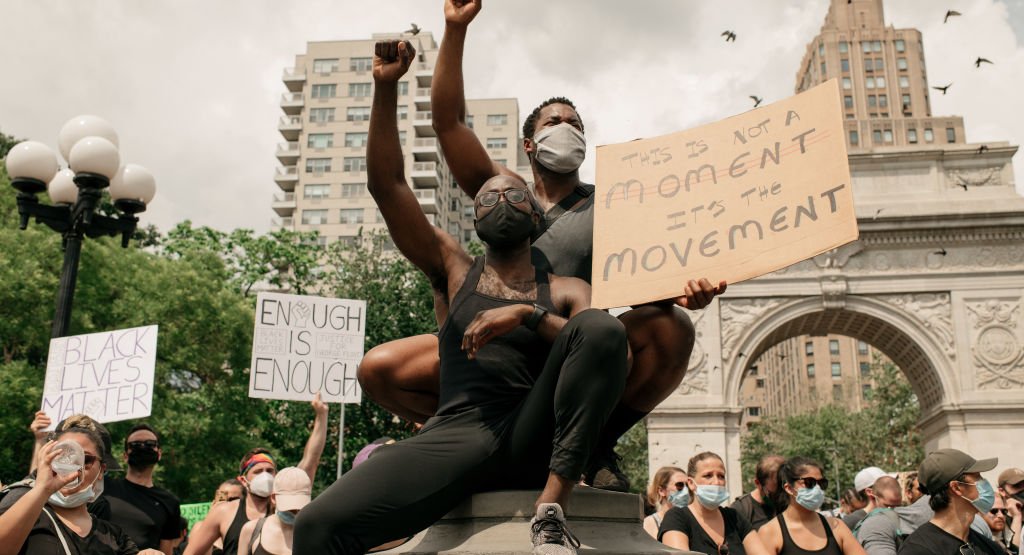
While the plan is an outgrowth of the racial reckoning that followed George Floyd’s murder by police in Minneapolis in 2020, it also states that the impetus goes back even centuries.
The “story of racial injustice in New York City begins with the arrival of Dutch colonists in 1624,” who proceeded to uproot the indigenous Lenape people, the plan states. The era of Dutch and British colonization then “entrenched a system of slavery that exploited Black labor” to build much of the city’s infrastructure, including Wall Street.
By 1703, about 42% of city households enslaved at least one person, the plan notes.
“Although New York formally abolished slavery in 1827, the legacy of slavery continued to shape the City’s economy and social structures long after,” the plan said.
The policy blueprint states it was based in part on the feedback from New Yorkers who reviewed a draft report released earlier by the administration. Mamdani said in a statement his administration was mindful of the task ahead.
“Naming disparities was never the hard part,” he said. “Eliminating them is.”