
The Tribeca Festival
June 3–14, 2026
New York
Risen from post-9/11 ashes and founded in 2001 by Robert De Niro, Jane Rosenthal, and Craig Hatkoff with an ethos of hope, the Tribeca Festival turned twenty-five this past June. This year’s slate feels more comprehensive than ever—film, TV, games, branded storytelling—paired with high ticket prices and more star-studded events. Yet beneath it all, Tribeca’s original ethos endures.
Most of this year’s highlights, fittingly, are David-and-Goliath stories. Does the zeitgeist shape the program, or does the program shape the zeitgeist? Tribeca 2026 showcased storytellers and New Yorkers––big and small—who once again cling to hope in the face of despair.
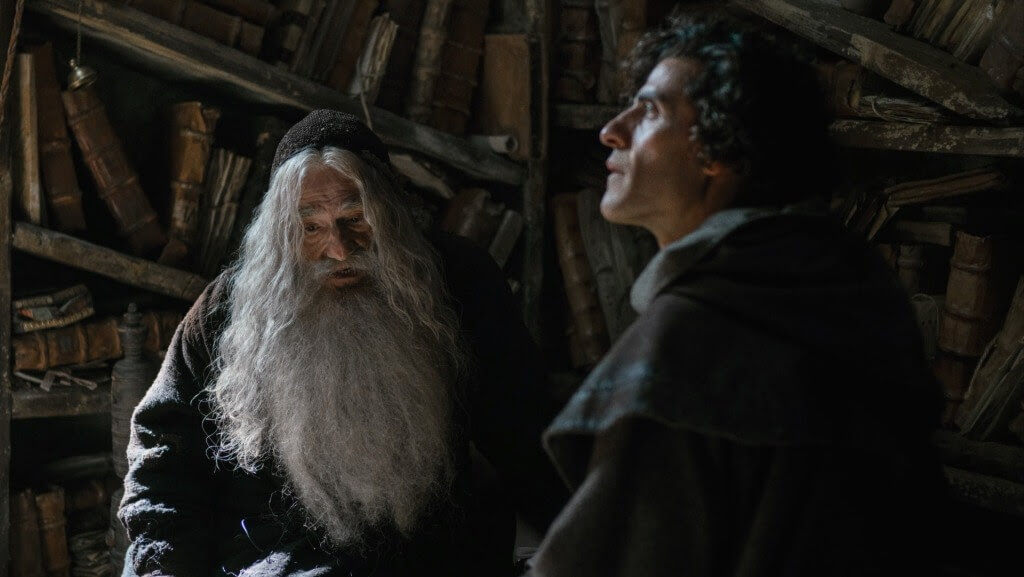
Julian Schnabel’s In the Hand of Dante, now streaming on Netflix, is a standout: an experimental drama that puzzles, challenges, and inspires. Adapted by Schnabel and Louise Kugelberg from Nick Tosches’s novel, the film juxtaposes parallel timelines: in the fourteenth century, Dante Alighieri (Oscar Isaac) is conceiving the Divine Comedy; in the twenty-first century, Nick (also Isaac) is enmeshed in a mob scheme authenticating a Dante manuscript. The threads contrast more than they coalesce, intentionally trapping Dante in a purgatory between authenticity and commerce, poetry and vulgarity. (Spoiler alert: poetry wins.)
Viewers who surrender are galvanized. The fourteenth-century thread unspools in rich color, archaic verse, and abstract musings; the twenty-first–century thread, shot in tenebrous black and white, plays like a bleakly funny Martin Scorsese film. Lyrical meets pulp. The most poignant moments belong to Scorsese himself as Dante’s bristly-bearded mentor, murmuring “Tempus fugit” as a primordial sky shifts from monochrome to color: a reminder of our connectedness across time. Schnabel’s twin stories become a stand-in for a fraught present, longing for lost humanity.
At the film’s Paris Theater premiere (concurrent with, but separate from Tribeca), Scorsese introduced Schnabel’s film alongside the director: mentorship… plus marketing. Yet, even as a Goliath in Tribeca’s slate, the film leverages provocation over commerciality—more an appeal for change than fodder for streaming.
This duality pulsed throughout the festival. Liza Mandelup’s Grandmasters, a propulsive doc series blending The Queen’s Gambit with Safdie energy, frames chess as an extreme sport and its players as rock stars. Instead of virtuosos Magnus Carlsen and Hans Niemann, Mandelup centers our emotions on Wesley So—a gentle Filipino-American whose immigrant story shapes his identity as much as his game. Even as he shies from the spotlight, So becomes our protagonist: an institutional outlier who succeeds on his own terms, speaking to our need for quiet perseverance over spectacle.
On the opposite end of the spectrum—in both scale and seniority—shoestring indies by young filmmakers burst with commercial bite. Kingston, an incendiary satire of education-gone-corporate, was filmed on Columbia University’s campus—written, produced, and directed by recent graduates. The film takes big swings: a bombastic score, one too many ideas, and a predictable dating-app subplot. But as a deconstruction of college comedy, it succeeds. Campus statues are juxtaposed with student faces—plaintive, judgmental, resigned. Then comes real footage from campus protest encampments––fictional indignation turned into tangible action. Powerful stuff.