
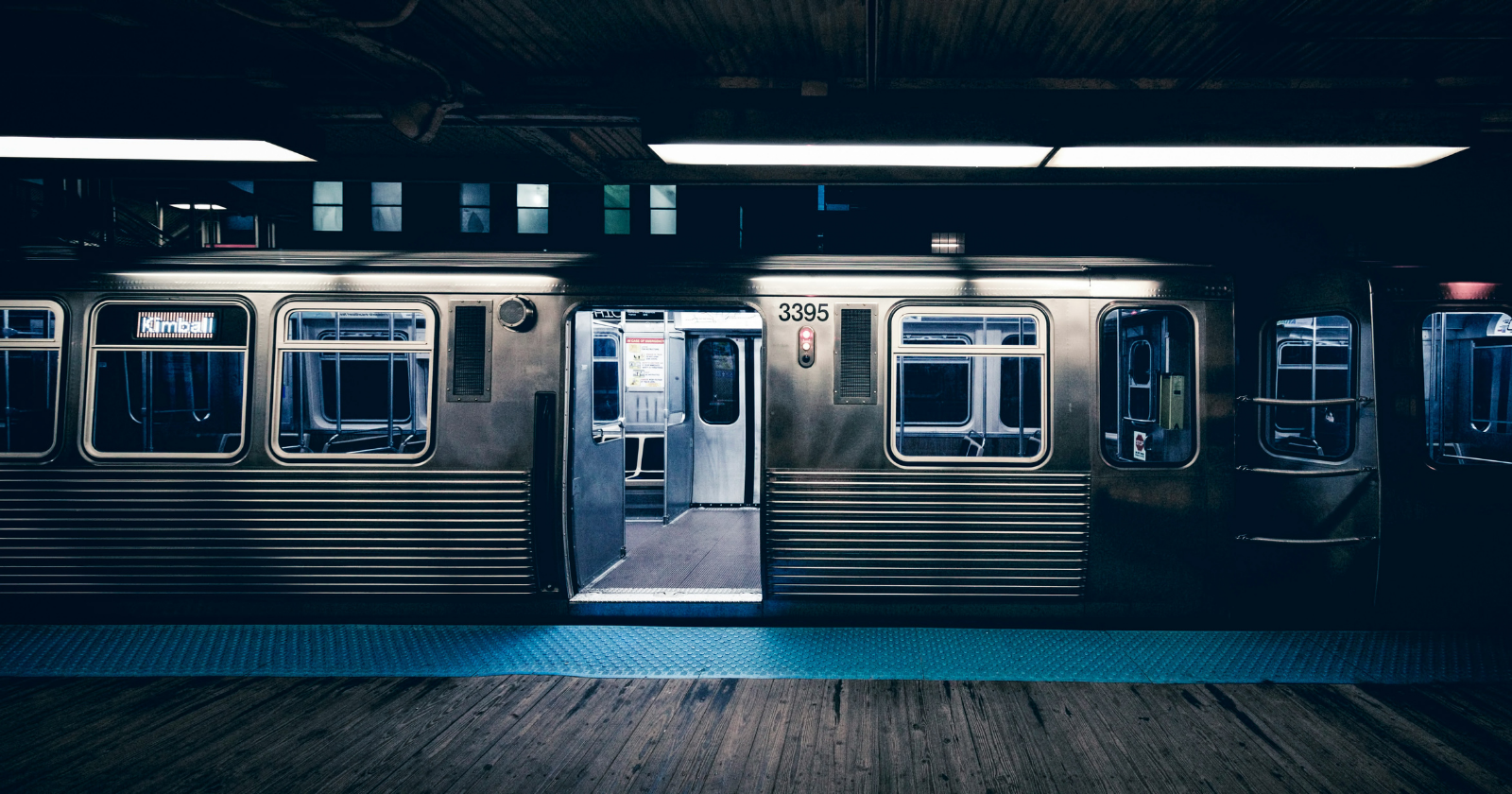
“New England has its rocky coast; tropical Florida and the Gulf have some coral reef. We have nothing like that,” Jeff Tinsman, Delaware’s reef program manager at the time, told Scientific American as the state prepared to sink its first batch of retired subway cars. Delaware’s whole coastline sits on sand and mud. No ledges, no rock outcrops, nothing for a fish to hide behind.
I grew up in Central Asia, landlocked, hundreds of miles from anything you could call an ocean. My idea of a coastline came later, first in Malaysia and now in Brazil, and it took me a long time to understand that a lot of what looks like a thriving reef is not an accident of geology at all. Someone decided to put it there. Someone picked the material, argued for the budget, and then, in Delaware’s case, dropped a few hundred retired train cars into the Atlantic and waited to see what grew on them.
What actually goes into an artificial reef turns out to be a stranger list than I expected, and Delaware’s own program has used most of it. Here is what is actually down there, and what is still being added.
Subway cars first, because nobody wanted them anymore
New York’s transit agency spent decades running the “Redbird” cars, named for their paint, until they aged out in the early 2000s. Rather than pay to scrap them, the agency worked with several coastal states to sink them instead. Delaware took the largest share for a single site: more than 700 retired Redbird cars, deployed since 2001 at what the state now calls the Redbird Reef, about 16 miles off Indian River Inlet.
The cars were not simply dropped as is. Regulators required the wheels, axles, doors, and window glass stripped out first, leaving a bare steel shell with plenty of open interior for fish to swim through. A separate study of five Philadelphia subway cars sunk off the coast in 1990 gave state biologists a rough timeline to work from: researchers there predicted the steel would hold up for about 20 years before finally collapsing. Twenty years is a long run for something nobody wanted to pay to keep.
Rock and broken concrete make up most of it
Subway cars get the photographs, but they are not the bulk of what is out there. Across Delaware’s whole reef system, the state has placed over 2 million tons of quarried rock and 100,000 tons of broken concrete, most of it demolition debris that would otherwise have gone to a landfill.
None of that makes for a dramatic photo. A pile of broken concrete does not read as a rescue story the way a subway car does. But it works on the same basic principle: give a mussel or a barnacle something hard and stable to grab onto, and everything above it in the food chain eventually shows up.
Tanks and troop carriers get a second retirement
Somewhere off the Delaware coast sit 86 decommissioned military tanks and armored personnel carriers, cleaned of fuel and fluids and lowered onto the sea floor. I find this genuinely funny in a way I do not think the state intends. A piece of hardware built to survive a battlefield ends its working life as a condo for black sea bass.
It is also a decent argument for how flexible the underlying idea is. The fish do not care whether the steel used to carry troops or commuters. They care whether it is stable, whether it has crevices, and whether it stays put through a storm.
Ships and boats are the biggest single units
Delaware has also sunk 32 retired vessels over the life of the program, ranging from small fishing boats to full cargo and passenger ships. A single ship does more per deployment than almost anything else on this list, since its size creates vertical structure a flat pile of tires or rubble never will, with different fish using different depths of the same wreck.
Vessels are also the most expensive and most regulated material to prepare. Fuel, oil, wiring, insulation, and anything that could leach into the water has to come out first, under environmental oversight, before a ship is cleared to sink.
The math behind why any of this works
Why bother with any of it? Delaware’s own answer, in the state’s plain language, is that the ocean floor off its coast needs the help. “The seafloor off Delaware’s coast primarily consists of featureless sand and mud,” says Colt Williamson, an environmental scientist with the state’s Division of Fish and Wildlife. “The addition of hard structures through the Artificial Reef Program gives many marine species the habitat they require to thrive.”
By the state’s own measure, the mussels, barnacles, and other filter feeders that colonize these structures generate up to 400 times more food for fish than the surrounding bare ocean floor. That is a correlational field observation, not a controlled experiment, and it is specific to structure placed on soft sediment like Delaware’s, not a universal multiplier. The mussels themselves do not stick around for decades the way coral does. Tinsman described them to Scientific American as a population that renews itself constantly, new juveniles settling every year on the same steel, which is part of why he argued a subway car works just as well as anything more exotic.
What is actually happening out there right now
This is not a program that finished twenty-some years ago and became a museum piece. Delaware currently operates 14 permitted reef sites, and it is still sinking things. This past August, the state added a 180-foot retired oilfield supply vessel, later used as a commercial fishing boat, to Reef Site 13, a location shared with New Jersey and Maryland. Preparing it cost about $285,000, paid through federal Sport Fish Restoration funds collected from excise taxes on fishing and boating gear rather than state tax dollars.
“The addition of this vessel to our reef system continues DNREC’s commitment to improving marine habitat while giving retired maritime vessels a new purpose beneath the waves,” said Greg Patterson, DNREC’s secretary, when the ship went down.
Subway cars built the reputation. Concrete and rock still make up the bulk of it.
But the actual pipeline, old ships, old tanks, whatever a state can get its hands on and clean up properly, is still running, and there is no sign it is close to done.